
Simple Roast Chicken With Crisp Skin
A whole chicken roasted at 425°F (220°C) for crisp skin and juicy meat, with a dry-salting step, where to put the thermometer, a quick pan sauce and how to carve.
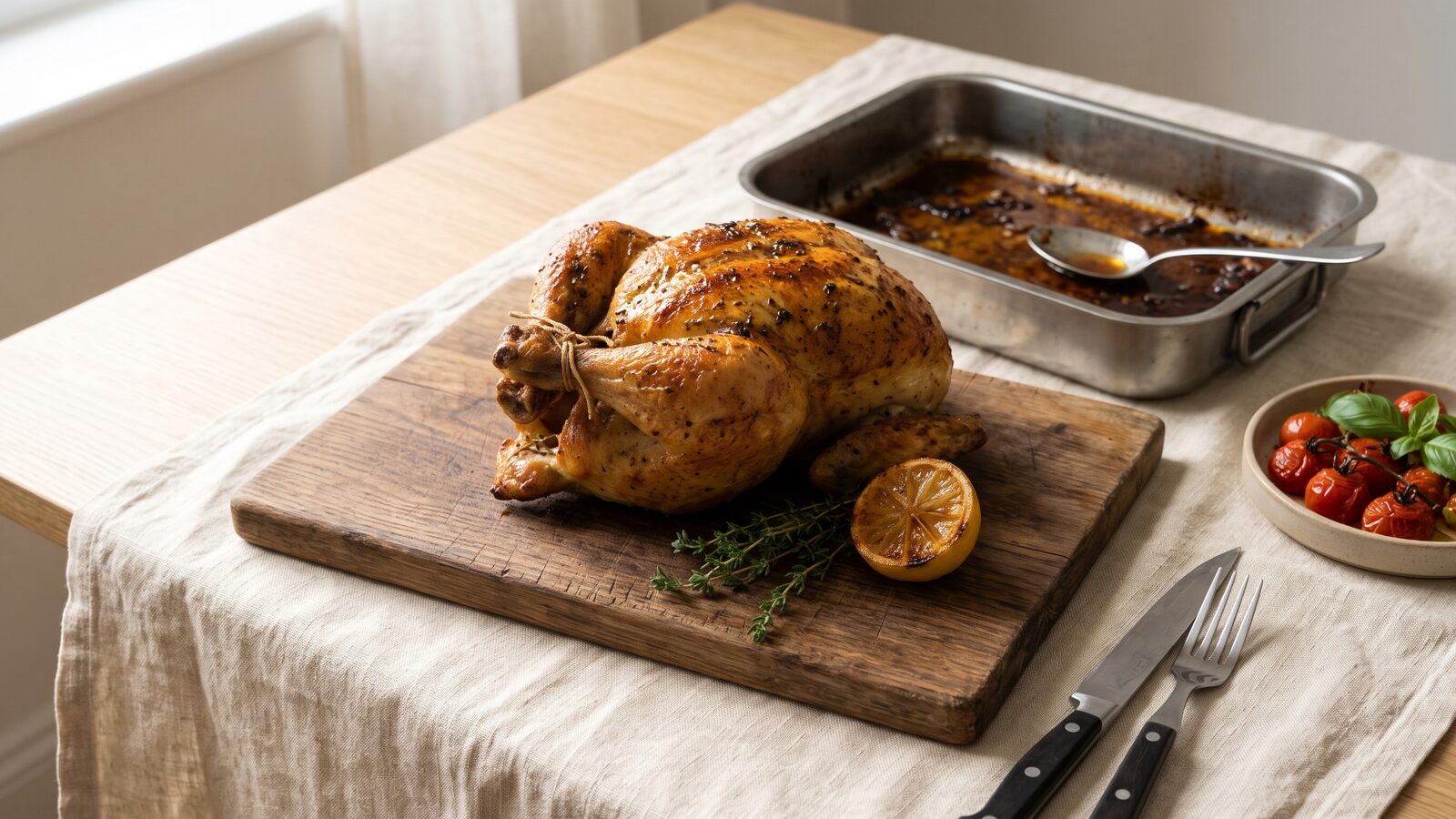
A whole chicken roasted hot, at 425°F (220°C), gives you crisp skin and juicy meat in a little over an hour, with almost no hands-on work. The two things that decide the result are a dry, salted skin and taking the bird out when the thigh reads 165°F (74°C), not when a timer says so.
Serves: 4 · Prep: 15 minutes, plus at least 1 hour salting · Cook: 60–75 minutes, plus 15 minutes resting
Allergens: contains dairy (butter). For dairy-free, use 2 tablespoons (30 ml) olive oil instead of the butter; the skin browns just as well.
Ingredients
- 1 whole chicken, about 4 lb (1.8 kg)
- 1 tablespoon kosher salt (10–15 g, depending on the brand), or 2 teaspoons (12 g) fine table salt
- 1 teaspoon (2 g) freshly ground black pepper
- 2 tablespoons (28 g) unsalted butter, softened
- 1 lemon, halved
- 4 cloves garlic, lightly crushed in their skins
- 5–6 sprigs fresh thyme, or 1 teaspoon (1 g) dried thyme
- 1 medium onion (about 6 oz / 170 g), cut into thick rings, optional
Equipment
A roasting pan or 12-inch (30 cm) ovenproof skillet, kitchen twine, paper towels and an instant-read thermometer. The thermometer is the one tool that matters here. Ovens run hot or cold and chickens vary in size, so time alone is a guess.
Steps
- Dry and salt the chicken. Take out any giblets, then pat the chicken dry all over with paper towels, including inside the cavity. Sprinkle the salt and pepper evenly over the skin and inside. Set it on a plate, uncovered, in the fridge for at least 1 hour and up to 24 hours. Salt draws moisture out of the skin, then gets reabsorbed into the meat. A drier skin browns and crisps instead of steaming.
- Heat the oven. Put a rack in the middle and heat the oven to 425°F (220°C). Take the chicken out of the fridge while the oven heats.
- Prepare the pan. Scatter the onion rings in the pan if using. They lift the chicken off the metal so the underside does not stew, and they flavour the pan juices.
- Season and tie. Push the lemon halves, garlic and thyme into the cavity. Rub the softened butter over the breast and legs. Tie the ends of the drumsticks together with twine and tuck the wing tips under the back. A compact bird cooks more evenly, because the thin wing tips and leg ends are not left sticking out to dry.
- Roast. Set the chicken breast side up on the onions and roast for 60–75 minutes. Start checking at 55 minutes. Do not baste: opening the oven drops the heat, and liquid on the skin slows browning.
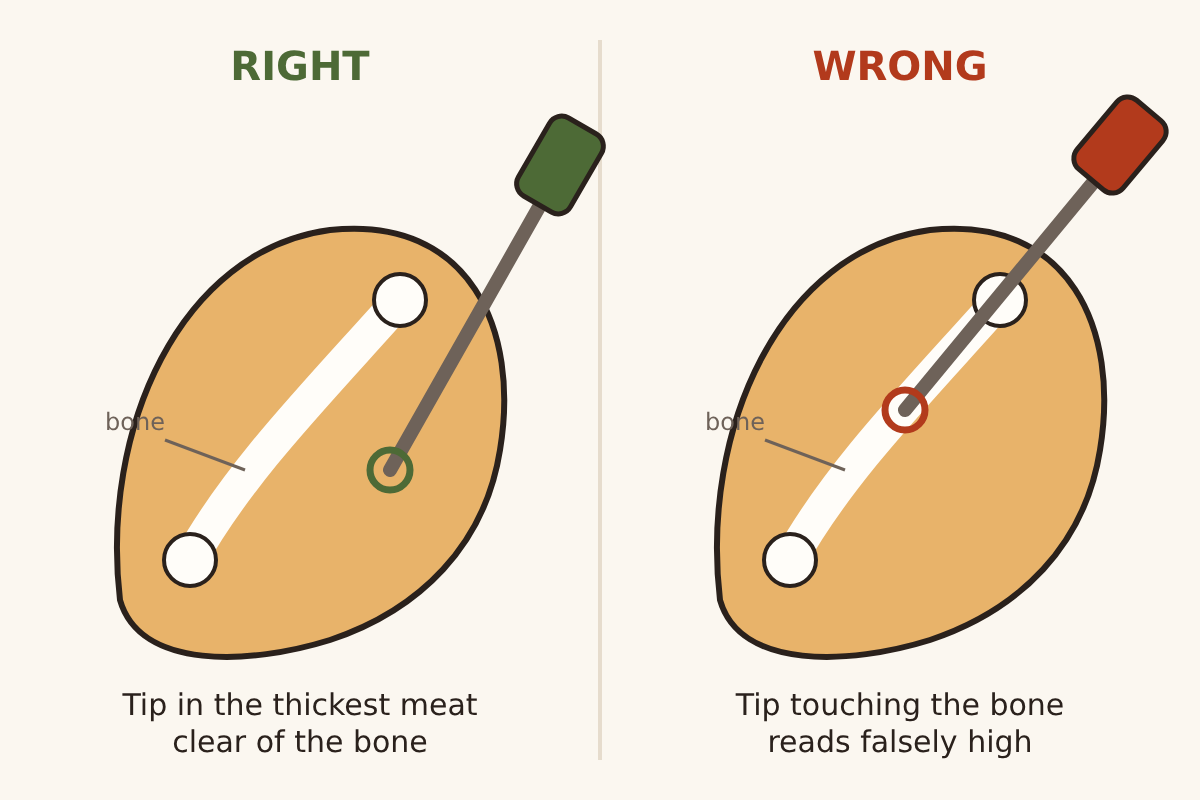
- Check the temperature. Push the thermometer into the thickest part of the thigh, near where it joins the body, without touching bone. The chicken is done when it reads 165°F (74°C), the USDA safe minimum for poultry, and the juices from that spot run clear. If it is under, give it 10 more minutes and check again.
- Rest. Move the chicken to a board and leave it for 15 minutes. The juices settle back into the meat instead of running out when you carve.
Make a quick pan sauce
While the chicken rests, tip the pan and spoon off most of the clear fat, leaving the brown juices. Set the pan over medium heat (use an oven mitt, the handle is hot), add ½ cup (120 ml) chicken stock or water and scrape up the browned bits. Simmer for 2–3 minutes until slightly reduced, squeeze in the roasted lemon from the cavity and taste for salt.
How to carve it
Cut through the skin between the leg and the body, then press the leg outward until the joint pops and cut through it. Separate the drumstick from the thigh at the joint. For the breast, cut down along one side of the breastbone, following the ribs with the knife, and lift the meat off in one piece before slicing it across. Take off the wings last.
Common problems
- Pale, soft skin. The skin was wet going in, or the oven was not fully hot. Pat it drier and give the salt more time next round.
- Dry breast, undercooked thighs. The bird went in straight from the fridge, or it was not tied. A cold, loose chicken cooks unevenly.
- Smoky oven. Fat hitting a bare, very hot pan smokes. The onion layer helps; so does a pan that is not much bigger than the chicken.
Storage and reheating
Refrigerate leftovers within 2 hours of cooking, in a shallow covered container, and eat them within 3–4 days. Pull the meat off the bones before storing so it cools fast. Cooked chicken keeps its best quality in the freezer for about 4 months. Reheat leftovers until they reach 165°F (74°C): covered in a 350°F (175°C) oven with a splash of stock, or in the microwave, stirring halfway.
The same thermometer habit carries over to other dishes. Ground beef, as in this weeknight beef and bean chili, has its own safe number, 160°F (71°C).
