
Fluffy Buttermilk Pancakes
Thick, tender buttermilk pancakes in 30 minutes, with the two habits that keep them fluffy, how to tell when to flip, a buttermilk substitute and allergen swaps.
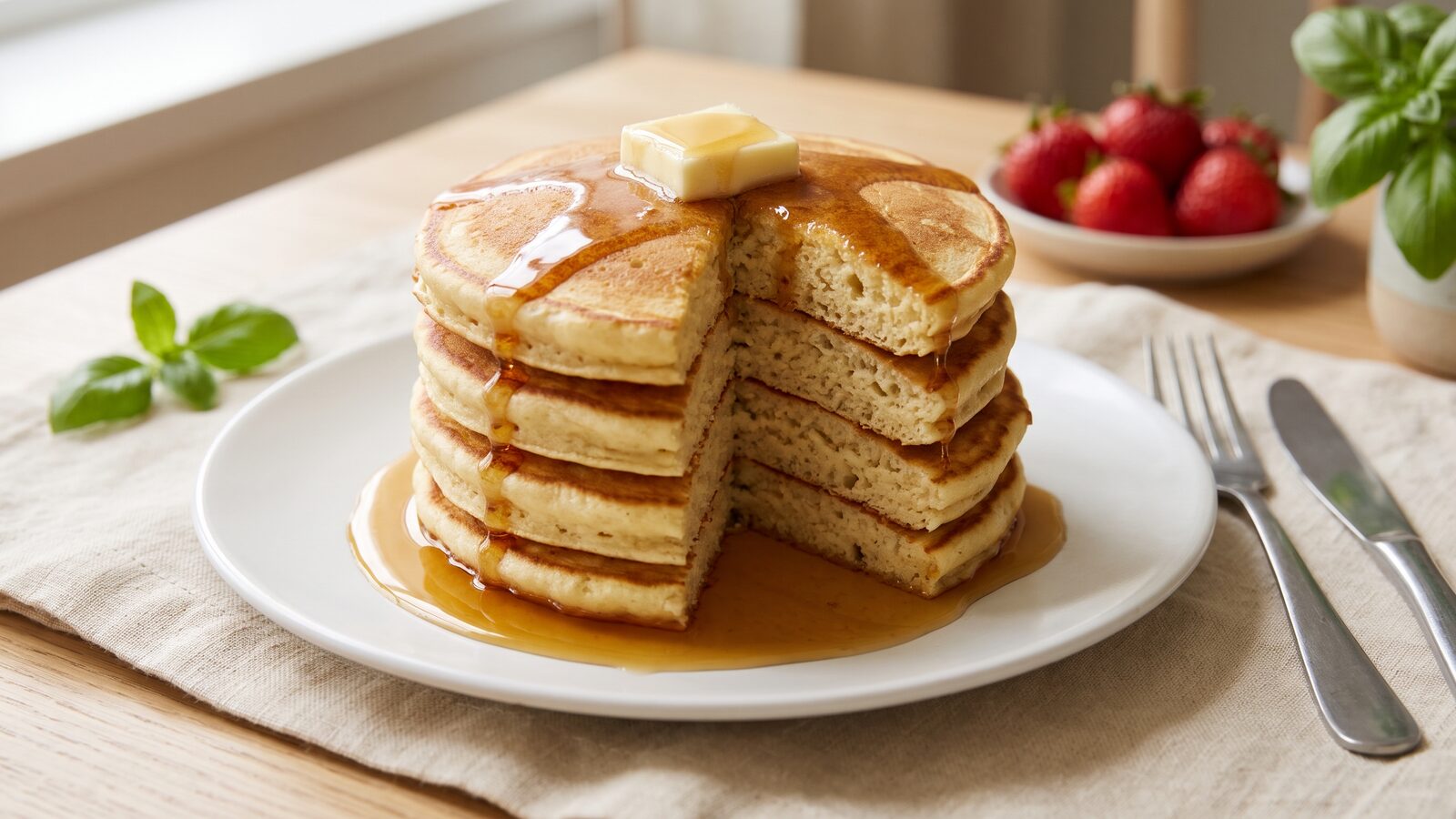
Fluffy buttermilk pancakes come down to two habits: stir the batter only until the flour disappears, lumps and all, and flip each pancake when the bubbles on top pop and stay open. This batch makes about 16 pancakes 4 inches (10 cm) across, and the batter is ready in 10 minutes.
Serves: 4 (about 16 pancakes) · Prep: 10 minutes, plus 5 minutes resting · Cook: about 20 minutes
Allergens: contains gluten (wheat), dairy (buttermilk, butter) and eggs. Swaps are at the end.
Ingredients
- 2 cups (250 g) all-purpose flour
- 2 tablespoons (25 g) granulated sugar
- 2 teaspoons (8 g) baking powder
- 1 teaspoon (5 g) baking soda
- ½ teaspoon (3 g) fine salt
- 2 cups (480 ml) buttermilk
- 2 large eggs
- 4 tablespoons (55 g) unsalted butter, melted and cooled slightly, plus a little more for the pan
Steps
- Mix the dry ingredients. Whisk the flour, sugar, baking powder, baking soda and salt in a large bowl for about 20 seconds, so the leaveners are spread evenly. Clumps of baking soda leave bitter, soapy spots.
- Mix the wet ingredients. In a second bowl, whisk the buttermilk and eggs together, then whisk in the melted butter. If the butter firms up into flecks when it hits the cold buttermilk, that is fine.
- Combine gently. Pour the wet ingredients into the dry and fold with a spatula until you no longer see dry flour. Stop there. The batter should be thick and lumpy. Every extra stir develops gluten, and a stretchy batter gives you flat, chewy pancakes instead of tender ones.
- Rest the batter. Leave it for 5 minutes while the pan heats. The baking soda reacts with the acid in the buttermilk and the batter puffs and thickens. Do not stir it again.
- Heat the pan. Set a large nonstick or cast-iron pan over medium heat, or an electric griddle to 375°F (190°C). Test it with a few drops of water: they should skitter and evaporate in a second or two. If they sit and steam, wait; if they vanish instantly with a hiss, turn the heat down.
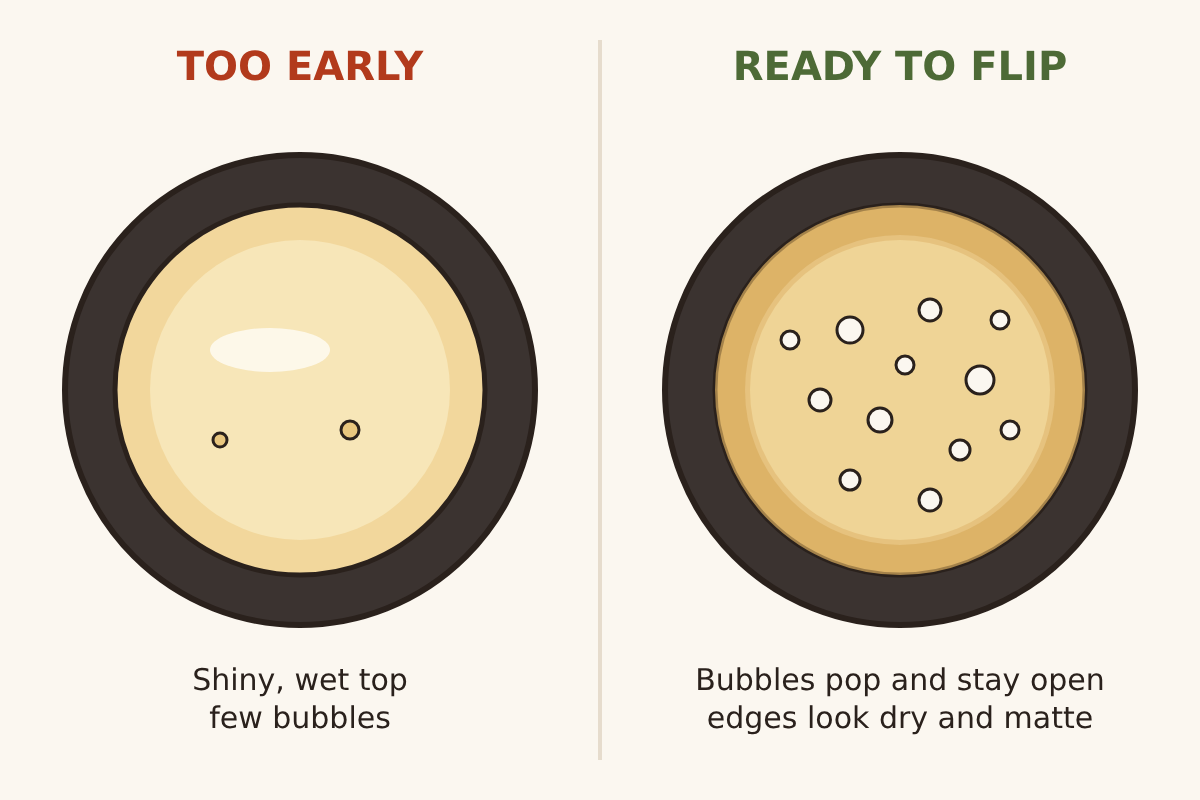
- Cook the first side. Wipe the pan with a thin film of butter. Pour ¼ cup (60 ml) of batter per pancake, leaving space between them. Cook for 2–3 minutes, until bubbles rise and pop on the surface and the holes they leave stay open, and the edges look dry and matte.
- Flip once. Slide a thin spatula under each pancake and turn it in one quick move. Cook the second side for 1–2 minutes, until golden and the centre springs back when pressed lightly. Do not press the pancakes flat with the spatula; it squeezes out the air you just built.
- Keep them warm. Move the cooked pancakes to a rack set on a baking sheet in a 200°F (95°C) oven while you cook the rest. A rack keeps the bottoms from going soggy, which happens when they are stacked on a plate.
Why pancakes come out flat or dense
- Overmixed batter. Smooth batter is overworked batter. Leave the lumps.
- Old baking powder or soda. Leaveners lose strength over time. Stir ½ teaspoon of baking powder into ¼ cup (60 ml) hot water: if it does not fizz right away, replace it.
- Pan too cool. The pancake spreads before it sets, so it ends up thin and pale. Turn the heat up a notch.
- Pan too hot. The outside burns before the inside cooks, leaving a raw middle. Turn it down and give the pan a minute to settle.
The first pancake is often the worst of the batch, because the pan is still finding its temperature. Use it as your test and adjust the heat from there.
No buttermilk?
Stir 2 tablespoons (30 ml) lemon juice or white vinegar into a measuring cup, then add milk up to the 2-cup (480 ml) line. Let it stand 5 minutes until it thickens slightly. Plain yogurt thinned with milk to a pourable consistency also works, in the same amount. Kefir and sour cream work too; this guide to buttermilk substitutes has the ratios for each.
Allergen swaps
- Gluten-free: use a 1:1 gluten-free flour blend that contains xanthan gum, by weight. Let the batter rest 10 minutes instead of 5 so the blend can absorb the liquid.
- Dairy-free: use unsweetened soy or oat milk soured with lemon juice as above, and melted dairy-free butter or a neutral oil such as sunflower. Soy milk contains soy.
- Egg-free: there is no swap that behaves exactly like eggs here. Ground flaxseed mixed with water (1 tablespoon / 7 g flax plus 3 tablespoons / 45 ml water per egg, rested 5 minutes) holds the batter together, but the pancakes come out a little denser.
Storage and reheating
Cool leftover pancakes completely on a rack, then refrigerate them in a covered container or bag for up to 3 days. To freeze, lay them flat on a tray until firm, then pack them with parchment between them and freeze for up to 2 months. Reheat straight from frozen in a toaster, or on a baking sheet in a 350°F (175°C) oven for 8–10 minutes.
If you make these on a weekend, a simple roast chicken is about as little work for dinner.
