
Crispy Potato Latkes: How to Keep Them From Going Soggy or Gray
A soggy latke almost always starts with water left in the potatoes. How to squeeze them properly, save the starch that holds the batter together, keep the oil at the right heat, and reheat a batch so it crisps up again.
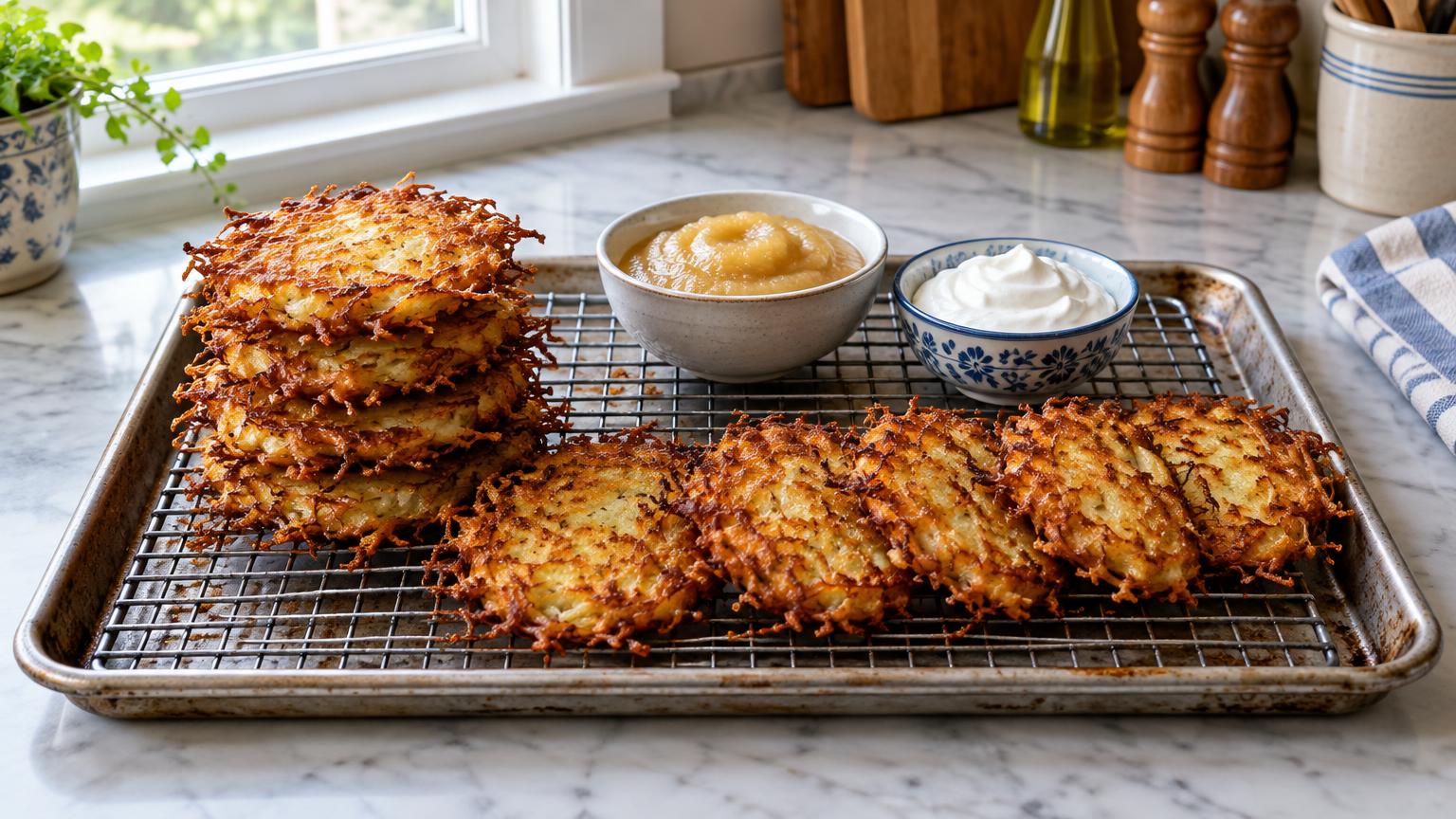
Crispy latkes depend on getting the water out. Grate starchy russet potatoes with an onion, squeeze the shreds very hard in a towel, stir back the white starch that settles out of the liquid, and fry in ¼ inch (6 mm) of oil at 350 to 375°F (175 to 190°C). The wetter the mixture, the more the oil is spent boiling off steam instead of browning the potato.
Hanukkah 2026 begins at sundown on December 4, and latkes are on many tables for the eight nights, because foods fried in oil recall the holiday's story of the temple oil that lasted. This batch holds well in the oven, so you can serve everyone at once.
Makes: about 16 latkes, serving 4 to 6 Prep time: 30 minutes Cook time: about 25 minutes Contains: eggs, and gluten if you use matzo meal. Swaps below.
Ingredients
- 2 pounds (900 g) russet potatoes, peeled
- 1 medium yellow onion, about 8 ounces (225 g), peeled and quartered
- 2 large eggs, beaten
- ¼ cup (30 g) potato starch or matzo meal
- 1½ teaspoons (9 g) fine salt
- ½ teaspoon ground black pepper
- About 1½ cups (360 ml) neutral oil with a high smoke point, such as peanut, canola or grapeseed
- Applesauce and sour cream, to serve
Steps
- Set a wire rack over a sheet pan. Heat the oven to 200°F (95°C) to keep finished batches warm.
- Grate the potatoes and onion on the large holes of a box grater, or with the coarse disc of a food processor, alternating them as you go. Onion juice helps slow the graying of the potato, so grate the two together and work without long pauses.
- Pile the shreds into a clean kitchen towel set over a bowl. Twist the towel closed and squeeze as hard as you can, in two or three rounds, until only a few drops fall.
- Let the liquid in the bowl stand for 5 minutes. The cloudy water will sit on top of a white paste. Pour off the water and keep the paste, which is pure potato starch.
- Add the potato shreds to that bowl with the eggs, potato starch or matzo meal, salt and pepper. Mix with your hands until the starch is evenly worked through.
- Pour oil into a heavy skillet to a depth of ¼ inch (6 mm) and heat it over medium-high. It is ready when it reads 350 to 375°F (175 to 190°C), or when a shred dropped in sizzles at once. Our guide to nonstick, stainless and cast iron explains why cast iron holds this heat so well.
- Scoop about ¼ cup of the mixture, press it lightly between your palms and slide it into the oil. Flatten gently with a spatula, leaving ragged edges. Those loose strands are the crispest part.
- Fry 3 or 4 at a time, without crowding, for 3 to 4 minutes per side, until deep golden brown. Too many in the pan lowers the oil temperature, and they turn greasy.
- Drain on the rack and sprinkle with a little salt right away. Move finished batches into the warm oven on the rack.
- Between batches, scoop out loose bits with a slotted spoon, as they burn and turn the oil bitter. Top up with oil and let it return to temperature.
Why each step matters
Russets, because of their starch. Waxy red potatoes hold more water and less starch, so they brown less and fall apart more. Yukon Golds work, with a softer and less crisp result, and they are a fair choice if you like a creamier middle under a thinner crust. Whichever you buy, peel and grate them just before you need them, since the shreds begin to darken within minutes of meeting the air, and do not rinse them, which would wash away the starch you want to keep.
Squeezing, because of the steam. Frying is a race between water leaving and the surface browning. Fewer drops left in the shreds means the crust forms faster and the latke absorbs less oil.
Saving the starch, for structure. It binds the shreds, and it is free.
Hot oil, for the crust. Below about 350°F (175°C), the latke sits in the oil soaking it up. Over 375°F (190°C), the outside burns before the potato inside cooks. A clip-on or instant-read thermometer takes out the guesswork, though the sizzle test in how to tell a pan is hot enough works too.
The egg in the batter is safe once the latke is fried through. Taste a test latke rather than the raw mixture, and adjust the salt from there.
Common problems
- Latkes fall apart: too little binder or not enough squeezing. Add 1 tablespoon (8 g) more starch to the mixture and try again.
- Gray mixture: the shreds sat too long in the air. It is harmless, and frying hides it. Next time, fry soon after grating.
- Mixture weeps as you go: it will keep leaking liquid as it stands. Tip the bowl and pour off what collects, then give it a stir.
- Pale and greasy: the oil is too cool. Wait for it to come back up between batches.
Allergen swaps
- Gluten: use potato starch, not matzo meal. Standard matzo meal contains wheat.
- Eggs: leave them out and use 2 extra tablespoons (16 g) of potato starch. Make the latkes smaller and turn them gently, since they will be more fragile.
- Nuts: if you fry in peanut oil, tell your guests, or use canola or grapeseed oil instead.
- Dairy: the latkes are dairy-free as written. Serve with applesauce, or a dairy-free sour cream.
Make ahead, storage and reheating
Latkes reheat well if you do not stack them while they are warm. Cool them on the rack and refrigerate in a single layer for up to 3 days, or freeze on a tray, then bag for up to 2 months.
Reheat on a wire rack over a sheet pan at 400°F (200°C) until sizzling and 165°F (74°C) inside, about 5 minutes from the fridge or 10 minutes from frozen. Skip the microwave, as it turns them soft.
Latkes also make a fine side away from the holiday. Try them next to a simple roast chicken, where the crisp edges soak up a little of the pan juices.
