
Moist One-Bowl Banana Bread
A moist, one-bowl banana bread with how ripe the bananas should be, why to stop stirring once the flour goes in, how to tell it is done, and swaps for nuts, dairy, gluten and eggs.
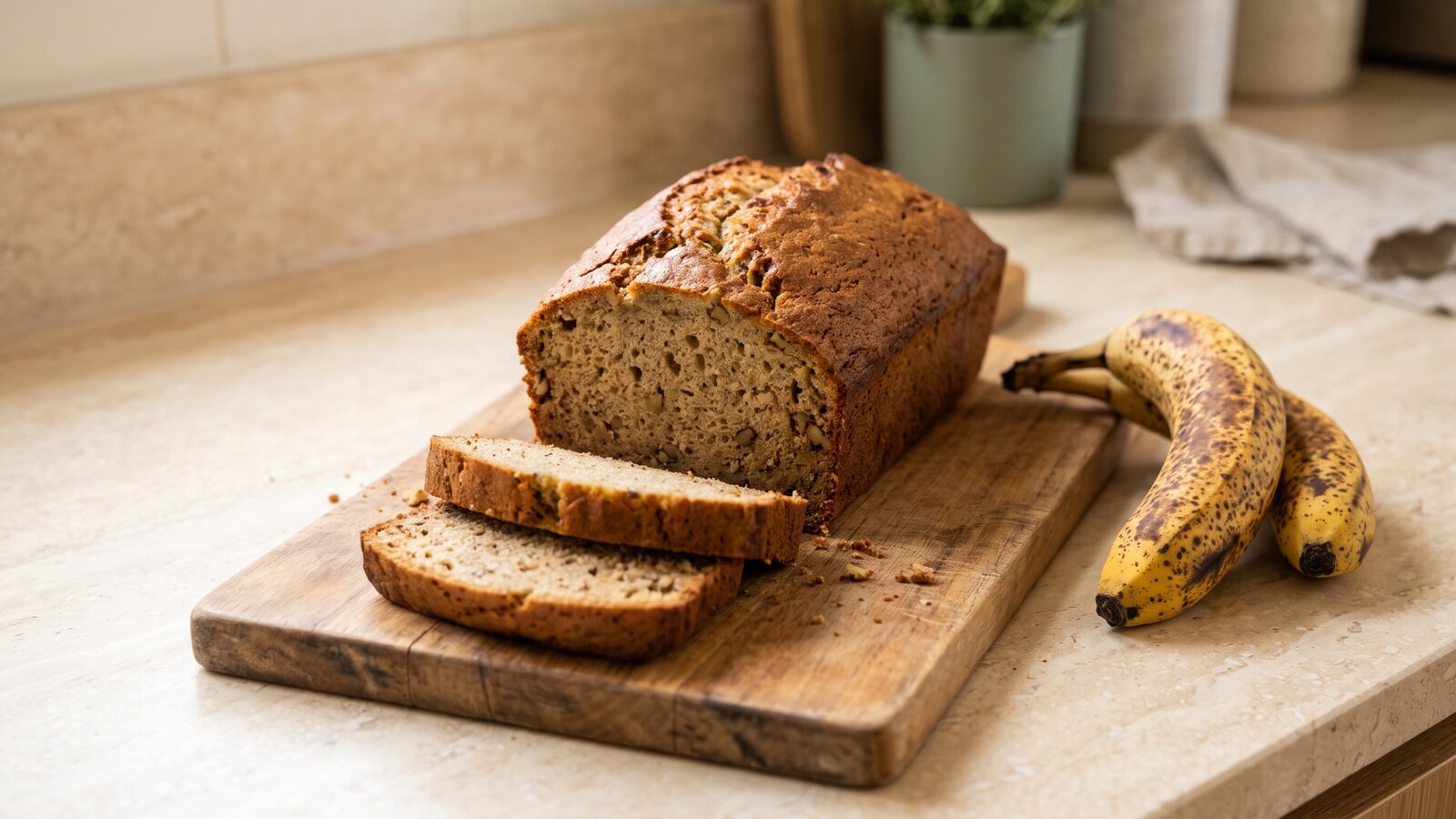
This banana bread is moist, tender and full of banana flavour, and it comes together in one bowl with a fork and a spoon. Two things decide how good it is: how ripe your bananas are, and how little you stir once the flour goes in. Get those right and the rest is waiting for the oven.
Makes: one 9 x 5-inch (23 x 13 cm) loaf, about 10 slices · Prep: 15 minutes · Bake: 55–65 minutes · Cool: at least 1 hour
Allergens: contains gluten (flour), eggs and dairy (butter). The walnuts are optional and are the only nuts. Swaps for each are below.
Ingredients
- ½ cup (113 g) unsalted butter, plus a little for the pan
- 3 to 4 very ripe medium bananas, enough for 1½ cups (340 g) mashed
- ¾ cup (150 g) packed light brown sugar
- 2 large eggs, at room temperature
- 1 teaspoon (5 ml) vanilla extract
- 1 teaspoon (5 g) baking soda
- ½ teaspoon (3 g) fine salt
- ½ teaspoon (1 g) ground cinnamon, optional
- 1¾ cups (220 g) all-purpose flour
- ½ cup (60 g) chopped walnuts, optional
If you measure flour with cups, spoon it into the cup and level it off rather than scooping straight from the bag. Scooping packs the flour down and can add a few tablespoons too many, which is the most common reason a loaf turns out dry.
Pick the right bananas
The bananas matter more than any other ingredient here. As a banana ripens, the starch in the fruit turns into sugar and the flesh softens, so a heavily spotted banana is sweeter, mashes smoother and tastes much more of banana than a yellow one.
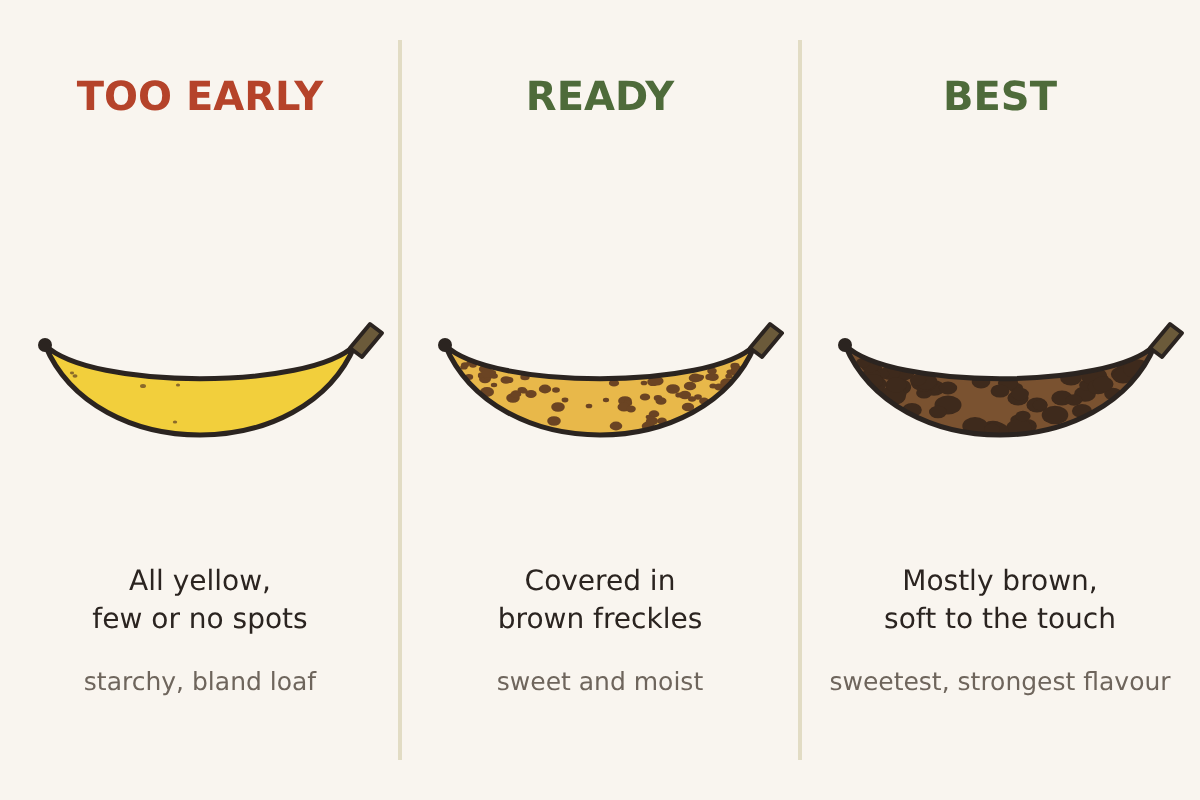
If your bananas are still yellow, put them in a paper bag with an apple for a day or two to speed things up. Peeled ripe bananas also freeze well in a sealed bag; thaw them in a bowl and include all the liquid they release when you measure.
Steps
- Heat the oven and prepare the pan. Heat the oven to 350°F (175°C) with a rack in the middle. Butter a 9 x 5-inch (23 x 13 cm) loaf pan and line the bottom and long sides with a strip of parchment, leaving a little overhang so you can lift the loaf out.
- Melt the butter. Melt it in a small pan or in the microwave, then let it cool for a few minutes while you mash the bananas. Very hot butter can start to cook the eggs when they go in.
- Mash the bananas. In a large bowl, mash the bananas with a fork until mostly smooth. A few small lumps are fine and leave pockets of soft banana in the loaf. Measure: you want about 1½ cups (340 g).
- Mix the wet ingredients. Stir in the melted butter and brown sugar, then the eggs and vanilla, until everything is evenly combined.
- Add the leavening. Sprinkle the baking soda, salt and cinnamon over the batter and stir well, so the soda is spread evenly before any flour goes in. Lumps of baking soda leave bitter, soapy spots in the bread.
- Fold in the flour. Add the flour all at once and fold it in with a spatula, scraping the bottom of the bowl, just until you cannot see dry flour. Stop there. Stirring more develops gluten in the flour, which gives a tough, rubbery loaf with long tunnels through it. The batter should look thick and a little lumpy. It is the same rule that keeps buttermilk pancakes fluffy. Fold in the walnuts, if using, with the last few strokes.
- Bake. Scrape the batter into the pan and smooth the top. Bake for 55–65 minutes. If the top is dark brown before the middle is done, around the 40-minute mark, lay a sheet of foil loosely over it.
- Check that it is done. Push a skewer or toothpick into the centre of the loaf. It is ready when the skewer comes out with a few moist crumbs but no wet batter, and the top springs back when pressed. With an instant-read thermometer, the kind you would use for a roast chicken, the centre should read about 200–205°F (93–96°C). The crack along the top always looks a little damp, so test beside it rather than in it.
- Cool. Leave the loaf in the pan for 10 minutes, then lift it out by the parchment onto a rack. Let it cool for at least an hour before slicing. The crumb is still setting as it cools, and a hot loaf tears and turns gummy under the knife.
Swaps and allergens
- Nut-free: leave out the walnuts, or use ½ cup (85 g) chocolate chips instead. Check the chocolate label, since many contain milk and some contain soy.
- Dairy-free: replace the butter with ½ cup (120 ml) neutral oil, such as vegetable or canola. The loaf will be a little moister and taste less buttery.
- Gluten-free: use the same weight, 220 g, of a 1:1 gluten-free baking flour blend that contains xanthan gum. Expect a slightly denser, more crumbly loaf; let it cool completely before slicing.
- Egg-free: there is no swap that gives quite the same rise. Two "flax eggs" (2 tablespoons / 14 g ground flaxseed stirred into 5 tablespoons / 75 ml water and left for 10 minutes) work, but the loaf comes out denser and flatter.
- Less sweet: you can cut the sugar to ½ cup (100 g) if your bananas are very ripe. Sugar also keeps the bread moist, so go no lower than that.
Make it muffins
The same batter makes 12 standard muffins. Divide it among a lined muffin tin and bake at 350°F (175°C) for 20–25 minutes, until a toothpick in the centre of one comes out clean.
Storage and reheating
Once completely cool, wrap the loaf tightly or keep it in an airtight container at room temperature for up to 3 days. In warm, humid weather, keep it in the fridge, where it lasts about a week, though it firms up when cold; let slices come back to room temperature or warm them briefly before eating.
To freeze, wrap the whole loaf or individual slices in plastic wrap and then foil, or put them in a freezer bag. It keeps its best quality for about 3 months. Thaw a whole loaf, still wrapped, at room temperature for a few hours, and toast single slices straight from frozen. A thick slice reheated in a lightly buttered skillet over medium heat, about 1 minute per side, gets crisp at the edges and soft in the middle.
