
Homemade Chicken Noodle Soup
Chicken noodle soup with bone-in thighs simmered in the broth for deep flavour, noodles cooked on the side so leftovers stay brothy, and safe temperatures for chicken and reheating.
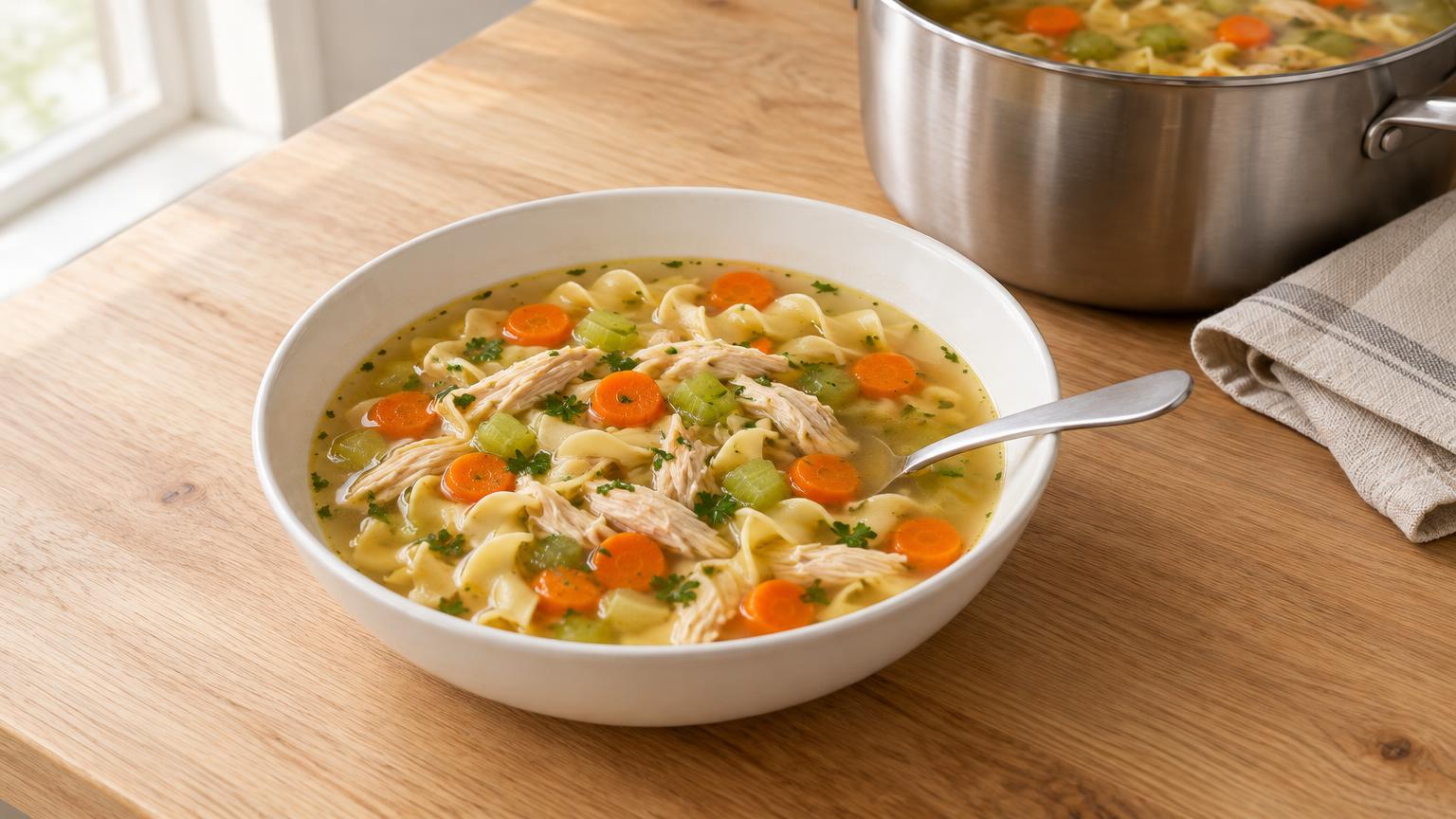
This chicken noodle soup gets its flavour from bone-in chicken thighs simmered right in the broth, so a carton of store-bought stock tastes like something you spent the afternoon on. It takes about an hour, most of it hands-off. Cook the noodles in a separate pot and the soup stays clear today and is still soup, not a pot of soggy noodles, tomorrow.
Serves: 6 · Prep: 20 minutes · Cook: about 45 minutes · Total: about 1 hour 5 minutes
Allergens: egg noodles contain gluten and eggs. Some boxed broths contain gluten or soy, so check the label. There is no dairy if you use oil rather than butter. Swaps are below.
Ingredients
- 2 tablespoons (30 ml) olive oil, or 2 tablespoons (28 g) butter
- 1 large onion (about 8 oz / 225 g), diced
- 3 medium carrots (about 6 oz / 180 g), peeled and sliced into ¼-inch (6 mm) coins
- 3 celery ribs (about 5 oz / 150 g), diced
- 3 garlic cloves, finely chopped
- 1 teaspoon (6 g) fine salt, plus more to taste
- ½ teaspoon (1 g) ground black pepper
- 8 cups (1.9 litres) low-sodium chicken broth
- 2 pounds (900 g) bone-in chicken thighs, about 5, skin removed
- 2 bay leaves
- 4 sprigs fresh thyme, or ½ teaspoon (0.5 g) dried thyme
- 6 ounces (170 g) wide egg noodles
- 2 tablespoons (8 g) chopped fresh parsley
- 1 tablespoon (15 ml) lemon juice, optional
Pulling the skin off the thighs before they go in keeps a thick layer of fat from collecting on the soup. The bones stay in: they give the broth more body and a rounder chicken flavour than boneless meat.
Steps
- Soften the vegetables. Heat the oil or butter in a large pot (at least 6 quarts / 5.7 litres) over medium heat. Add the onion, carrots, celery, salt and pepper and cook, stirring now and then, for 8–10 minutes, until the onion is soft and translucent. Cooking them gently first brings out their sweetness, which the broth would not get from vegetables dropped straight into liquid.
- Add the garlic. Stir it in for about 30 seconds, until it smells fragrant. Any longer and it can scorch and turn bitter.
- Simmer the chicken. Pour in the broth, then add the chicken thighs, bay leaves and thyme. Bring to a boil, then turn the heat down so the surface just trembles with small bubbles. Simmer, partly covered, for 25–30 minutes. A hard boil churns fat and proteins into the liquid and turns it cloudy; a gentle simmer keeps it clear.
- Check the chicken. Push an instant-read thermometer into the thickest part of a thigh, clear of the bone, the same way you would check a whole roast chicken. It must read at least 165°F (74°C), the USDA safe minimum for poultry. Thighs are more tender if they go a little higher, to around 175°F (80°C), and they stay juicy because of their extra fat and connective tissue.
- Shred the chicken. Lift the thighs onto a board, let them cool for 5 minutes, then pull the meat into bite-size pieces with two forks. Throw away the bones. Pick out the bay leaves and thyme stems from the pot.
- Cook the noodles separately. While the chicken cools, bring a second pot of salted water to a boil and cook the noodles according to the package, usually 6–8 minutes. Drain them.
- Finish the soup. Return the chicken to the pot and simmer for 2 minutes to heat it through. Stir in the parsley and lemon juice, then taste and add salt a pinch at a time. Low-sodium broth usually needs another ½ teaspoon (3 g) or so.
- Serve. Put a handful of noodles in each bowl and ladle the soup over them.
Why the noodles cook in their own pot
Noodles keep absorbing liquid for as long as they sit in it. Cooked in the soup, they also shed starch that clouds and thickens the broth. That is fine if the whole pot gets eaten tonight. Leftovers are another story: by the next day the noodles have swollen and gone soft, and much of the broth has disappeared into them.
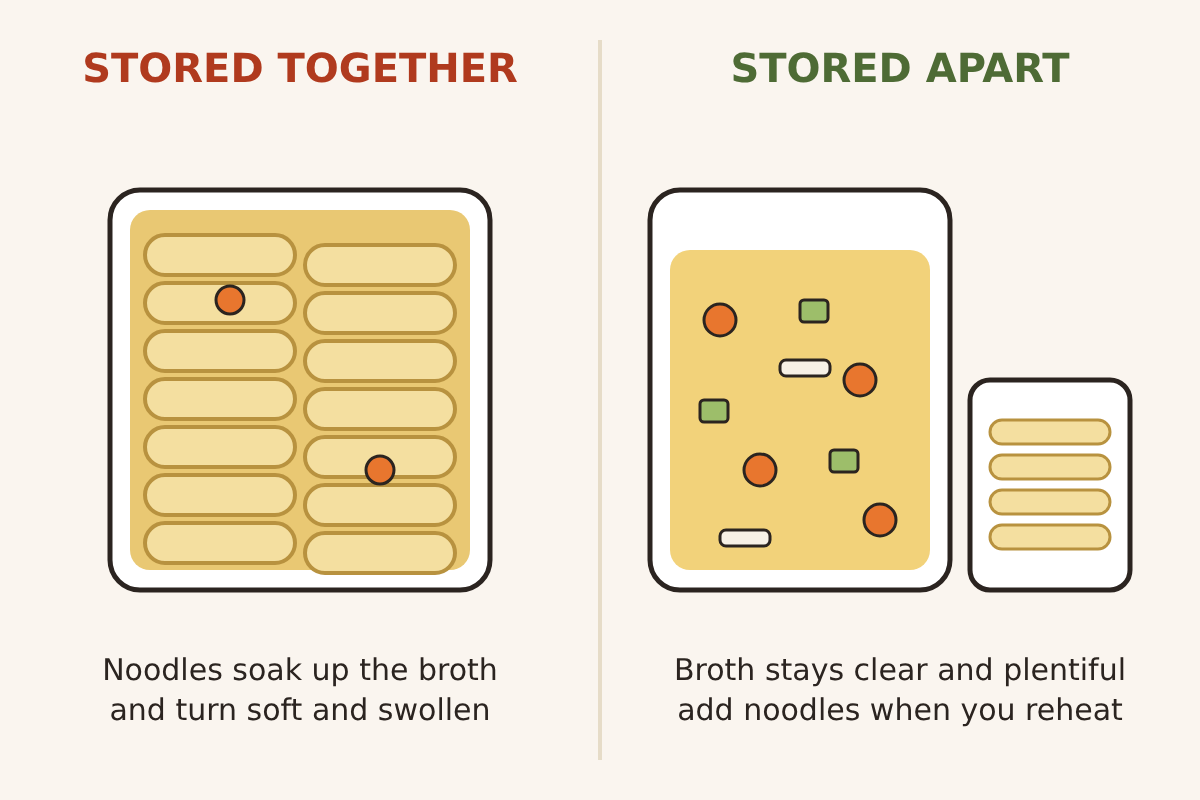
If you only want one pot, cook the noodles in the simmering soup for the time on the package and serve it all at once. Expect the soup to be thicker and a little cloudier.
Shortcut with cooked chicken
Leftover roast chicken works well here. Skip the thighs, simmer the vegetables in the broth with the herbs for 15 minutes, then add 3 cups (about 420 g) of shredded cooked chicken for the last 5 minutes. The broth will be lighter, since it misses the flavour the bones would have added.
Swaps and allergens
- Gluten-free: use 6 ounces (170 g) gluten-free pasta, or about 3 cups (500 g) cooked rice, added to bowls the same way, and a broth labelled gluten-free.
- Egg-free: use any dried pasta made without eggs; most short shapes, such as small shells or ditalini, are made from just durum wheat and water.
- Dairy-free: use olive oil instead of butter.
Storage and reheating
Cool the soup and get it into the fridge within 2 hours of cooking. Shallow containers help it cool quickly. Store the soup and the noodles in separate covered containers, and use both within 3–4 days, which is the USDA guideline for cooked leftovers.
To freeze, leave the noodles out: they turn mushy once frozen and thawed in liquid. The soup itself keeps its best quality for 2–3 months in the freezer. Thaw it overnight in the fridge.
Reheat soup on the stove until it is steaming and reaches 165°F (74°C), then add the noodles for the last minute so they warm through. If the soup has thickened, loosen it with a splash of broth or water.
For another pot that feeds a crowd on a weeknight and reheats just as well, try ground beef and bean chili.
