
Pumpkin Pie From Scratch With a Crust That Stays Crisp
The soggy bottom on a pumpkin pie is not bad luck: liquid custard in raw pastry can only go one way. Two changes fix it, and neither is hard.
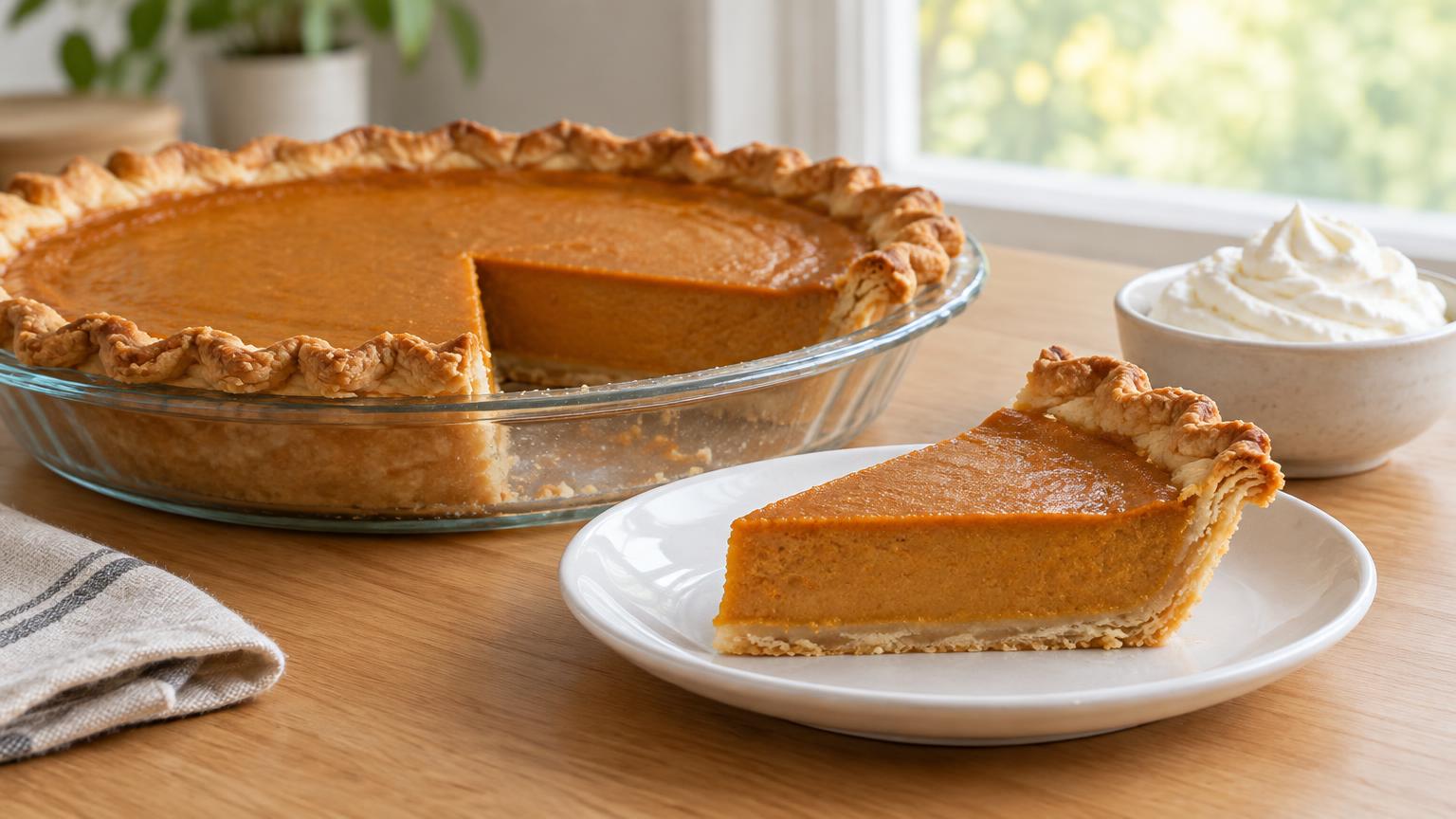
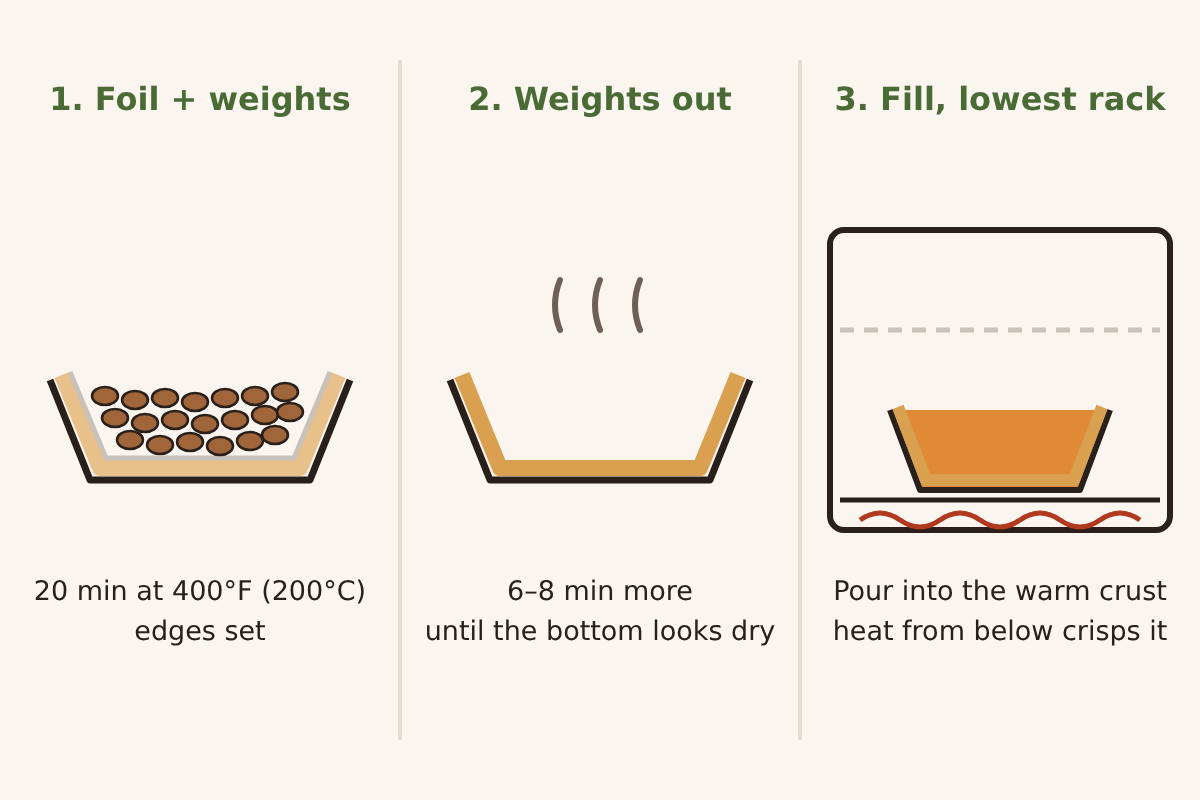
The fix for a soggy pumpkin pie crust is to bake the crust before the filling goes in. Line it with foil and pie weights, bake until set, take the weights out and bake until dry, then pour the filling into the still-warm shell and bake the pie on the lowest oven rack. The custard sets while the bottom crust stays crisp and flaky, and the whole pie can be made the day before Thanksgiving.
Serves: 8 Prep time: 30 minutes, plus 1 hour chilling the dough Cook time: about 1 hour 25 minutes (30 minutes for the crust, 55 minutes for the pie), plus 2 hours cooling Dish: 9 inch (23 cm) deep-dish pie plate, about 1½ inches (4 cm) deep Contains: gluten (flour), dairy (butter, evaporated milk), eggs. Swaps below.
Why the bottom goes soggy
Pumpkin pie filling is a custard: mostly liquid, held together by eggs. Pour it into raw dough and the liquid soaks into the pastry before the crust has a chance to set, so the bottom bakes up pale and gummy while the edges brown. Baking the crust first (blind baking) firms and dries it so the filling sits on top of it instead of soaking in. Baking on the lowest rack puts the bottom of the pie closest to the oven's heat, so it keeps crisping while the custard sets.
Ingredients
For the crust:
- 1½ cups (190 g) all-purpose flour, plus extra for rolling
- 1 tablespoon (12 g) granulated sugar
- ½ teaspoon (3 g) fine salt
- 10 tablespoons (140 g) cold unsalted butter, cut into ½ inch (1 cm) cubes
- 4 to 6 tablespoons (60 to 90 ml) ice water
- 1 egg white, lightly beaten, for sealing the crust
For the filling:
- 1 can (15 oz / 425 g) pumpkin puree, not pumpkin pie filling (which is already sweetened and spiced)
- ¾ cup (150 g) packed light brown sugar
- 1½ teaspoons ground cinnamon
- ½ teaspoon ground ginger
- ¼ teaspoon ground nutmeg
- ⅛ teaspoon ground cloves
- ½ teaspoon (3 g) fine salt
- 2 large eggs
- 1 can (12 fl oz / 354 ml) evaporated milk
- 1 teaspoon (5 ml) vanilla extract
Steps
Make and chill the crust
- Whisk the flour, sugar and salt in a bowl. Add the butter and rub it in with your fingertips, or cut it in with a pastry blender, until the biggest pieces are the size of peas. Those visible butter pieces turn to steam in the oven and make the flaky layers.
- Sprinkle in 4 tablespoons (60 ml) of ice water and toss with a fork. Squeeze a handful: if it holds together, stop. If it crumbles, add more water a tablespoon at a time. Too much water makes a tough crust that shrinks.
- Press the dough into a disc, wrap and refrigerate at least 1 hour, or up to 2 days. Cold dough is easier to roll and keeps its shape in the oven.
- On a floured surface, roll it into a 13 inch (33 cm) circle. Ease it into the pie plate without stretching (stretched dough shrinks back as it bakes), trim to a ¾ inch (2 cm) overhang, fold the overhang under and crimp. Freeze the shell for 15 minutes while the oven heats.
Blind bake the crust
- Heat the oven to 400°F (200°C) with a rack in the lowest position.
- Line the frozen shell with foil or parchment, pressing it into the corners, and fill to the top with pie weights, dried beans or rice. Bake 20 minutes, until the edges are set and lightly golden.
- Lift out the foil and weights. Bake 6 to 8 minutes more, until the bottom looks dry and matte. If the bottom puffs, press it down gently with the back of a spoon.
- Brush the inside of the hot crust with the beaten egg white and return it to the oven for 2 minutes. The egg white cooks into a thin seal between the pastry and the filling.
Fill and bake
- While the crust bakes, whisk the pumpkin, brown sugar, spices and salt in a large bowl until smooth. Whisk in the eggs one at a time, then the evaporated milk and vanilla.
- Turn the oven down to 350°F (175°C). Set the warm crust on the lowest rack and pour in the filling there, which saves carrying a brimming pie across the kitchen. Filling a warm crust means the bottom starts baking immediately.
- Bake 45 to 55 minutes. If the crimped edge browns too fast, cover it with a ring of foil.
How to tell it is done
The edges should be set and slightly puffed, and the centre, about 2 inches (5 cm) across, should still wobble a little like set jelly when you nudge the plate. A knife pushed in 1 inch (2.5 cm) from the centre should come out clean. If you have a thermometer, the centre reads about 175°F (80°C).
Take it out at that point. The centre finishes setting as it cools, and a custard baked until it is firm all the way across cracks and turns grainy.
- Cool on a rack for at least 2 hours before slicing, so the filling sets completely.
Storing
Pumpkin pie is an egg-and-milk custard, so it belongs in the fridge. Once it has cooled, cover and refrigerate it within 2 hours of baking; it keeps 3 to 4 days. That makes it a good job for Wednesday: bake the pie the day before Thanksgiving and it is one less thing in the oven on the day. Our Thanksgiving cooking timeline fits it in with everything else.
Serve it cold or let it stand at room temperature for 30 minutes first. Custard pies do not freeze well: the filling weeps and turns watery as it thaws.
Swaps
- Dairy-free: use full-fat coconut milk in place of the evaporated milk, and a firm plant-based butter block in the crust.
- Gluten-free crust: use a gluten-free flour blend that contains xanthan gum, and chill the dough well; it is more fragile, so patch any cracks with scraps.
- Store-bought crust: fine. Blind bake it the same way, following the times above, and let it thaw first if frozen.
- Fresh pumpkin: use 1¾ cups (425 g) thick, well-drained puree from a small sugar or pie pumpkin. Carving pumpkins are watery and stringy and make a loose filling.
Troubleshooting
- Crust shrank down the sides: the dough was stretched into the plate, or not chilled enough. Ease it in loosely and freeze the shell before baking.
- Cracked top: baked too long or too hot. Take it out while the centre still wobbles.
- Bottom still soft: the crust needed longer without weights, until the bottom looked dry. Make sure the pie is on the lowest rack.
Planning the rest of the meal? Start with how long to thaw a turkey: it is the one job that cannot be rushed.
