
Creamy Stovetop Mac and Cheese
Stovetop mac and cheese in 25 minutes with a smooth, glossy sauce: grate the cheese from a block, add it off the heat, and know how to rescue a sauce that starts to split.
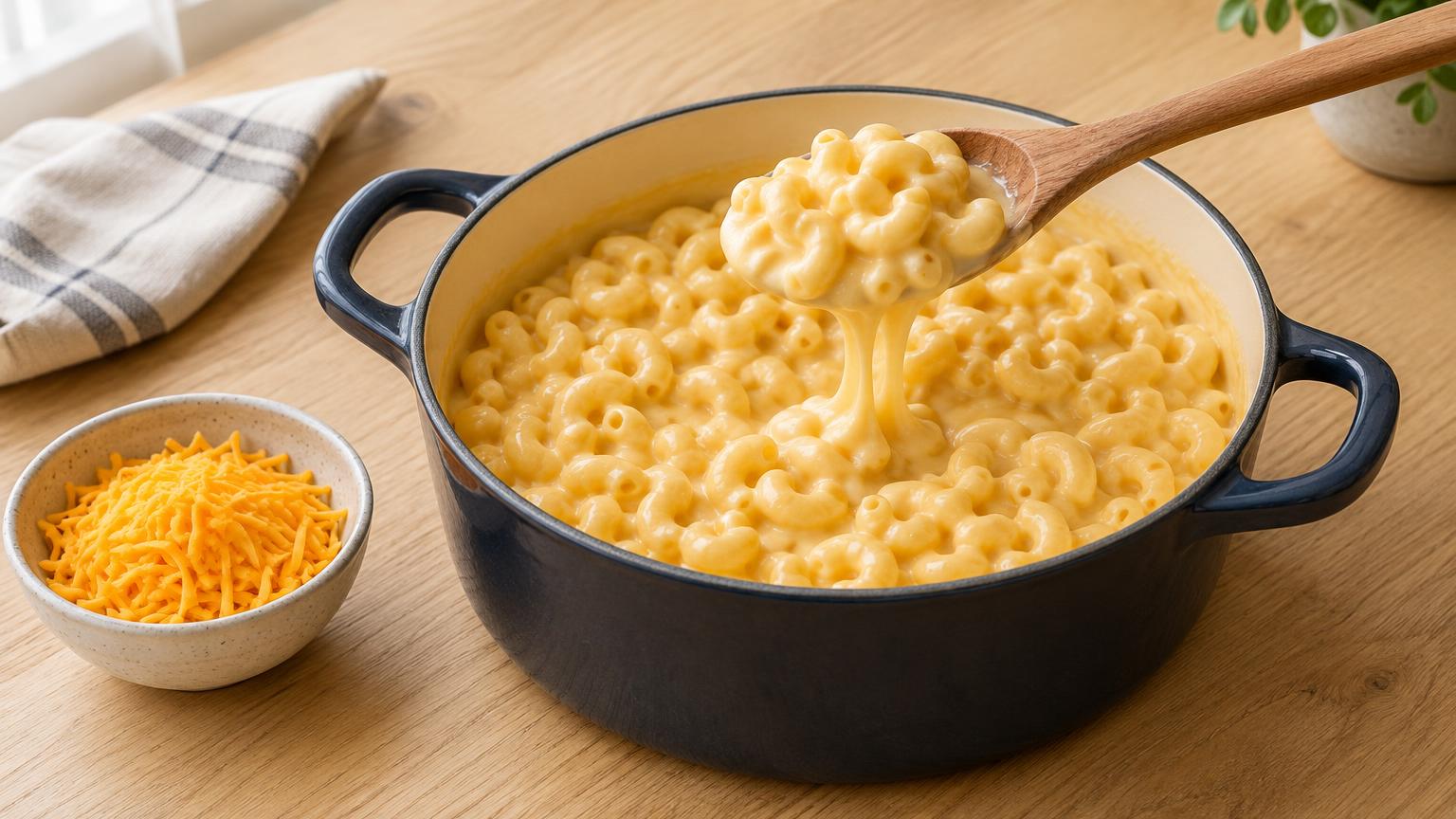
This stovetop mac and cheese takes about 25 minutes and one pot plus a saucepan, and the sauce comes out smooth and glossy every time. Two habits make the difference: grate the cheese yourself from a block, and stir it in after the pan comes off the heat. Skip either and you risk a sauce that is gritty or oily.
Serves: 4 as a main, 6 as a side · Prep: 10 minutes · Cook: 15 minutes · Total: about 25 minutes
Allergens: contains dairy (butter, milk, cheese) and gluten (pasta, flour). No eggs or nuts. Gluten-free swaps are below.
Ingredients
- 8 ounces (225 g) elbow macaroni
- 2 tablespoons (28 g) unsalted butter
- 2 tablespoons (16 g) all-purpose flour
- 2 cups (480 ml) whole milk, warmed
- ½ teaspoon (1 g) mustard powder, optional
- ½ teaspoon (3 g) fine salt
- ¼ teaspoon (0.5 g) ground black pepper
- 6 ounces (170 g) sharp cheddar, grated from a block (about 1½ cups)
- 2 ounces (55 g) Monterey Jack, grated from a block (about ½ cup)
Bagged shredded cheese is coated with starch or cellulose so the shreds do not stick together. That coating does not melt, and it can leave the sauce grainy and dull. A block grated on the large holes of a box grater melts much more smoothly. Sharp cheddar brings the flavour; Monterey Jack melts especially smoothly and softens the sauce. Gruyère or mild cheddar can stand in for the Jack.
Steps
- Boil the pasta. Bring a large pot of well-salted water to a boil and cook the macaroni for 1 minute less than the package says. It finishes softening in the sauce. Scoop out ½ cup (120 ml) of the cooking water, then drain.
- Make the roux. While the pasta cooks, melt the butter in a medium saucepan over medium heat. Whisk in the flour and cook, whisking, for 1 minute. It should bubble and smell a little nutty but not brown. Cooking the flour removes its raw taste, and this butter-and-flour paste is a white roux.
- Add the milk. Pour in the warm milk slowly, whisking the whole time, so the flour disperses without lumps. Warm milk blends in faster than cold. Whisk in the mustard powder, salt and pepper.
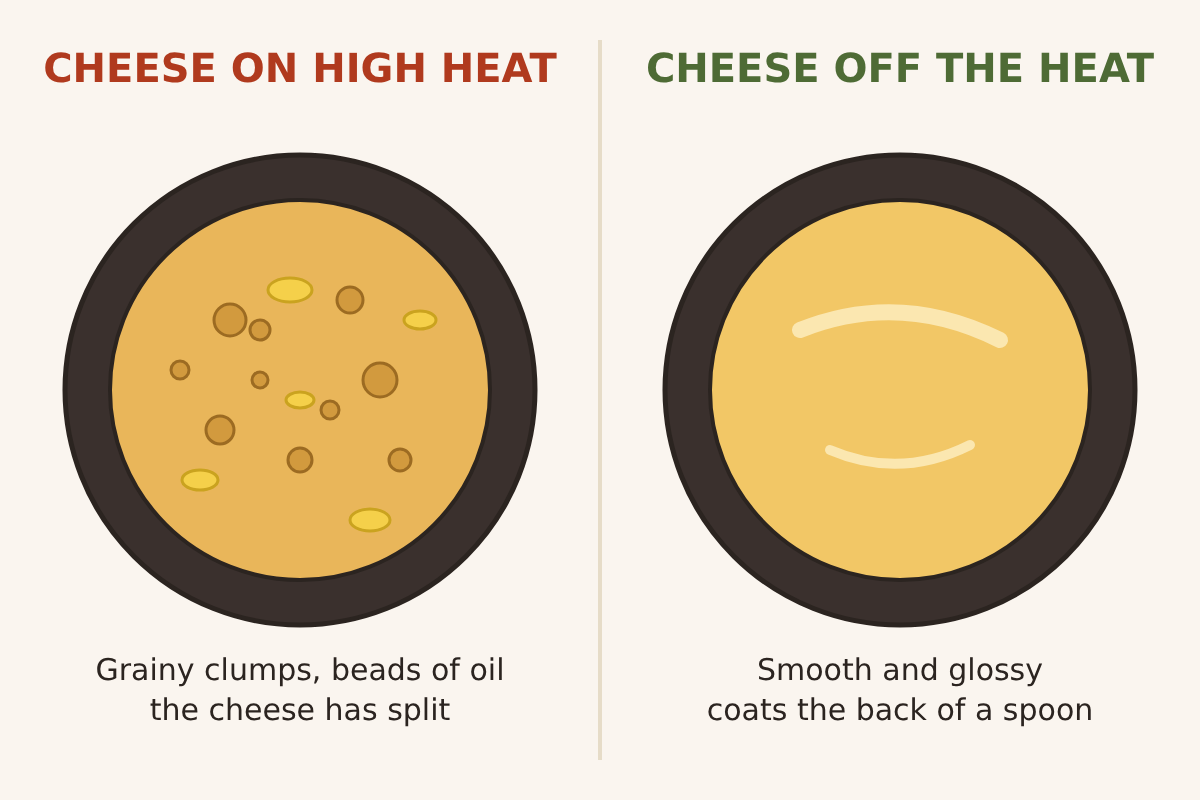
- Thicken. Keep whisking over medium heat until the sauce comes to a gentle simmer and coats the back of a spoon, about 4–5 minutes. The flour needs to reach a simmer to thicken fully.
- Take the pan off the heat. This is the step that keeps the sauce smooth. Move the saucepan to a cool burner and let it sit for a minute.
- Stir in the cheese. Add the cheese a handful at a time, stirring until each handful melts before adding the next. The hot sauce has plenty of heat to melt it.
- Combine. Tip the drained macaroni into the sauce and stir over low heat for a minute or two, just until hot. If it looks thick, loosen it with a splash of the pasta water. The starch in that water helps the sauce cling to the pasta. Taste and add salt if needed, then serve straight away.
Why cheese sauces split
Cheese is a mix of milk proteins, fat and water held together. Heat it gently and it melts into a smooth sauce. Heat it too hard and the proteins tighten and clump, pushing the fat out as little yellow beads. Aged cheeses like sharp cheddar have less moisture and split more easily than young ones, which is why this recipe pairs one with Monterey Jack. The flour in the roux also helps: its starch sits between the proteins and keeps them from clumping.
If your sauce does turn slightly grainy, take it off the heat and whisk in 2–3 tablespoons (30–45 ml) of warm milk hard for a minute. That can bring back a sauce that has only just started to split. One that has separated into clumps and a slick of oil will not fully recover, but it still tastes good.
Swaps and allergens
- Gluten-free: use gluten-free elbow pasta, and skip the roux. Instead, whisk 1 tablespoon (8 g) cornstarch into the milk while it is still cold, then heat it in the saucepan with the butter, whisking, until it simmers and thickens. Continue from step 5. Gluten-free pasta can turn soft quickly, so drain it on the firm side.
- Dairy-free: milk and cheese are the whole dish here, and we do not have a dairy-free version of this recipe to recommend.
- Mustard: the powder adds a gentle sharpness you will not taste as mustard. Leave it out if you need to avoid mustard.
Storage and reheating
Refrigerate leftovers within 2 hours in a covered container and eat them within 3–4 days. The sauce firms up as it cools because the pasta keeps soaking it up.
To reheat, put the mac and cheese in a saucepan with a splash of milk, about 2 tablespoons (30 ml) per cup of leftovers, and stir over low heat until hot all the way through, to 165°F (74°C). In the microwave, add the milk, cover, and heat in 1-minute bursts, stirring between each. Freezing is not recommended; the sauce tends to turn grainy once thawed.
What to serve with it
Mac and cheese is rich, so it pairs well with something sharp or crisp: a green salad with a vinegar dressing, roasted broccoli, or sliced tomatoes. As a side it sits next to crisp-skinned roast chicken on a Sunday, and on a cold night a spoonful of leftover beef and bean chili on top turns it into chili mac.
