
Buttermilk Substitutes That Work, and When to Use Each
Out of buttermilk? Milk with lemon juice or vinegar works in most recipes. Here are four substitutes with exact ratios, and which one to pick for pancakes, biscuits, cakes and marinades.
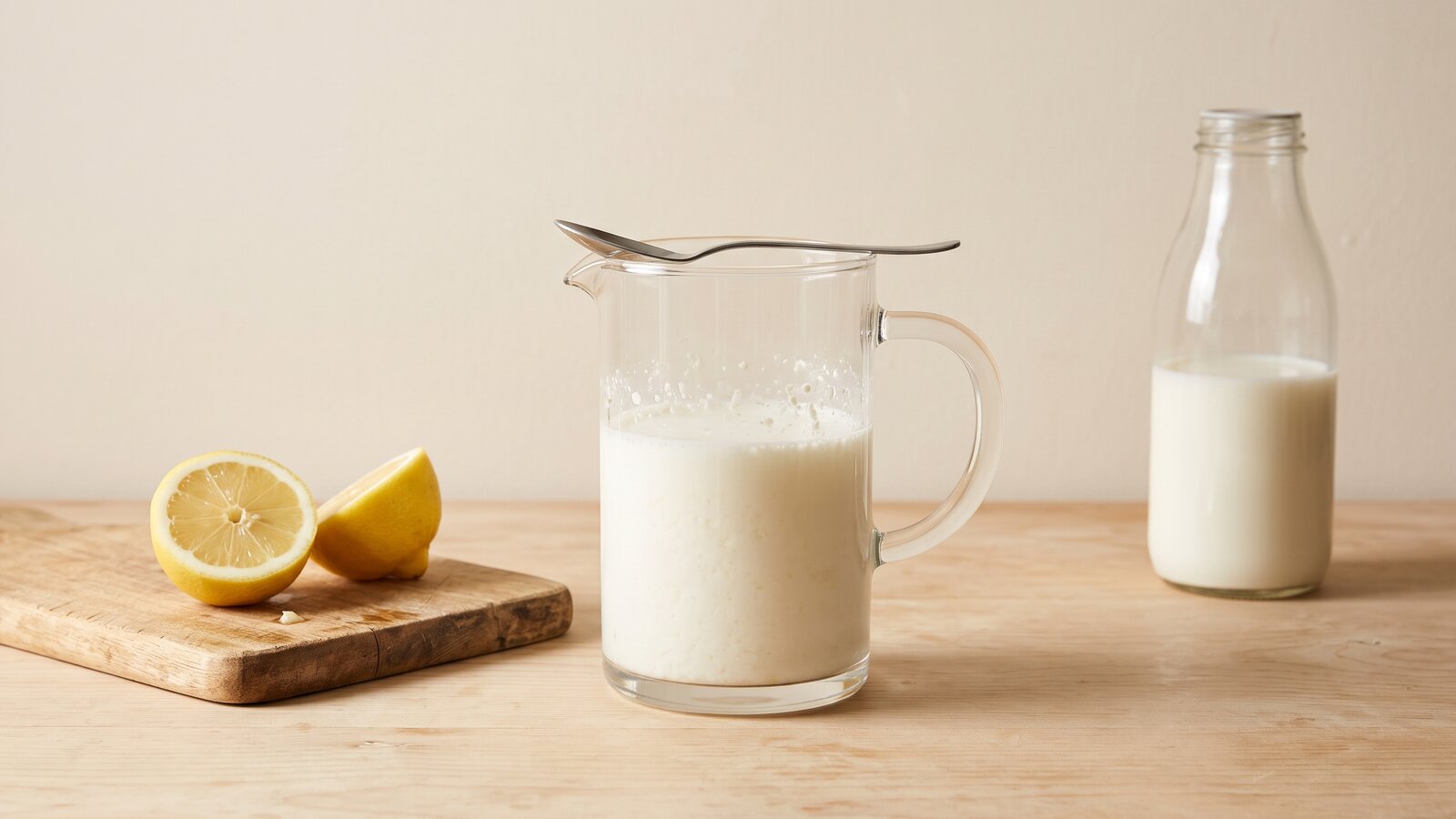
The quickest buttermilk substitute is milk with a little acid: put 1 tablespoon (15 ml) lemon juice or white vinegar in a measuring cup, add milk up to the 1-cup (240 ml) line, stir, and let it stand 5 to 10 minutes. It works in pancakes, waffles, biscuits, muffins and most cakes. Plain yogurt, sour cream or kefir work too, and in some recipes they work better.
All of these contain dairy. A dairy-free version is further down.
Why recipes ask for buttermilk
Buttermilk does three jobs in a recipe, and a good substitute has to cover the ones that matter for that dish.
First, it brings acid. Most recipes that use buttermilk also use baking soda. Soda is an alkali, and it only gives off the gas that lifts a batter when it meets an acid. Swap in plain milk and the soda has little to react with: the batter rises less and can taste faintly soapy or metallic from soda that never reacted.
It is also thicker than milk. Cultured buttermilk pours more like thin cream, and that body keeps pancake batter from spreading into thin discs and gives biscuit dough something to hold onto.
And it tastes tangy. In a plain cake or a ranch-style dressing, that sour note is part of the point.
Soured milk covers the first job fully and the other two partly. Yogurt and sour cream cover all three. That is the whole logic behind choosing between them.
Four substitutes, measured
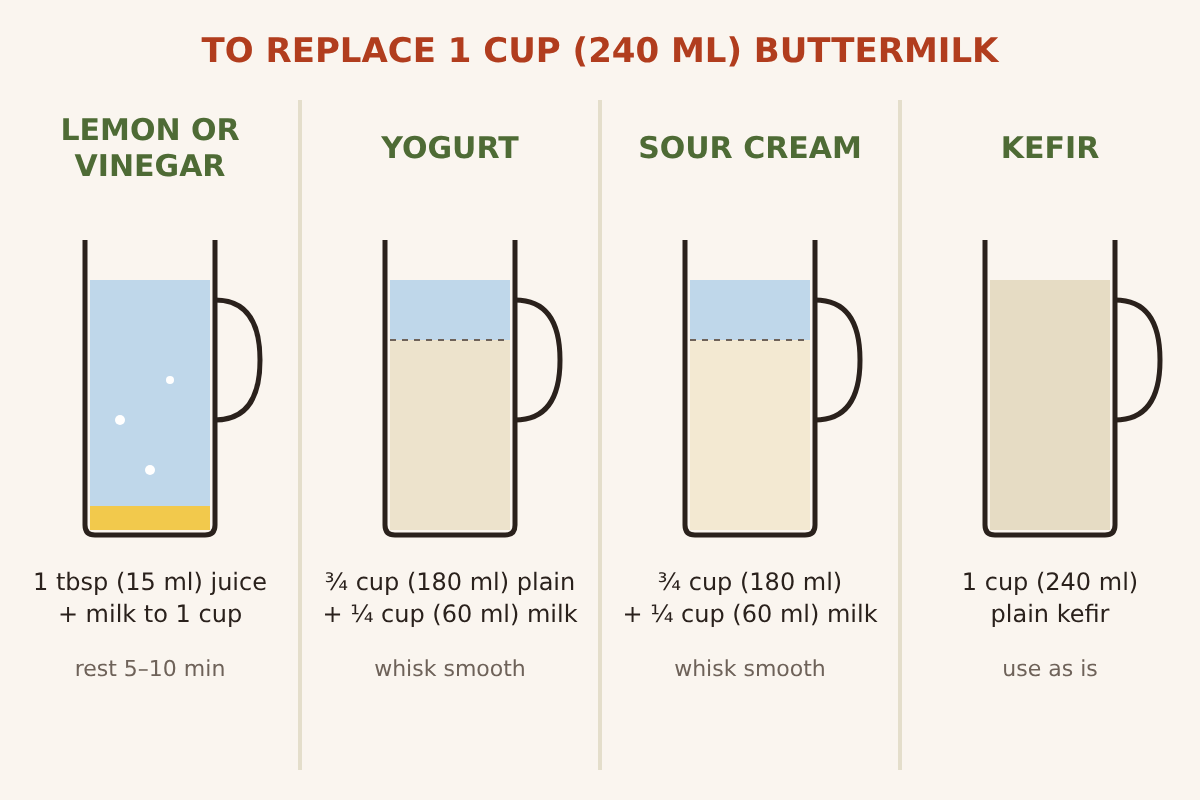
Every ratio below replaces 1 cup (240 ml) of buttermilk. Scale up or down in the same proportion.
Milk plus lemon juice or vinegar. 1 tablespoon (15 ml) lemon juice or white vinegar, then milk to 1 cup (240 ml). Stir once and leave it 5 to 10 minutes. It will thicken slightly and show small curds, which is what you want; stir them back in before using it. Whole milk gives the thickest result, but 2% works. Lemon juice adds a faint citrus note; white vinegar tastes of nothing once baked. Apple cider vinegar also works if that is what you have.
Plain yogurt thinned with milk. ¾ cup (180 ml) plain yogurt whisked with ¼ cup (60 ml) milk until smooth. Use unsweetened, unflavoured yogurt. Greek yogurt is thicker, so thin it with a little more milk until it pours like heavy cream.
Sour cream thinned with milk. ¾ cup (180 ml) sour cream whisked with ¼ cup (60 ml) milk. It is richer than buttermilk, so cakes come out a touch more tender and dense.
Kefir. Swap plain, unsweetened kefir cup for cup, 1 cup (240 ml) for 1 cup. It is already cultured and about as thick as buttermilk, so it needs no prep.
If you bake with buttermilk often, buttermilk powder keeps in the cupboard. Follow the ratio on the package, since brands differ: most have you mix the powder in with the dry ingredients and add water with the wet ones.
Which substitute to use for what
Pancakes and waffles. Soured milk is fine and the cheapest choice. The batter will be slightly thinner than with real buttermilk, so the pancakes spread a little more. Yogurt thinned with milk gives the closest match. Our fluffy buttermilk pancakes take either one in the same amount.
Biscuits and scones. Thickness matters here, because a runny dough is hard to shape and bakes flat. Yogurt or sour cream thinned with milk is the better pick. If you use soured milk, hold back a tablespoon or two and add it only if the dough is too dry to come together.
Cakes, muffins and quick breads. Any of the four works. Soured milk gives the lightest crumb, sour cream the richest.
Marinades for chicken. Thinned yogurt or kefir clings to the meat the way buttermilk does; soured milk runs off. The marinade is not a substitute for cooking the meat through: chicken is safe at 165°F (74°C) in the thickest part, whatever it was soaked in. Keep it in the fridge while it marinates and throw away the used marinade. When you just want crisp skin and no marinade at all, a simple roast chicken skips this step.
Dressings and dips. Use sour cream or yogurt thinned with milk. Soured milk tastes thin and sharp in a dressing, where nothing bakes the edge off it.
Mistakes that make a substitute fail
- Adding a full cup of milk to the acid. Then you have 1 cup plus 1 tablespoon, and a slightly wetter batter. Pour the milk to the 1-cup line instead.
- Skipping the rest. Five minutes gives the acid time to thicken the milk. Used right away, it is thinner and the batter spreads more.
- Using sweetened or vanilla yogurt. It adds sugar and flavour the recipe was not built for.
- Swapping plain milk with no acid. In a recipe built on baking soda, this is the one swap that reliably gives a flat, slightly soapy result.
Dairy-free buttermilk
Unsweetened soy milk soured the same way, 1 tablespoon (15 ml) lemon juice or vinegar topped up to 1 cup (240 ml), curdles and thickens the most of the plant milks, so it behaves closest to the real thing. Oat and almond milk take on the acid but stay thinner; expect a slightly flatter pancake. Soy milk contains soy and almond milk contains tree nuts, so choose for whoever you are cooking for.
Storing real buttermilk
Keep buttermilk in the fridge at 40°F (4°C) or below, and do not leave it out at room temperature for more than 2 hours. The USDA's FoodKeeper guidance gives opened buttermilk about 1 to 2 weeks in the fridge; go by the date on the carton and how it smells and looks. Buttermilk is supposed to be tangy, but mould, a strong off smell or a pink or orange tint means it goes in the bin.
Buttermilk also freezes for about 3 months. Freeze it in measured portions, 1 cup (240 ml) per bag or a few tablespoons per ice-cube slot, so you can thaw only what a recipe needs. Thaw it in the fridge. It separates and turns grainy after freezing, so shake or whisk it before using it, and use thawed buttermilk for baking and marinades rather than for drinking or dressings, where the texture shows.
Soured milk does not keep the way cultured buttermilk does. Make it when you need it and use it the same day.
