
How to Tell When Your Pan Is Hot Enough
The water-drop test, how oil looks when it is ready, how long each kind of pan needs to preheat, and the foods that do better starting in a cold pan.
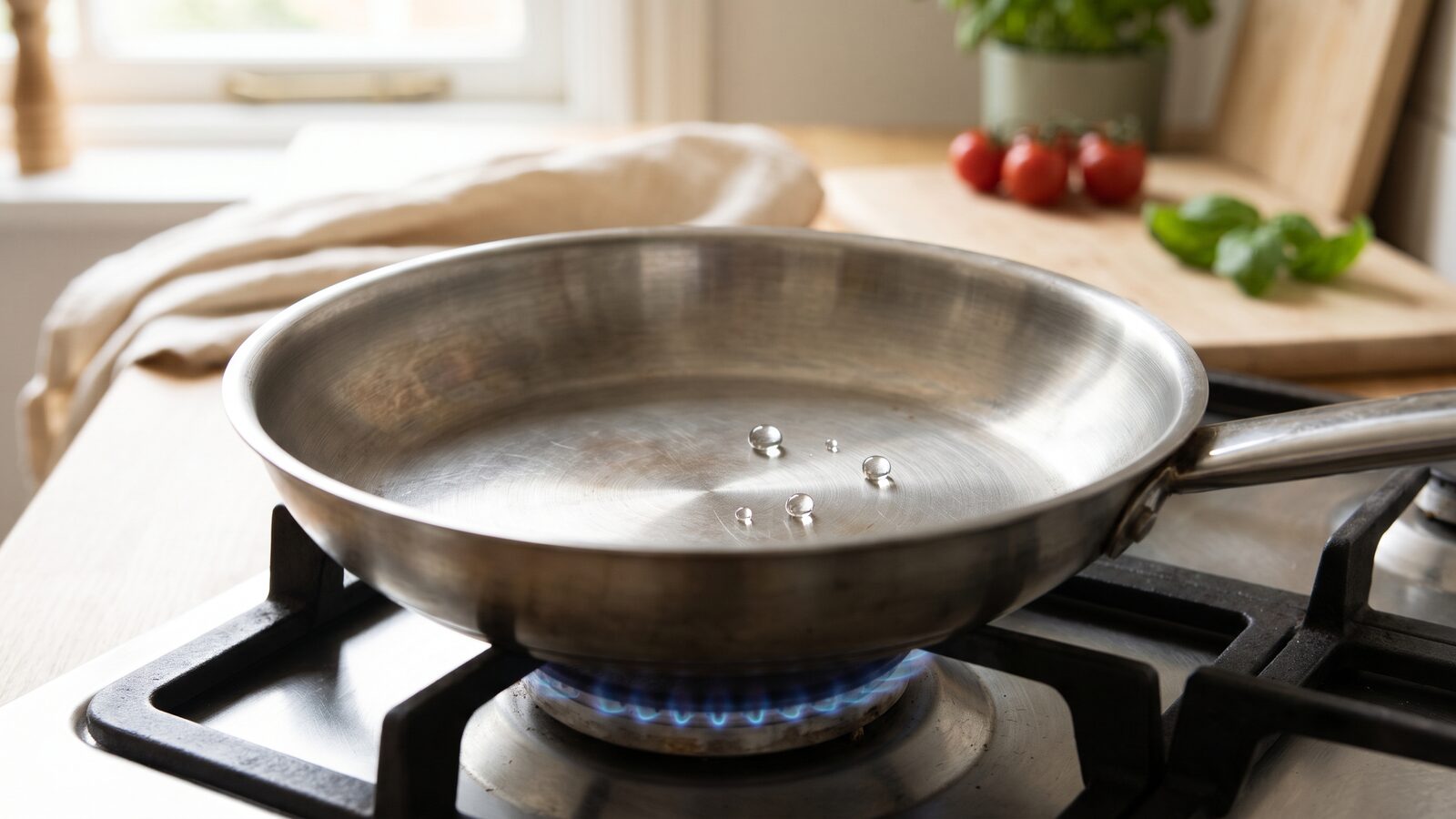
A pan is hot enough when a few drops of water sizzle and vanish within a second or two (medium heat, right for eggs and pancakes), or bead up and skate across the surface (high heat, ready for oil and a sear in stainless steel). Oil tells you too: it shimmers when it is ready and smokes when it has gone past. Most food that sticks, steams or cooks unevenly went into a pan that was not ready.
Why preheating matters
Food cooks by taking heat from the pan. When cold food lands in a cold pan, the two warm up together, slowly, and the food releases moisture before its surface is hot enough to brown. You get pale, steamed results and, with eggs, fish or potatoes, food that welds itself to the metal.
A properly preheated pan has heat stored in the metal. The surface of the food sets and browns quickly, and in stainless steel and cast iron that quick set is also what lets the food release cleanly instead of sticking. This is the first step of every good sear on meat, and the reason the first pancake of a batch is so often the worst.
How long to preheat
It depends on the pan more than the stove.
- Thin aluminium or thin stainless: 1–2 minutes over medium heat. Thin pans heat fast and develop hot spots, so keep the heat moderate.
- Heavy stainless steel (clad): 2–4 minutes over medium to medium-high heat.
- Cast iron and carbon steel: 5 minutes or more over medium heat. Iron heats slowly and unevenly, so give it time to even out rather than turning the burner to high. It holds heat very well once it gets there.
- Nonstick: add the oil or butter first and heat for about a minute over medium. Most nonstick makers advise against heating the pan empty or over high heat, because the coating breaks down at very high temperatures. Check the guidance for your pan.
Electric coil and induction hobs heat at different speeds, and induction can be very fast, so trust the tests below more than the clock.
The water-drop test
This is the quickest check for a dry stainless-steel, cast-iron or carbon-steel pan. Flick a few drops of water into the pan with your fingertips and watch what they do.
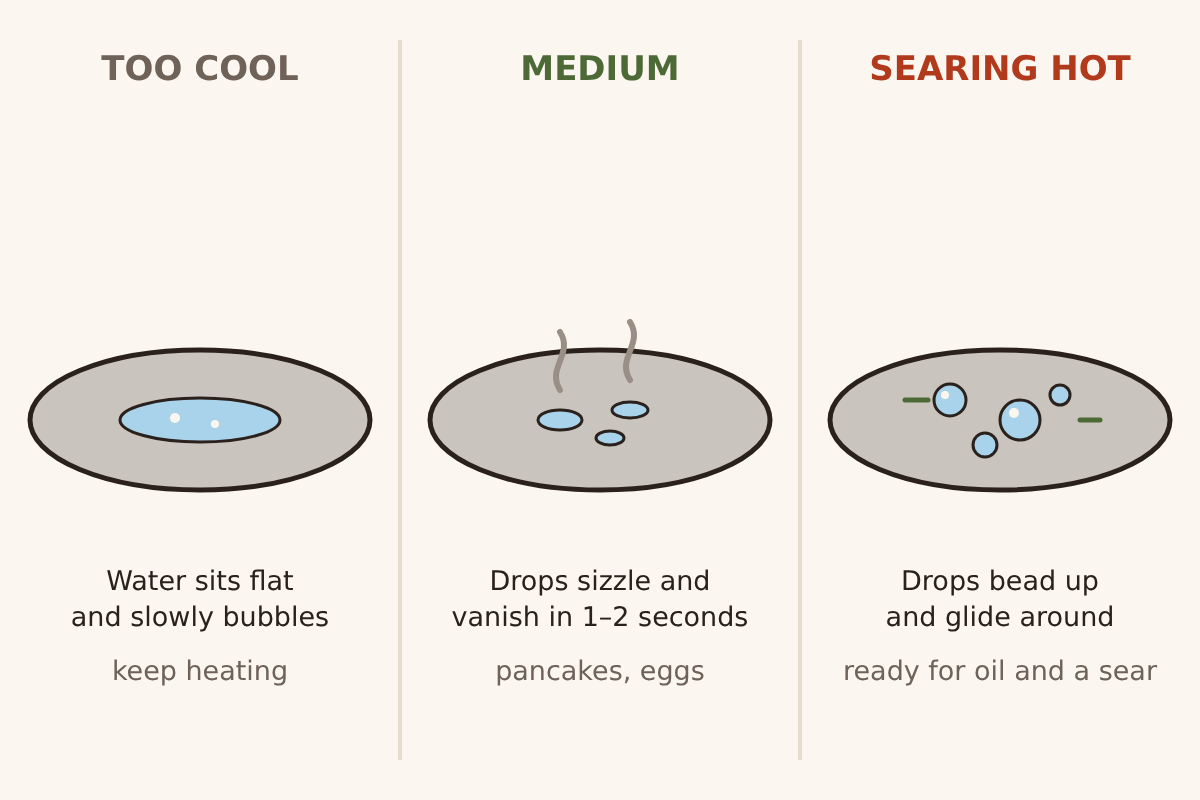
- The water sits and slowly bubbles: the pan is still too cool. Keep heating.
- The drops sizzle hard and evaporate within a second or two: medium heat. This is right for fluffy buttermilk pancakes, eggs and gentle sautéing.
- The drops pull into round beads that glide around the pan: the pan is well above the boiling point of water. A thin layer of steam forms under each drop and holds it off the metal, which is why it skates instead of boiling away. In a stainless-steel pan this is the moment to add oil for searing.
Dry the pan with a paper towel if a lot of water is left in it before you add oil; water and hot oil spatter.
Reading the oil
Once the oil goes in, it gives you a second signal.
- Cold oil is thick and pools. It moves slowly when you tilt the pan.
- Warm oil thins out and flows like water across the pan.
- Hot oil shimmers: the surface ripples, with faint lines like heat haze on a road. This is the cue for most sautéing and searing.
- Smoking oil has gone past the point you want for most cooking. A wisp of smoke just before the food goes in is fine for a hard sear on steak. Steady smoke means the oil is breaking down and will taste acrid. Take the pan off the heat for a minute, or wipe it out and start again.
For deep or shallow frying, where temperature matters to within a few degrees, use a thermometer instead of judging by eye.
When to start cold instead
Some foods do better in a cold pan, because you want them to cook slowly as the pan heats up.
- Bacon: starting cold lets the fat render out gradually, so the strips crisp evenly instead of burning at the edges while the fat stays chewy.
- Garlic in oil for infusing: sliced garlic burns within seconds in hot oil. Starting it in cool oil over low heat flavours the oil and keeps the garlic golden.
- Toasting whole nuts and seeds: a cold, dry pan over medium-low heat toasts them evenly. Stir often and take them out as soon as they smell toasty, because they go from golden to burnt quickly.
Common mistakes
- Cranking the heat to save time. High heat on a thin pan creates scorching hot spots in the centre while the edges stay cool. Medium heat for longer gives an even pan.
- Adding oil to a cold pan and then heating it a long time. The oil reaches its smoke point before the pan is evenly hot, especially in cast iron. Heat the pan first, then add oil and give it 15–30 seconds.
- Adding all the food at once. Even a hot pan cools sharply under a big load of cold food. Cook in batches, and let the pan recover for a minute between them.
- Using a pan bigger than the burner. The edges never get as hot as the centre. Match the pan to the burner, or keep the food over the middle.
Safety
Never leave a preheating pan unattended, especially an empty one or one with oil in it. Keep a lid that fits close by. If oil catches fire, turn off the heat and cover the pan with the lid; never use water on an oil fire. Turn pan handles inward so they cannot be knocked off the stove.
Once you can read the pan, much of cooking gets easier. The same checks decide whether a ground beef chili starts with properly browned meat or grey, steamed beef.
