
Nonstick, Stainless or Cast Iron: Which Skillet for Which Job
Eggs go in nonstick, a pan sauce starts in stainless, and a thick steak wants cast iron. Here is how each skillet is built, what it does best, and how to look after it.
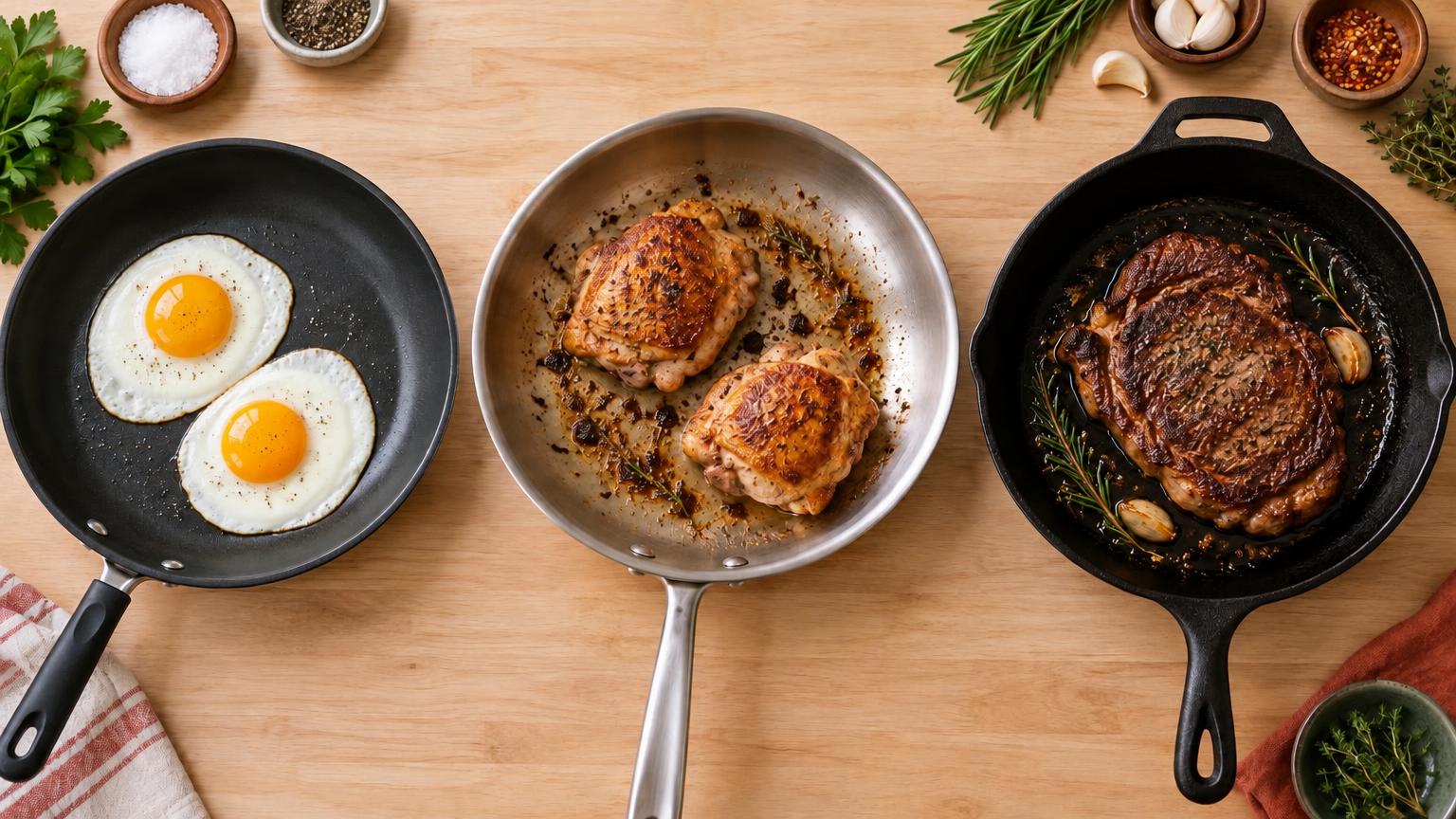
Use a nonstick skillet for eggs, pancakes and delicate fish, a stainless-steel skillet for searing and pan sauces, and a cast-iron skillet for steak, shallow frying and anything that goes from the stove into the oven. If you can only own two, make them a 10- or 12-inch (25 or 30 cm) stainless or cast-iron pan for everyday cooking and a small nonstick pan for eggs.
That split comes from how each pan is built. Once you know what is going on in the metal, you can pick the right pan for a dish you have never cooked before.
What each skillet is made of
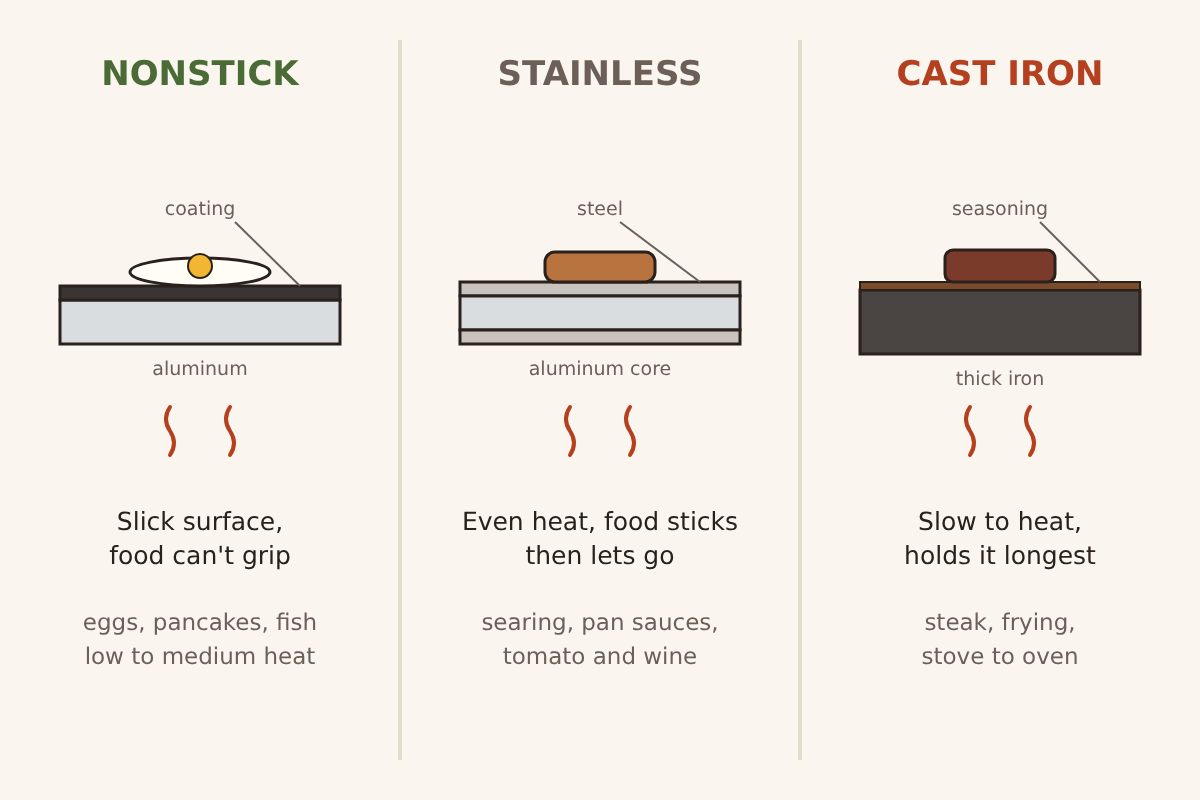
Nonstick pans are usually aluminum with a slick coating on the cooking surface, either PTFE (the classic nonstick coating) or a ceramic-type coating. Aluminum heats quickly and evenly. The coating gives food almost nothing to hold on to, so an egg slides out with a teaspoon of butter.
Stainless-steel skillets worth cooking in are clad: a layer of aluminum (sometimes copper) sandwiched between layers of steel. Steel on its own spreads heat poorly, so a thin, single-layer steel pan gets hot spots right over the burner. The core fixes that, and the steel gives you a tough surface that does not react with acidic food.
Cast iron is one thick piece of iron. It takes a long time to heat and heats unevenly at first, but once it is hot it holds on to that heat better than the other two. Its surface is seasoning, a layer of oil baked hard onto the iron, which keeps it from rusting and helps food release.
Nonstick: for food that sticks to everything else
Eggs, pancakes, crêpes, thin fish fillets and anything cooked in very little fat belong here. These foods are full of protein that bonds to bare metal before it sets. On a coated surface it has nothing to bond to.
The trade-off is heat. Most nonstick makers tell you to cook on low to medium heat, never to heat the pan empty, and to keep it off the highest burner setting, because the coating breaks down at very high temperatures. That rules nonstick out for a hard sear. You also won't get much fond, the browned bits that stick to the pan and give a pan sauce its flavour, because the coating is designed to stop exactly that.
Looking after it is mostly about protecting the coating:
- Use wooden, silicone or nylon utensils, not metal.
- Wash by hand with a soft sponge, even if the box says dishwasher-safe; harsh detergent wears the coating faster.
- Skip aerosol cooking sprays. Many makers warn that they leave a sticky film that builds up and makes food stick.
- Let the pan cool before it goes in water, so the hot metal is not shocked.
- Check the oven limit in the maker's instructions before you put it in the oven; it is often lower than for stainless or cast iron.
A nonstick pan wears out. When the coating is scratched through, flaking or food starts sticking even with fat, replace it.
Stainless steel: for searing and pan sauces
A good stainless pan is the most versatile of the three. It handles high heat, it can go in the oven and under the broiler, metal utensils won't hurt it, and it is safe with tomato, wine, vinegar and lemon for as long as you like.
Food does stick to it, and that is part of how it works. Meat or fish laid in a properly hot pan grips the steel for the first minute or two, then lets go once a crust has formed. Try to move it early and it tears. Wait, and it releases on its own. The key is heat: get the pan hot enough that a drop of water beads up and skates around before you add the oil.
What sticks and browns on the pan floor is fond. Pour in a splash of stock, wine or water while the pan is hot, scrape, and you have the start of a sauce. That is the main reason to sear meat in stainless rather than nonstick.
Care is simple. Stainless goes in the dishwasher if the maker allows it, though hand-washing keeps it looking better. Soak stuck-on food in hot water, then scrub. Rainbow-coloured stains from high heat are harmless and come off with a little white vinegar. White spots from hard water come off the same way.
Cast iron: for steady, high heat
Cast iron is the pan for a thick steak, smash burgers, shallow-fried chicken, cornbread, or a dish you start on the stove and finish in the oven. Because it holds so much heat, it stays hot when cold food goes in, so the crust keeps forming instead of the meat steaming.
The weight is the price: a 12-inch (30 cm) cast-iron skillet is heavy to lift with one hand, and the handle gets as hot as the pan. Heat it slowly, for 5 minutes or so over medium, so the whole base warms instead of one hot ring over the burner.
The seasoning makes it fairly slick once it is built up, though not as slick as nonstick. Two things wear it down: water left sitting on the iron, and long-simmered acidic food such as tomato sauce, which can also pick up a metallic taste. A quick deglaze with wine is fine. An hour of simmering marinara is a job for stainless or an enamelled pot. If your pan looks dull, patchy or sticky, season it again in the oven.
Never put bare cast iron in the dishwasher. Wash it, dry it on low heat, and wipe in a few drops of oil while it is warm.
Carbon steel sits between stainless and cast iron. It needs seasoning like cast iron, but it is thinner and lighter, so it heats faster. If cast iron is too heavy for you, it is the closest substitute.
Which skillet for which job
| Job | Best pan | Why |
|---|---|---|
| Fried or scrambled eggs, omelettes | Nonstick | Egg proteins bond to bare metal |
| Pancakes and crêpes | Nonstick or well-seasoned cast iron | Even, moderate heat and easy release |
| Delicate fish fillets | Nonstick | Thin flesh tears if it sticks |
| Steak, chops, burgers | Cast iron or stainless | High heat for a deep crust |
| Chicken breasts or thighs with a pan sauce | Stainless | Fond builds the sauce |
| Tomato sauce, wine braises | Stainless | Will not react with acid |
| Cornbread, stove-to-oven dishes | Cast iron | Holds heat, oven-safe |
| Shallow frying | Cast iron | Oil temperature stays steady |
For fluffy pancakes, either nonstick or a well-seasoned cast-iron pan works; nonstick is the more forgiving of the two.
If you cook on induction
An induction hob only heats pans that a magnet sticks to. Cast iron and carbon steel always work. Many clad stainless pans work because their outer layer is magnetic steel, but not all. Plain aluminum nonstick pans only work if they have a steel plate built into the base. Hold a fridge magnet to the bottom of the pan: if it sticks firmly, the pan will heat.
Common mistakes
- Searing in nonstick. It cannot safely take the heat a good crust needs, so meat goes grey. Use stainless or cast iron.
- Moving food in stainless too soon. If it is stuck, it is not ready. Give it another minute.
- Starting stainless too cold. Food added before the pan is hot welds itself on. Preheat first, then add the oil, then the food.
- Rushing cast iron. High heat straight away makes a hot ring in the middle and cool edges. Start on medium and give it time.
- Using metal tools on nonstick. Every scratch shortens the coating's life.
