
How to Season a Cast-Iron Skillet So It Stays Smooth
Seasoning cast iron takes oil, heat and one step most people skip: wiping the oil off. Here is the oven method, everyday care, and how to fix sticky, rusty or flaking pans.
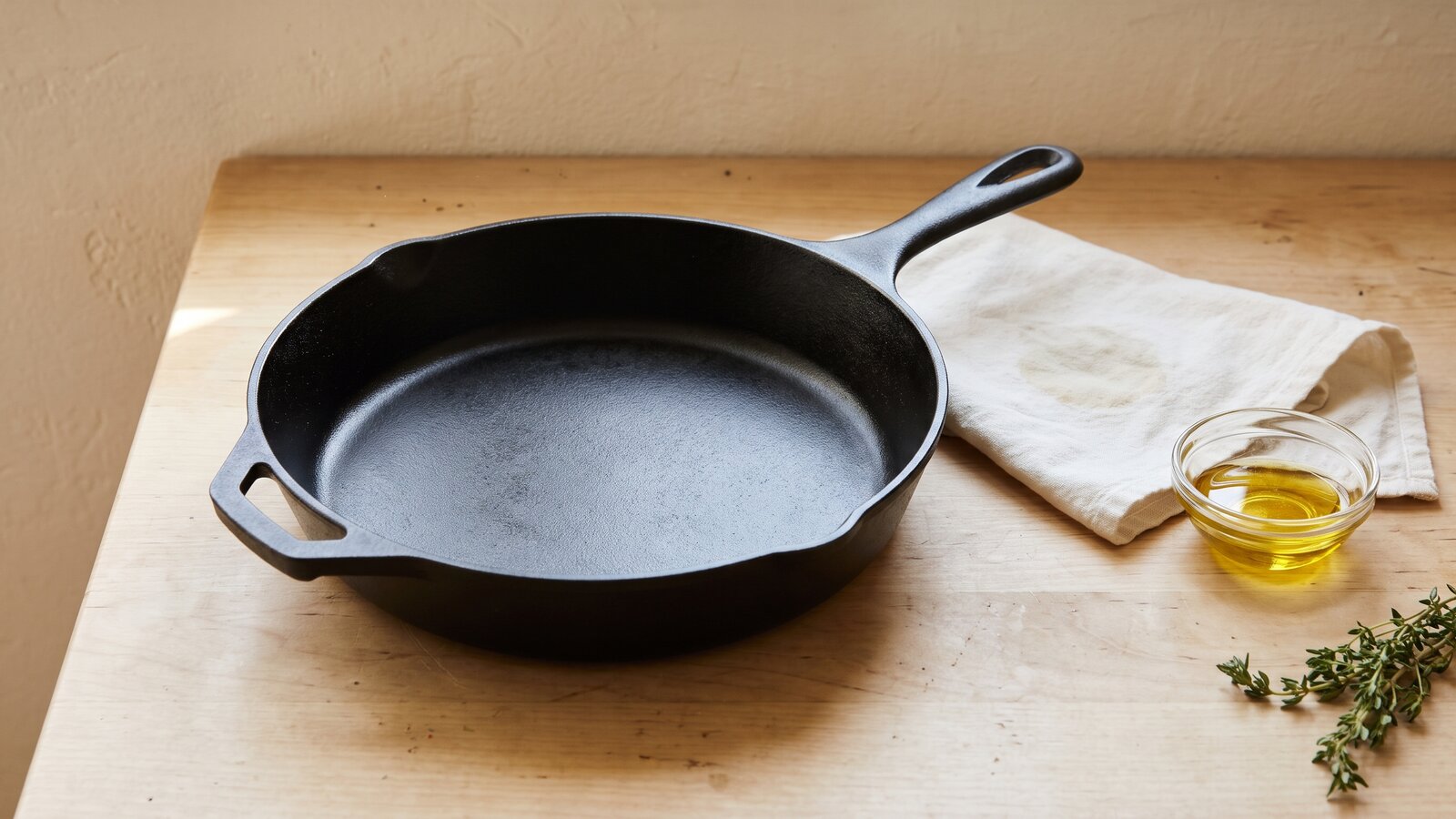
To season a cast-iron skillet, wash and dry it completely, rub a very thin layer of neutral cooking oil over every surface, wipe off as much of that oil as you can, and bake the pan upside down at about 450°F (230°C) for an hour. Let it cool in the oven. One round refreshes a pan; three or four rounds rebuild a pan you have scrubbed back to bare metal.
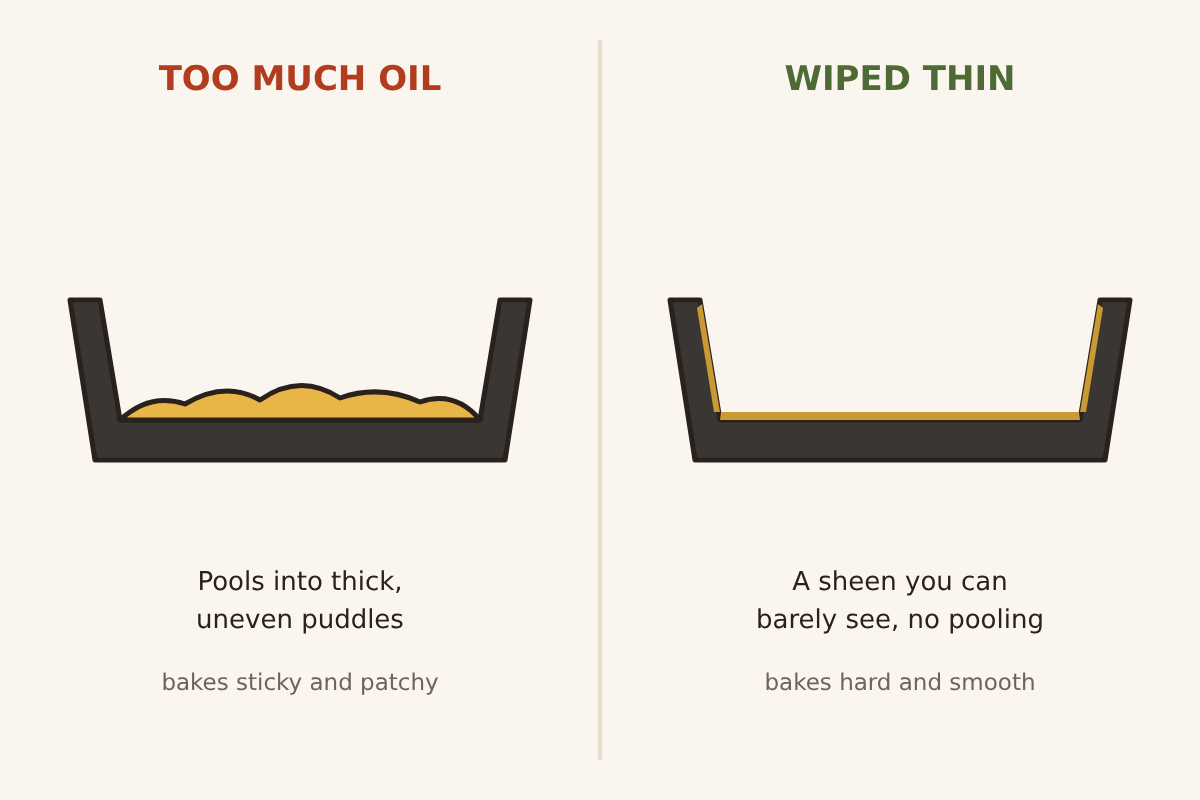
The step people get wrong is the wiping. Almost every sticky, blotchy cast-iron pan got that way from too much oil, not too little.
What seasoning is
Seasoning is not a coating you buy or a flavour the pan picks up. It is cooking oil that has been heated past its smoke point until it turns from a liquid into a hard, dry, slightly glossy layer bonded to the iron. That layer does two things. It fills the tiny pits in the cast surface, so food has less to grip, and it keeps water and air off the bare metal, which would otherwise rust within hours.
Each round of oil and heat adds a very thin film. A good surface is many thin films stacked up, which is why a pan that gets used for searing and frying several times a week keeps improving on its own.
What you need
- A cast-iron skillet, or any bare cast-iron pan (enamelled cast iron does not need seasoning)
- Hot soapy water and a stiff brush or scrubber
- A neutral cooking oil or solid vegetable shortening: vegetable, canola, sunflower or a similar oil works
- Lint-free cloths or paper towels
- A sheet of foil or a baking sheet to catch drips
- An oven mitt, because every part of the pan, handle included, gets as hot as the oven
How to season cast iron in the oven
- Heat the oven. Set it to 450°F (230°C) with one rack in the upper-middle position. Put the foil or baking sheet on the rack below.
- Clean the pan. Wash it in hot soapy water and scrub off any food or rust. Seasoning bonds to clean iron; it will not stick well over grease or loose rust.
- Dry it with heat. Towel it off, then set it over low heat on the stove for a few minutes until every bit of moisture has gone. Cast iron holds water in its pores, and water trapped under oil makes the new layer patchy.
- Oil every surface. Let the pan cool until you can handle it with a cloth. Add about a teaspoon (5 ml) of oil and rub it over the inside, the outside, the rim and the handle.
- Wipe it off. Take a clean cloth and wipe the pan as if you made a mistake and want all the oil gone. You won't get it all. What stays behind is the right amount: the pan should look barely damp, with no shine pooling anywhere.
- Bake upside down. Put the pan face down on the upper rack so any extra oil runs off instead of collecting in the bottom. Bake for 1 hour.
- Cool in the oven. Turn the oven off and leave the pan inside until it is cool enough to touch. Expect some smoke during the hour; open a window or run the range hood.
For a stripped or newly restored pan, repeat steps 4 to 7 three or four times. For a pan that only looks dry or a little dull, one round is enough.
Seasoning a new pan
Most cast iron sold today comes pre-seasoned, which means it has already had at least one baked coat. You can cook in it right away. The surface often looks slightly matte or rough at first and gets smoother with use. If you want a head start, give it one or two oven rounds before the first cook.
Everyday care that keeps the seasoning
Cleaning cast iron is less fussy than its reputation. A small amount of dish soap is fine on a well-seasoned pan: the cured layer is no longer oil, so a quick wash will not strip it. What does damage it is water left sitting on the iron.
After cooking, while the pan is still warm, rinse it under hot water and scrub with a brush. For stuck-on bits, scrub with a spoonful of coarse salt and a little oil, or simmer some water in the pan for a minute to loosen them. Dry it with a towel straight away, then put it back on low heat for a minute or two. While it is warm, rub in a few drops of oil and wipe it until it looks almost dry.
A few things to avoid:
- Soaking the pan in the sink, or leaving it wet on the drying rack
- The dishwasher, which strips seasoning and leaves the pan rusty
- Storing food in it, especially anything acidic, overnight
Long-simmered acidic dishes, such as tomato sauce or a wine braise, can wear down thin seasoning and give the food a metallic taste. A quick pan sauce made by deglazing with wine or lemon juice is fine on a well-seasoned pan. For a sauce that cooks for an hour, use a stainless or enamelled pot.
Cooking with fat is the best upkeep. Searing, shallow frying and roasting all lay down new layers. Our guide to searing meat for a deep brown crust is a good first job for a freshly seasoned skillet. Cast iron heats slowly and unevenly, so give it 5 to 10 minutes over medium heat before you add food; the water-drop test for a hot pan tells you when it is ready.
Fixing common problems
Sticky or tacky surface. There was too much oil, or it did not bake long enough. Put the pan back in a 450°F (230°C) oven for another hour, upside down. If it is still tacky, scrub the sticky spots with hot soapy water and a stiff brush, dry, and season again with a thinner coat.
Rust spots. Scrub the rust off with steel wool or a stiff scrubber until you see grey metal, wash the pan, dry it on the stove, and do one or two oven rounds. Light surface rust is common after a pan has been left wet and does not mean the pan is ruined.
Black flakes in food. These are pieces of seasoning, usually from a thick layer that did not cure fully or from carbonised food left on the surface. Scrub the loose areas until nothing more comes off, then season again with thin coats.
Food sticks even though the pan looks seasoned. The pan is usually not hot enough, or the food went in too wet. Preheat longer, pat food dry, and use a thin film of fat. Eggs and fish stick more than anything else until the seasoning has built up over many cooks.
