
Make-Ahead Mashed Potatoes That Reheat Creamy
Creamy mashed potatoes you make up to two days before a holiday dinner and reheat in the oven. Why a masher beats a food processor, how to reheat them to 165°F, and dairy-free swaps.
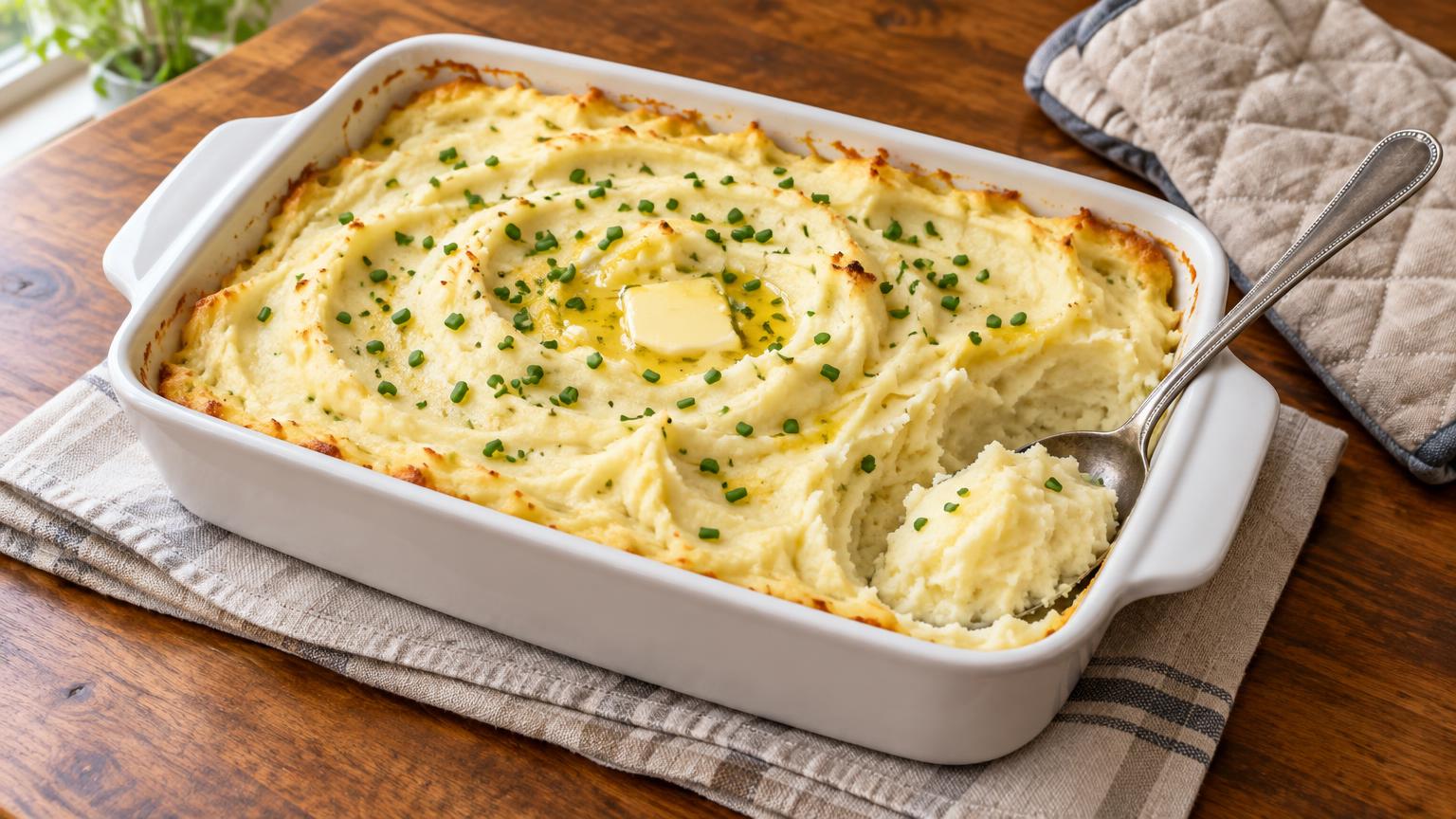
Make these mashed potatoes up to two days ahead, refrigerate them in the baking dish, and reheat them in the oven while the turkey rests. A little cream cheese and a generous amount of butter keep the mash soft after a night in the fridge, so it comes back creamy instead of stiff.
Serves: 8 to 10 as a side Prep: 20 minutes | Cook: 25 minutes | Reheat: 35 to 50 minutes Allergens: dairy (milk, cream, butter, cream cheese). No gluten, egg, nut, soy or shellfish ingredients; swaps below.
Ingredients
- 4 lb (1.8 kg) Yukon Gold potatoes
- 1 tablespoon (about 15 g) salt, for the cooking water
- 1 cup (240 ml) whole milk
- 1/2 cup (120 ml) heavy cream
- 6 tablespoons (85 g) unsalted butter, cut into pieces, plus 2 tablespoons (28 g) for reheating
- 4 oz (113 g) cream cheese, softened
- 1 1/2 teaspoons (about 9 g) fine salt, plus more to taste
- 1/2 teaspoon (1 g) ground black pepper
- 2 tablespoons (6 g) finely chopped fresh chives, for serving
Yukon Golds give a dense, buttery mash that holds up well to reheating. Russets make a lighter, fluffier mash but dry out a little more in the fridge. Our guide to which potato to use for mash, roasting and salad explains the difference.
Instructions
- Cut and start cold. Peel the potatoes and cut them into even 2-inch (5 cm) chunks. Put them in a large pot, cover with cold water by about 1 inch (2.5 cm) and add the tablespoon of salt. Starting in cold water lets the outside and the center cook at the same pace; potatoes dropped into boiling water turn mushy outside before the middle is done.
- Simmer until tender. Bring to a boil, then lower the heat to a steady simmer. Cook 15 to 20 minutes, until a knife slides into the largest piece with no resistance.
- Warm the dairy. While the potatoes cook, warm the milk, cream and 6 tablespoons (85 g) of butter in a small saucepan over low heat until the butter melts. Keep it warm. Cold milk cools the potatoes and makes them harder to mash smooth.
- Drain and steam dry. Drain the potatoes well, then return them to the hot, empty pot over low heat for 1 to 2 minutes, shaking the pot now and then, until the surfaces look dry and chalky. Extra water makes a thin, watery mash.
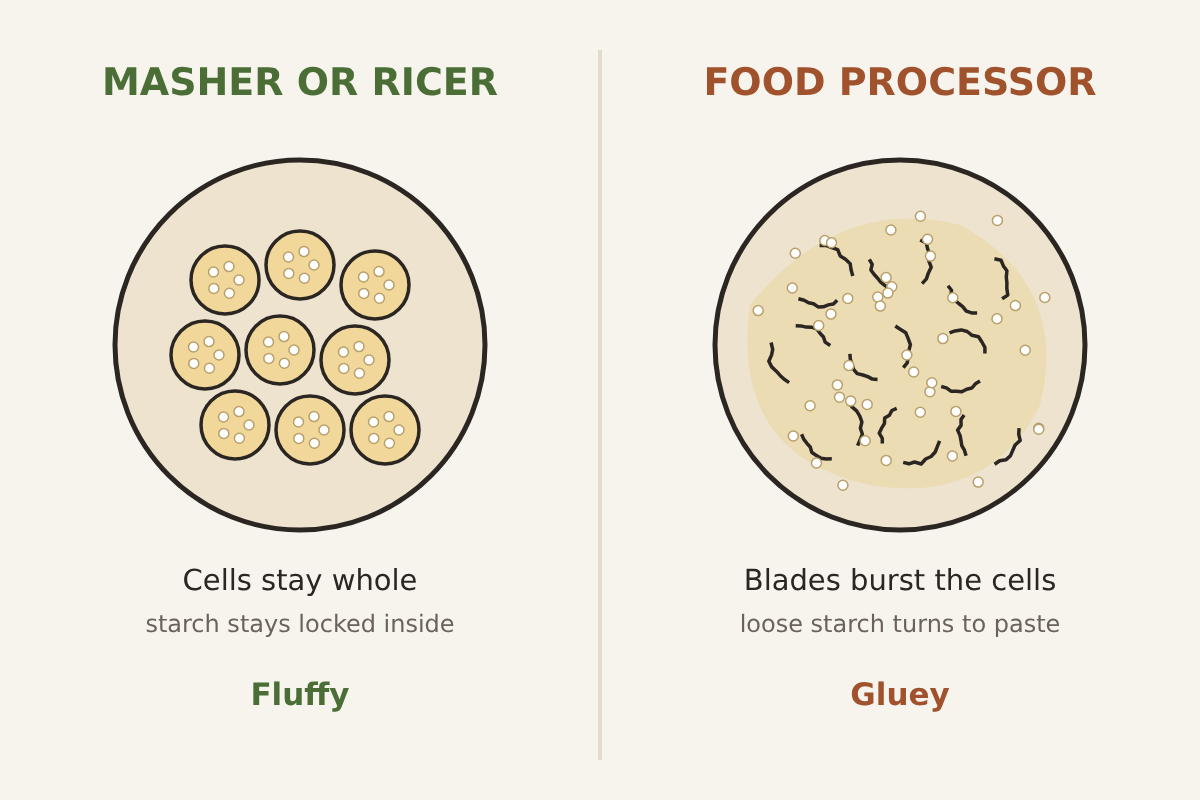
- Mash by hand. Mash with a potato masher, or press through a ricer, until smooth. Do not use a food processor or blender.
- Mix in the dairy. Add the cream cheese and stir until it disappears. Pour in the warm milk mixture a little at a time, folding with a spatula until the mash is creamy and slightly looser than you would serve it; it firms up in the fridge. Season with the fine salt and pepper, taste and adjust.
- Pack and chill. Spread the mash in a buttered 9 x 13-inch (23 x 33 cm) baking dish or a 3-quart (2.8-liter) casserole and smooth the top. Let it cool, then cover tightly and refrigerate within 2 hours of cooking. Keep it up to 2 days before reheating.
Reheating on the day
- Take the dish out of the fridge while the oven heats to 350°F (175°C).
- Cover with foil and bake 30 minutes.
- Uncover, dot the top with the remaining 2 tablespoons (28 g) of butter and bake another 10 to 20 minutes, until the edges turn lightly golden and the center reads 165°F (74°C) on an instant-read thermometer. That is the USDA's reheating temperature for leftovers, and the center of a deep dish is the last place to get there. If you need a refresher, see how to use a meat thermometer; the same probe works here.
- Stir once, scatter the chives over the top and serve.
Reheating times depend on the dish: a shallow metal pan heats faster than a deep ceramic one, so go by the thermometer, not the clock.
If the oven is full of turkey, reheat the mash on the stove instead. Put it in a heavy pot with a splash of milk over low heat, stirring often, until it reaches 165°F (74°C). To keep it warm for serving, move it to a slow cooker on the warm setting, stir now and then, and check that it stays at 140°F (60°C) or above.
For the rest of the meal, our Thanksgiving cooking timeline shows where this fits, and the make-ahead turkey gravy reheats alongside it.
Swaps
- Dairy-free: use a plain, unsweetened plant milk in place of the milk and cream, dairy-free butter or olive oil in place of the butter, and a dairy-free cream cheese or simply leave it out. The mash will be a little less rich and may need an extra splash of liquid when you reheat it.
- No cream cheese: add 2 extra tablespoons (28 g) of butter and 1/4 cup (60 ml) extra cream instead.
- Garlic mash: simmer 4 peeled garlic cloves with the potatoes and mash them in.
- Smaller batch: halve everything and use an 8-inch (20 cm) square dish; reheating takes a little less time.
Storage
- Fridge: cooled and covered within 2 hours, the mash keeps 3 to 4 days, the USDA guideline for cooked leftovers. Since you make it up to 2 days ahead, eat leftovers from the reheated dish within a day or two.
- Freezer: freeze in a covered container for up to about 1 month for best texture. Thaw overnight in the fridge, then reheat as above with a splash of milk; frozen mash can turn slightly grainy, and stirring in the milk helps.
- Reheating leftovers: microwave single portions covered, stirring halfway, or warm them in a pot over low heat with a little milk, until hot all the way through (165°F / 74°C).
Food safety guidance: USDA Food Safety and Inspection Service, Leftovers and Food Safety.
