
Russet, Yukon Gold or Red: Which Potato for Mash, Roasting and Salad
Starchy russets go fluffy, waxy reds hold their shape and Yukon Golds sit in between. Which potato to buy for mash, roasting, salad, soup and fries, and how to choose and store them.
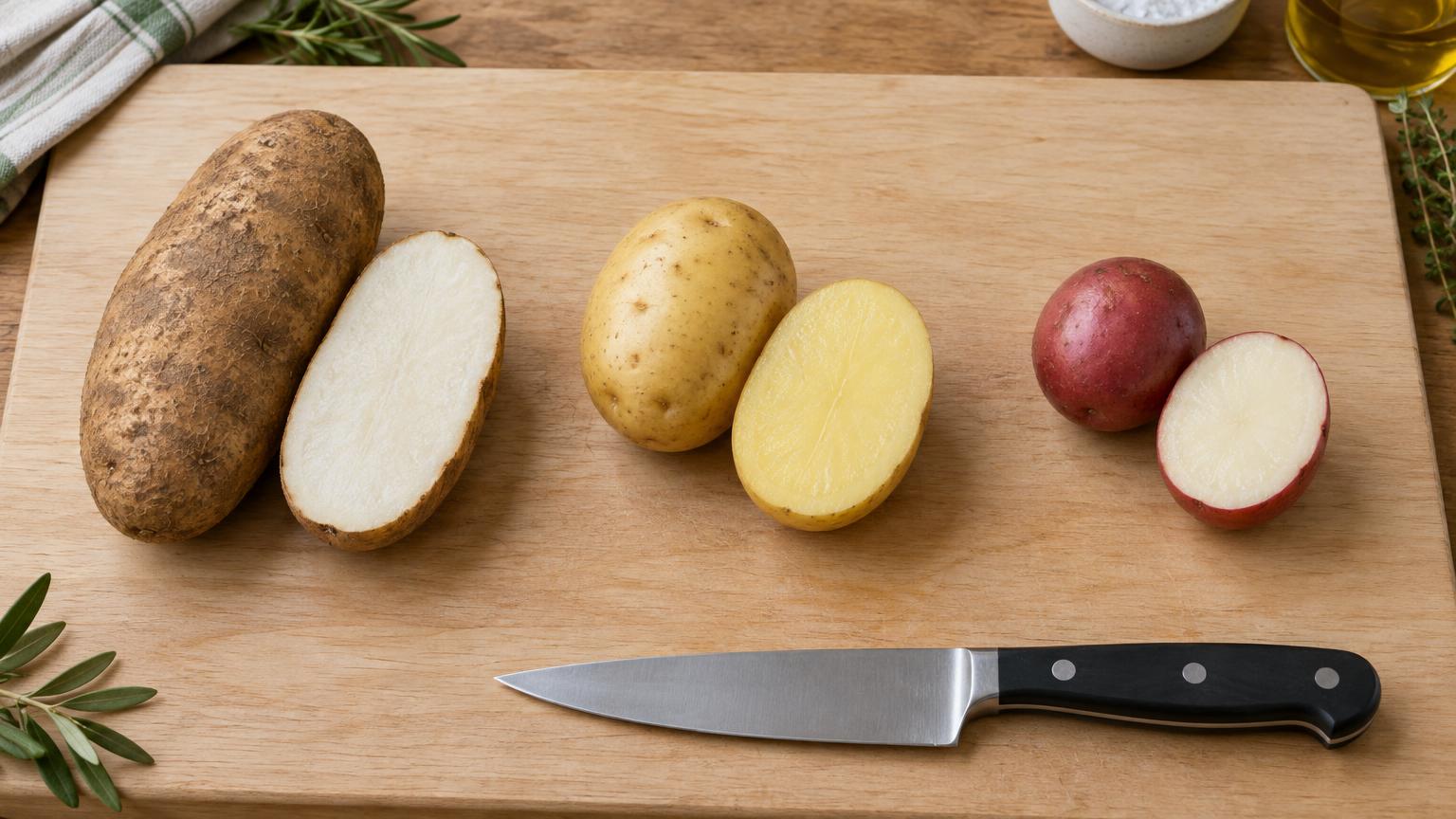
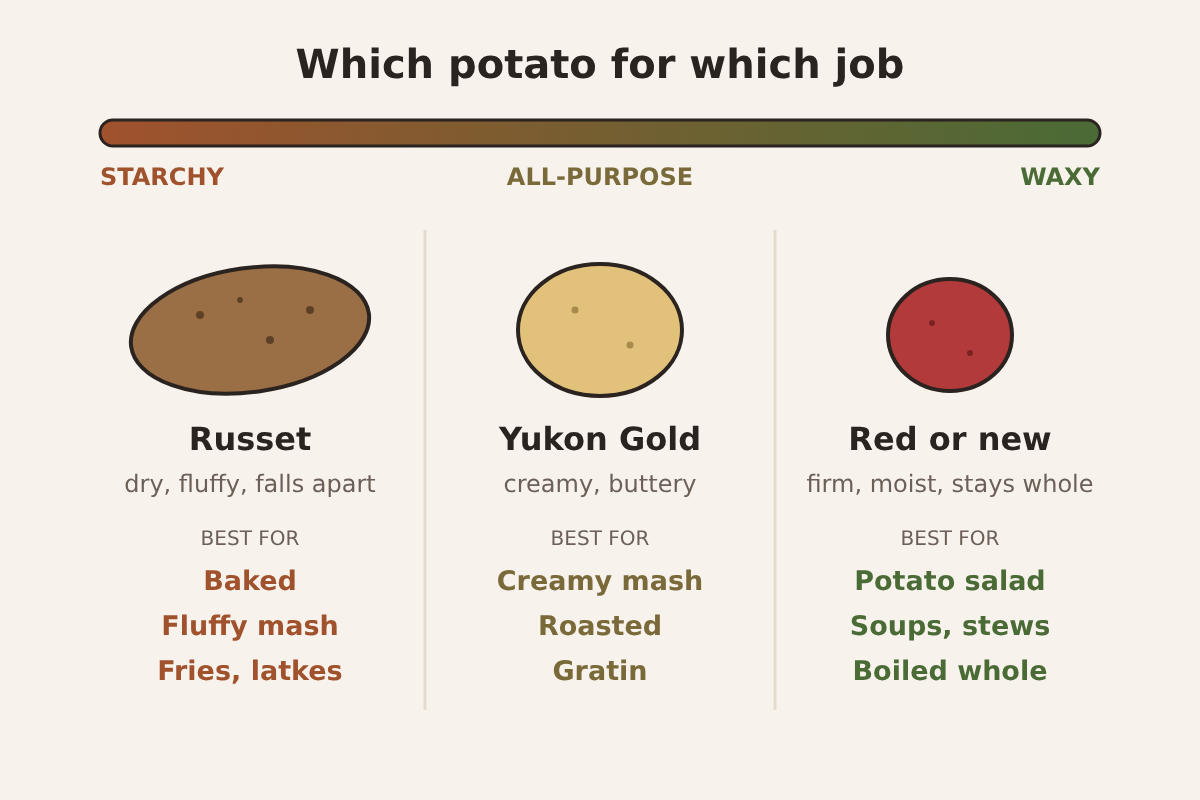
Pick the potato by how much starch it has. Starchy russets turn dry and fluffy when cooked, so they make the lightest mashed and baked potatoes and the crispest fries. Waxy red and new potatoes stay firm and hold their shape, which is what you want in potato salad, soups and stews. Yukon Golds sit in the middle: creamy, buttery and good at almost everything, which is why they are the safest choice when one bag has to cover the whole meal.
Starchy, waxy and in between
Every potato is mostly water and starch, but the balance changes from one variety to the next, and that balance decides the texture.
Starchy (russet, often sold as baking or Idaho potatoes). Long, with rough brown skin and white flesh that looks dry when you cut it. Cooked, it turns light and crumbly, sometimes called mealy. It soaks up butter and cream readily and falls apart if you boil it too long.
All-purpose (Yukon Gold and other yellow or white potatoes). Medium starch, thin smooth skin, yellow or pale flesh. Cooked, it is moist and creamy without being gluey, and it holds together well enough to roast or slice.
Waxy (red potatoes, new potatoes, most fingerlings). Less starch and more water. The flesh looks wet and dense when cut, and it stays firm and smooth after cooking. Waxy potatoes keep their shape in a salad or a pot of soup, but they make a heavy, dense mash.
Why starch changes the texture
A raw potato is made of cells packed with tiny grains of starch. As it cooks, those grains absorb water and swell. In a starchy russet the swollen starch pushes the cells apart, so the cooked flesh breaks into separate, fluffy pieces. In a waxy potato there is less starch to swell and the cells stay stuck to each other, so a cube comes out of the pot still a cube.
The same science explains gluey mashed potatoes. If you work cooked potatoes too hard, the cells burst and release their swollen starch, which turns the mash sticky and elastic. That is why a food processor or blender ruins mashed potatoes, and why a masher or a ricer, used briefly, gives a better result. Starchy potatoes are the most likely to go gluey when overworked, because they have the most starch to release.
Which potato for which dish
Mashed potatoes. Russets give the lightest, fluffiest mash and absorb the most butter and milk. Yukon Golds give a denser, creamier, more buttery-tasting mash and are a little more forgiving. A half-and-half mix of the two is a good compromise. Reds can be mashed with their skins on for a rustic, chunky side, but expect it to be firmer. Plan on about ½ pound (225 g) of raw potatoes per person for a generous side. Mashed potatoes are a dairy dish; for a dairy-free version, use olive oil and warm stock instead of butter and milk.
Baked potatoes. Russets, every time. Their dry flesh turns fluffy inside a crisp skin. A waxy potato bakes up dense and moist instead.
Roasted potatoes. Yukon Golds brown well, stay creamy inside and keep their shape when you turn them. Russets give a crunchier outside and a fluffier middle but break more easily. Small reds can be roasted halved or whole. Whatever you choose, give the pieces room on the pan: crowded vegetables steam instead of browning.
Fries and latkes. Russets. Their low moisture means less water to drive off in the oil and a crisper result, which is why our crispy potato latkes call for them.
Potato salad. Reds, new potatoes or fingerlings, so the pieces stay whole when you stir in the dressing. Yukon Golds work if you like a softer salad. Dressing the potatoes with a little vinegar while they are still warm lets them absorb more flavour.
Soups and stews. Waxy potatoes if you want clean cubes in the bowl. Russets if you want them to break down and thicken a chowder or a puréed soup.
Gratins. Yukon Golds are the usual choice: the slices hold together but the layers still turn creamy. Russets release more starch, which thickens the sauce but can make it heavier.
How to cook potatoes evenly
Start whole or cut potatoes in cold, salted water and bring it to a simmer, rather than dropping them into boiling water. Potatoes are dense, and in boiling water the outside can turn soft and start to fall apart before the middle is tender. Starting cold lets the heat move through more evenly. Cut pieces to roughly the same size, about 1½ to 2 inches (4 to 5 cm), so they finish together, and test with a knife: it should slide into the centre with no resistance.
For mash, drain well and let the potatoes steam in the pot for a minute or two so excess water evaporates before you add butter and milk. Water left in the pot makes a thin, bland mash.
How to choose potatoes at the store
Look for potatoes that are firm and heavy for their size, with no soft or wrinkled spots, cuts or bruises. Skip any with sprouts or green patches on the skin. Green appears when potatoes are exposed to light; if a potato at home has a little green or a few sprouts, cut them away generously before cooking, and throw out any potato that is mostly green, soft or shrivelled.
Variety names on the bag matter more than colour. A "white" potato can be all-purpose or closer to waxy depending on the variety, so if you are unsure, buy Yukon Gold for general cooking and russets or reds when the dish needs one end of the scale.
How to store potatoes
Keep raw potatoes in a cool, dark, dry place with some air around them, such as a paper bag or a basket in a pantry. Darkness keeps them from turning green, and a cool spot slows sprouting. Don't wash them before storing, since damp skins encourage rot, and take them out of sealed plastic bags. Check the bag every week or so and remove any that have gone soft.
Peeled, cut potatoes darken in the air. Cover them with cold water and refrigerate them if you are preparing ahead; our Thanksgiving cooking timeline uses this trick to get the peeling done the night before.
Cooked potatoes, mashed or otherwise, follow the USDA's rule for leftovers: refrigerate them within 2 hours of cooking and use them within 3 to 4 days. Reheat mashed potatoes until hot all the way through, to 165°F (74°C), stirring in a splash of milk or stock to loosen them.
Swaps when you have the wrong bag
You can make most dishes with whatever you have if you adjust the method.
- Only russets for potato salad: cook them whole and gently, at a bare simmer, and cut them only once they are cool. They will still be softer than reds, so fold the dressing in carefully.
- Only reds for mash: leave the skins on, mash briefly by hand and add a little more warm milk. Accept a chunkier texture; whipping them harder will only make them gluey.
- Only Yukon Golds: use them for anything. They will not be the fluffiest baked potato or the firmest salad potato, but they are good at both.
