
How to Roast Vegetables So They Brown, Not Steam
Even pieces, a thin coat of oil, space on the pan and a 425°F (220°C) oven: how roasting browns vegetables, how long each kind takes, and how to fix pale, soggy or stuck results.
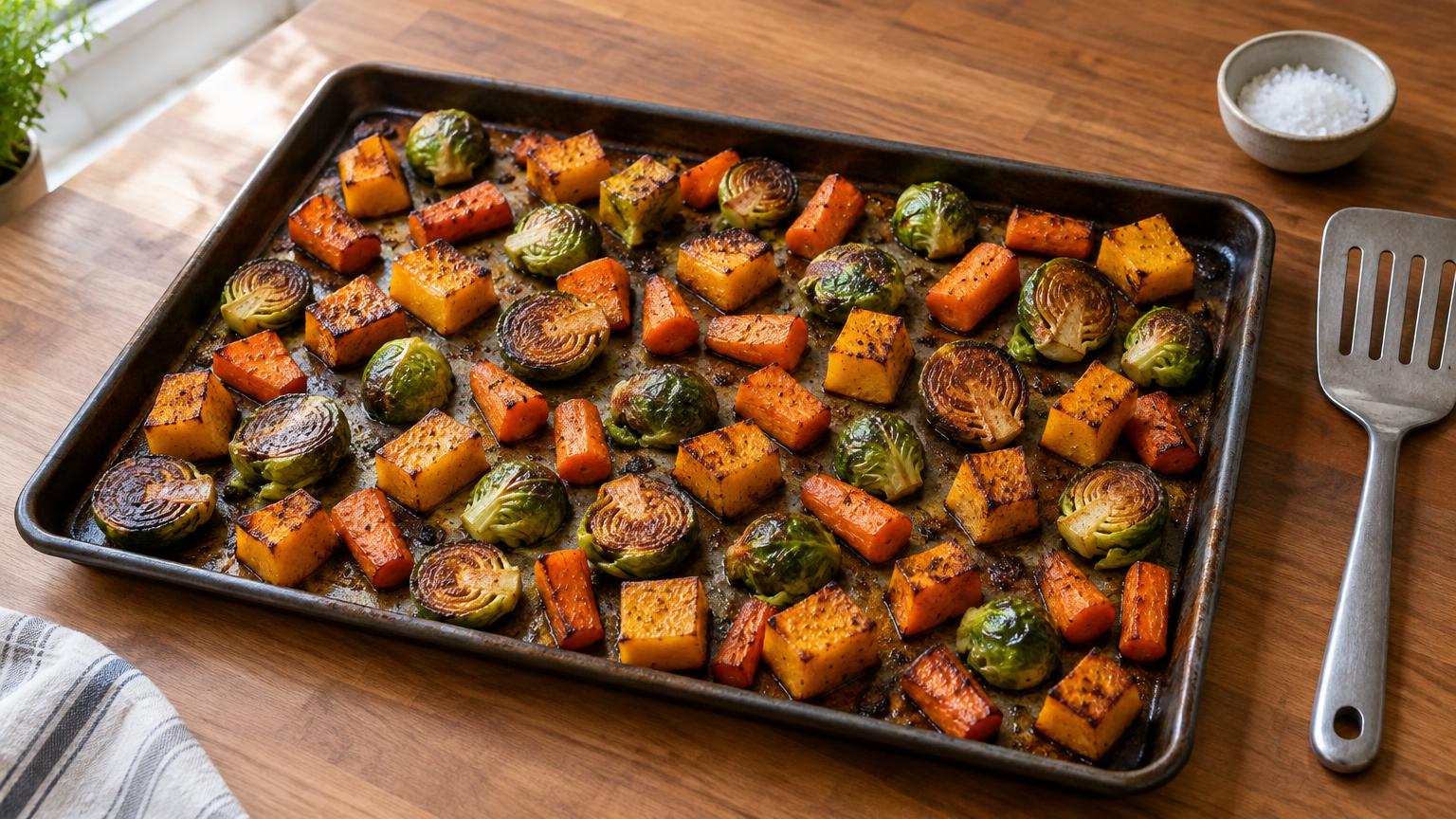
To roast vegetables so they brown instead of going soft and pale, cut them into even pieces, coat them lightly in oil, spread them in a single layer with space between the pieces, and roast at a high heat, around 425°F (220°C). Turn them once, when the side touching the pan has browned. Most roasting problems come from a crowded pan or an oven that is too cool.
Active time: 10 to 15 minutes. Roasting time: 15 to 45 minutes, depending on the vegetable.
What roasting does to vegetables
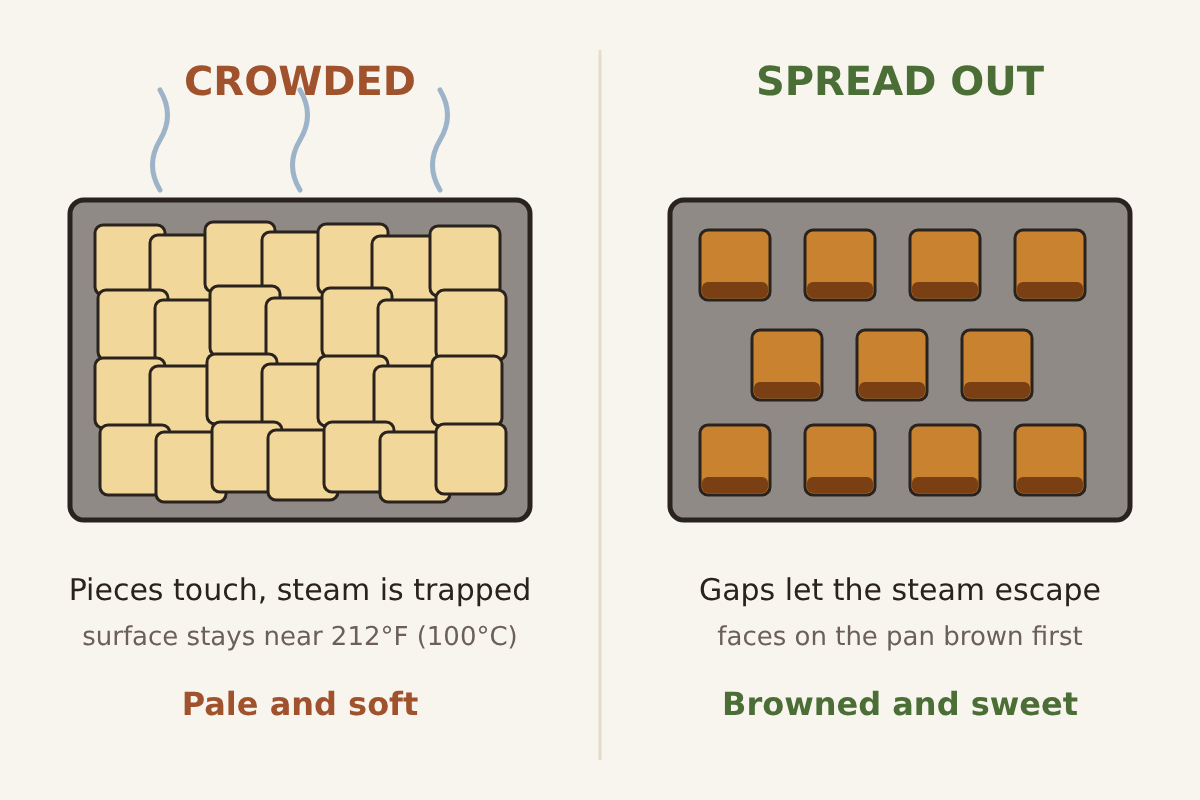
Vegetables are mostly water. In the oven, that water has to leave before the surface can brown. Water cannot get hotter than 212°F (100°C) while it is boiling off, so as long as a piece is wet on the outside, it steams. Once the surface dries, it heats past that point, and two kinds of browning take over: sugars caramelise, and sugars and proteins react together in the Maillard reaction, the same process that gives seared meat its crust. That is where the sweet, nutty flavour of a good roast vegetable comes from.
So the whole technique comes down to getting moisture away from the surface quickly. High heat helps, and so does air around every piece.
What you need
For about 2 pounds (900 g) of vegetables, enough for 4 people as a side:
- 2 pounds (900 g) vegetables, such as butternut squash, carrots, Brussels sprouts, potatoes, cauliflower or broccoli
- 2 tablespoons (30 ml) neutral oil or olive oil
- 1 teaspoon (6 g) fine salt, or 1½ teaspoons (5 g) Diamond Crystal kosher salt
- Black pepper, to taste
Use a rimmed metal sheet pan, ideally a heavy one. Dark pans brown faster than shiny ones; glass and ceramic dishes heat slowly and give paler bottoms. If you need more than one pan to keep the pieces apart, use two. These ingredients contain none of the common allergens, unless you pick peanut oil.
How to roast vegetables, step by step
- Heat the oven to 425°F (220°C) with a rack in the lower-middle position. For extra browning, put the empty sheet pan in the oven while it heats, so the vegetables start sizzling the moment they land.
- Cut evenly. Aim for pieces about 1 inch (2.5 cm) across. Pieces of one size cook at one speed; a mix of chunks and slivers gives you burnt bits and raw bits on the same pan. Halve Brussels sprouts through the stem and split carrots lengthwise if they are thick. Our winter squash guide shows how to cut a butternut squash safely.
- Dry and coat. Pat washed vegetables dry, then toss them in a bowl with the oil, salt and pepper until every piece is glossy. Too little oil and they dry out and stick; too much and they fry and turn greasy. A thin, even coat is enough.
- Spread them out. Lay the pieces in a single layer with a little space around each, cut sides down. This is the step that matters most: crowding traps steam.
- Roast without touching. Leave them alone until the undersides are well browned, usually 15 to 20 minutes for dense vegetables.
- Turn once. Flip the pieces with a thin metal spatula and roast until a knife slides in easily and the edges are browned, usually another 10 to 20 minutes. If you are using two pans, swap their positions when you turn.
- Season and serve. Taste, add salt if needed, and finish with something fresh if you like: lemon juice, chopped herbs or a little grated cheese (which adds dairy).
Roasting times at 425°F (220°C)
For pieces about 1 inch (2.5 cm) across. Ovens vary, so use these as a starting point and judge by colour and tenderness:
| Vegetable | Roughly |
|---|---|
| Broccoli florets, asparagus, sliced zucchini | 15 to 20 minutes |
| Brussels sprouts (halved), cauliflower florets | 20 to 30 minutes |
| Carrots, parsnips, butternut squash, sweet potatoes | 25 to 35 minutes |
| Potatoes, beets | 30 to 45 minutes |
To roast a mix, either cut slow vegetables smaller than quick ones, or start the slow ones first and add the quick ones partway through.
How to tell they are done
- The side that touched the pan is deep golden to chestnut brown, not just spotted.
- The edges are crisp and a few corners are dark.
- A knife or fork goes into the thickest piece with almost no resistance.
Pale but tender means the heat was too low or the pan too full; next time, spread them out more or use a hotter rack position. Brown outside but hard inside means the pieces were too big for the heat; cut them smaller or drop the oven to 400°F (200°C) and give them longer.
Common mistakes and how to fix them
- Pale and soft: the pan was crowded or the oven too cool. Use two pans and make sure the oven is fully heated.
- Stuck to the pan: not enough oil, or they were turned before they had browned. Browned vegetables release on their own. A sheet of parchment helps with sticking, at the cost of a little browning.
- Garlic or glaze burnt: chopped garlic and anything with sugar, such as honey or maple syrup, burn long before the vegetables are done. Add them for the last 5 to 10 minutes, or roast whole unpeeled garlic cloves instead.
- Soggy by the time you serve: covering roasted vegetables traps steam and softens them. Keep them uncovered and warm them briefly in a hot oven if they have to wait.
Roasting fits well into a big meal, since everything goes in at one temperature. If you are cooking for a holiday, our Thanksgiving cooking timeline shows how to fit a tray of vegetables around the main event.
