
How to Make a Vinaigrette That Does Not Separate
Salt in the vinegar first, mustard to hold it, oil in slowly. Why oil and vinegar split, the ratio to start from, and how to rescue a dressing that broke.
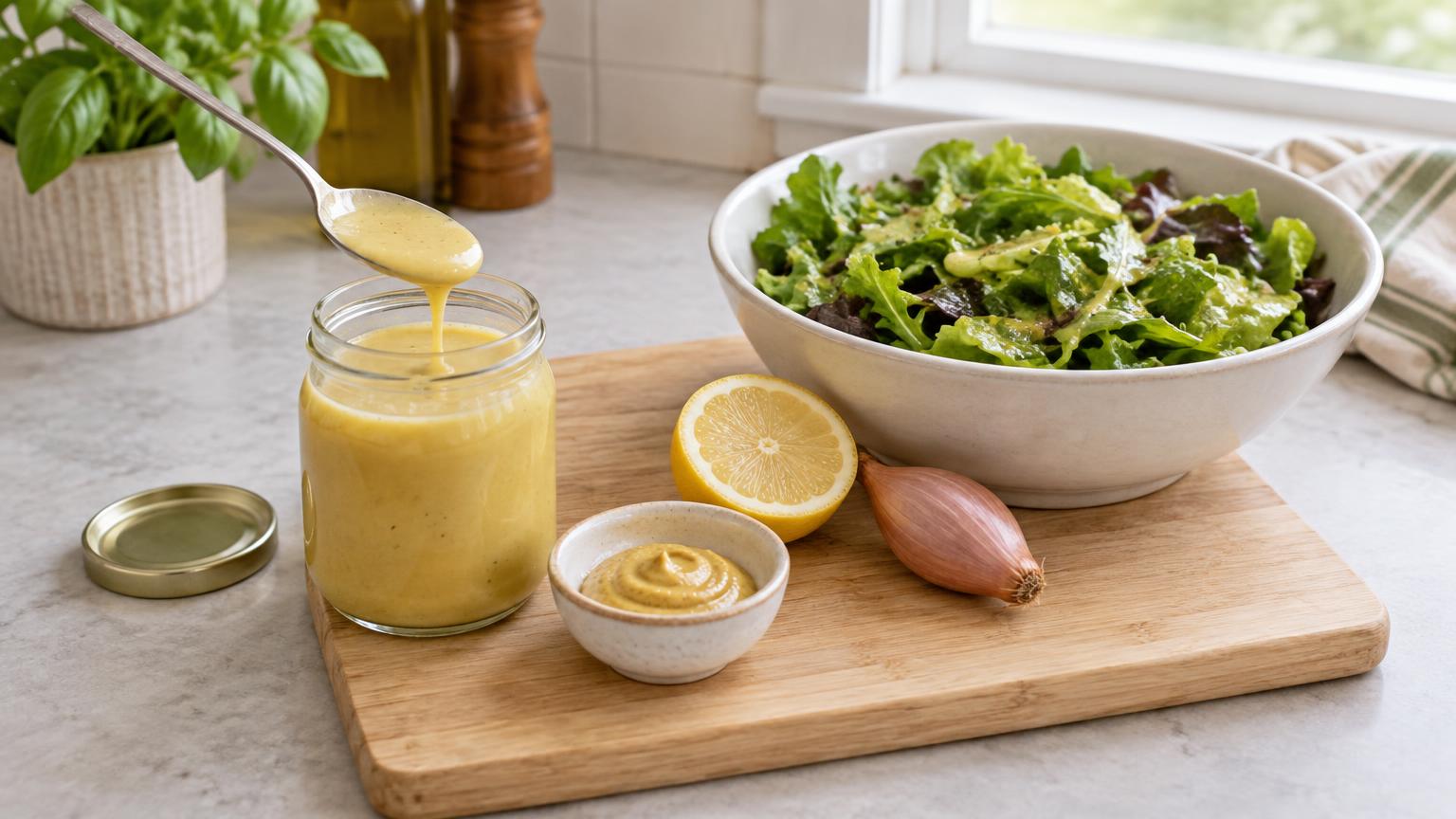
A vinaigrette stays together when three things happen: the salt dissolves in the vinegar first, there is an emulsifier such as Dijon mustard to coat the oil, and the oil goes in slowly while you whisk (or all at once in a jar you shake hard). Start with 3 parts oil to 1 part vinegar, whisk 1 teaspoon of mustard into the vinegar, then stream in the oil. You get a dressing that looks creamy and clings to leaves instead of pooling at the bottom of the bowl.
Oil and vinegar do not mix on their own. Vinegar is mostly water, and oil and water push apart. Shake them and you break the oil into droplets, but within a minute those droplets find each other again and float to the top as a slick layer. Every trick for a stable vinaigrette is about keeping those droplets small and apart.
What an emulsion is
An emulsion is one liquid spread through another as tiny drops. Mayonnaise, hollandaise and the glossy butter sauce at the end of a pan sauce are emulsions, and so is a good vinaigrette.
Two things make one last:
- Small drops. The smaller the oil droplets, the slower they drift together. Whisking oil in a thin stream, or shaking hard, breaks it finer.
- An emulsifier. Some ingredients have parts that cling to oil and parts that cling to water, so they sit around each oil drop like a coat and stop the drops merging. Mustard is the classic one for vinaigrette. Egg yolk, which contains lecithin, is what holds mayonnaise together. Honey and mashed garlic do not emulsify in the same way, but they thicken the water side, which slows the drops down.
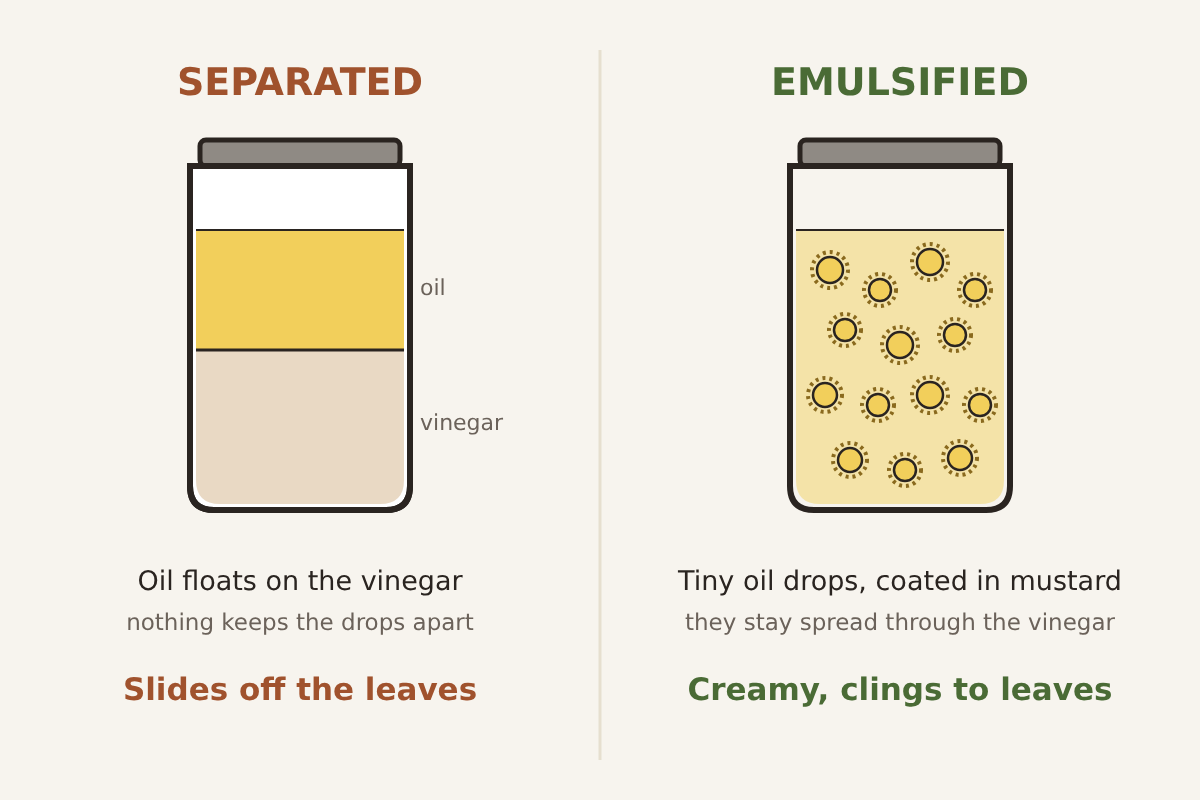
A vinaigrette is a temporary emulsion: even a good one starts to separate after a while in the fridge. That is normal, and a quick whisk or shake brings it back.
The basic ratio
Three parts oil to one part vinegar is the usual starting point. For about ½ cup (120 ml) of dressing, enough for a large salad for 4 to 6 people:
- 2 tablespoons (30 ml) vinegar or lemon juice
- ¼ teaspoon (1.5 g) fine salt
- 1 teaspoon (5 g) Dijon mustard
- 6 tablespoons (90 ml) olive oil or a neutral oil
- Black pepper to taste
Treat 3 to 1 as a place to start, not a rule. Sharp vinegars such as distilled white or sherry vinegar may need a little more oil; mild rice vinegar or a soft balsamic can take less. Taste it on a leaf, not off a spoon: dressing always tastes sharper on its own than on salad.
How to make it, step by step
- Put the vinegar and salt in a bowl and whisk for a few seconds until the salt dissolves. Salt does not dissolve in oil, so if it goes in last it stays gritty and the dressing tastes unevenly seasoned.
- Whisk in the mustard, and a finely minced shallot or a small grated garlic clove if you like. The mustard needs to be spread through the vinegar before the oil arrives, so it is ready to coat each drop.
- Pour the oil in a thin, steady stream while you whisk constantly. Set the bowl on a damp towel so it stays put. As the oil goes in, the dressing turns cloudy and then thickens slightly and looks creamy. That change in look is the sign it has emulsified.
- Taste on a leaf. Add pepper, a pinch more salt, or a few more drops of oil or vinegar.
The jar method. Put everything in a jar with a tight lid, vinegar and salt first, then mustard, then oil, and shake hard for 20 to 30 seconds. It is a little less stable than whisking because the oil breaks into bigger drops, but it is quicker and stores in the same jar.
Why a vinaigrette breaks, and how to fix it
- No emulsifier. Plain oil and vinegar will always separate fast. Add ½ to 1 teaspoon of mustard.
- Oil added too fast. A big pour of oil swamps the mustard before it can coat the drops. Pour a thinner stream.
- Too much oil for the emulsifier. Past a point there is not enough mustard to go round. Add a little more mustard.
- It was cold. Olive oil thickens and clouds in the fridge, and cold dressing is hard to whisk. Let it stand at room temperature for 10 to 15 minutes, then shake.
To rescue a broken dressing, put a fresh ½ teaspoon of mustard in a clean bowl and whisk the separated dressing into it a little at a time, the same way you added the oil the first time.
Using it
Dress salad just before serving, and toss it with your hands or tongs so every leaf gets a thin coat. Start with less than you think, about 1 tablespoon (15 ml) per two big handfuls of leaves, then add more: overdressed greens wilt and sit in a puddle. Sturdy leaves such as kale and the cooked collards in our black-eyed peas and greens hold up to dressing for longer than soft lettuce.
A vinaigrette is also good on warm food. Spoon a little over vegetables straight from the oven, especially ones roasted until they brown: the warm vegetables soak it up.
Storing homemade vinaigrette
Keep it in a covered jar in the fridge. Dressings made with fresh garlic, shallot or herbs belong in the fridge, never on the counter: garlic kept in oil at room temperature is a botulism risk. Make small batches you will use within a few days, and shake or whisk before each use.
Allergens and swaps
The basic recipe has none of the common allergens, but check your extras:
- Mustard is a regulated allergen in some countries. Without it, use 1 teaspoon (7 g) honey or maple syrup for body; the dressing will separate sooner, so shake it just before serving.
- Mayonnaise (1 teaspoon) is a strong emulsifier but contains eggs.
- Nut oils such as walnut or hazelnut add flavour but are a tree nut allergen. Swap in olive or a neutral oil.
- Cheese stirred in (Parmesan, blue cheese) adds dairy.
- Soy sauce or miso in an Asian-style dressing adds soy and often gluten; tamari labelled gluten-free is a swap for the gluten.
