
Flaky Buttermilk Biscuits: Cold Butter, Three Folds and a Straight Cut
Tall, flaky buttermilk biscuits in about 35 minutes: why the butter must stay cold, how three quick folds make layers, and why you never twist the cutter.
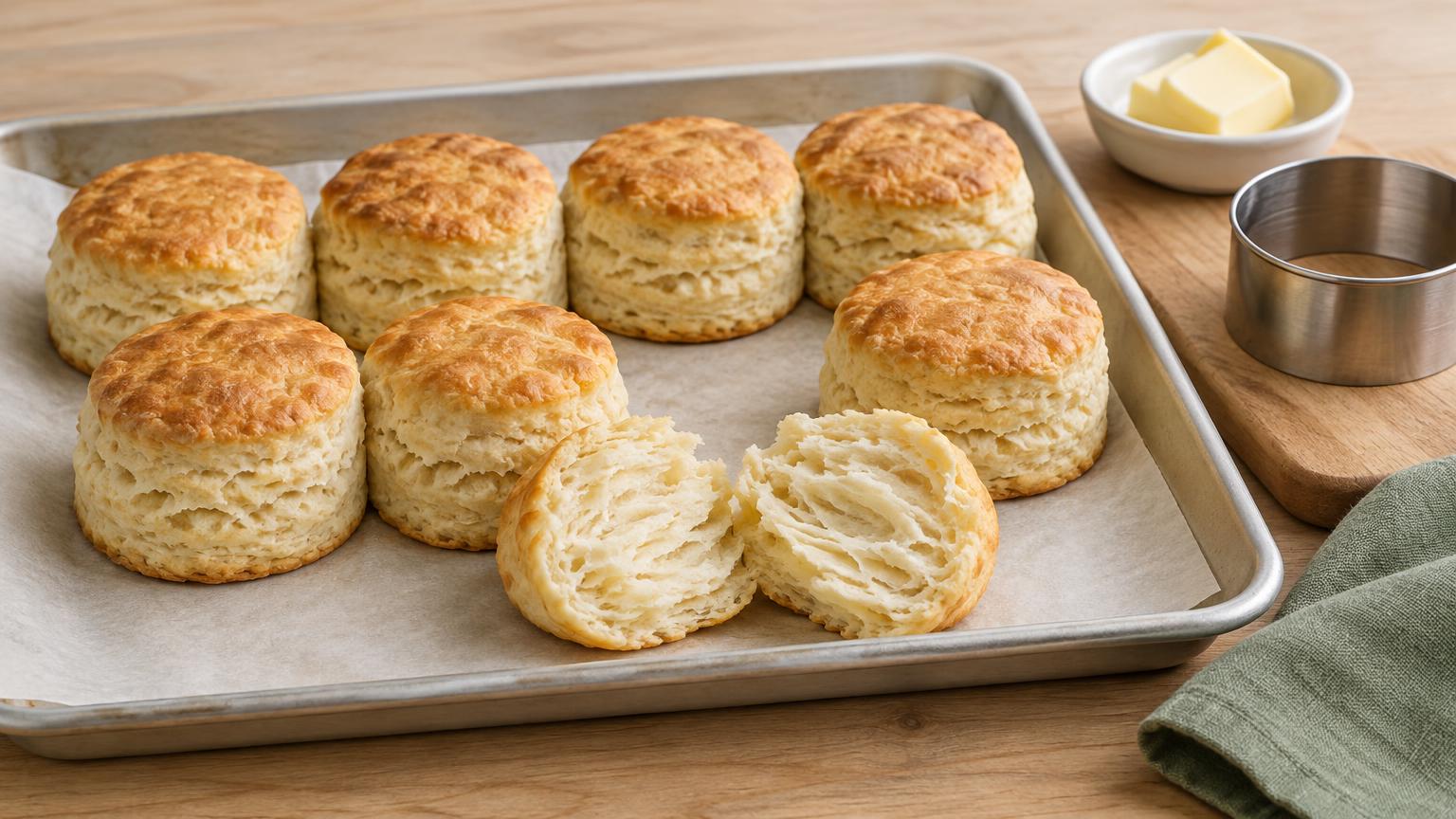
Tall, flaky biscuits come down to three things: butter that is still cold and in visible pieces when the dough goes into the oven, a few folds to stack that butter into layers, and a cutter pressed straight down. This recipe makes 8 biscuits in about 35 minutes, start to finish.
- Makes: 8 biscuits, 2½ inches (6 cm) across
- Prep: 20 minutes, plus 10 minutes chilling
- Bake: 12 to 15 minutes at 450°F (230°C)
- Contains: gluten (wheat flour) and dairy (butter, buttermilk). No eggs or nuts. Swaps are below.
Ingredients
- 2 cups (250 g) all-purpose flour, plus a little for the counter
- 1 tablespoon (12 g) baking powder
- ½ teaspoon (3 g) baking soda
- 1 teaspoon (6 g) fine salt
- 1 tablespoon (12 g) sugar, optional
- ½ cup (113 g, 1 stick) cold unsalted butter
- ¾ cup plus 2 tablespoons (210 ml) cold buttermilk, plus 1 to 2 tablespoons (15 to 30 ml) if needed
- 2 tablespoons (28 g) butter, melted, for brushing (optional)
If you only have salted butter, use it and cut the salt to ½ teaspoon (3 g); our guide to swapping salted and unsalted butter has the details. No buttermilk? Stir 1 tablespoon (15 ml) lemon juice or white vinegar into ¾ cup plus 1 tablespoon (195 ml) milk and let it stand 5 minutes. There are more options in our buttermilk substitutes guide.
Why this works
Biscuits rise two ways. The baking soda reacts with the acid in the buttermilk, and the baking powder adds a second lift in the heat of the oven. Our baking soda vs baking powder explainer covers why the recipe uses both.
The flakes come from the butter. Pieces of cold butter sit between thin sheets of dough; in a hot oven the water in the butter turns to steam and pushes those sheets apart before the butter melts into them. If the butter is soft when the dough goes in, it blends into the flour and the biscuits bake up tender but cakey, without layers. That is why the butter stays cold, the oven is very hot and the dough is handled quickly.
Steps
- Heat the oven: Set a rack in the middle and heat the oven to 450°F (230°C). Line a baking sheet with parchment.
- Mix the dry ingredients: In a large bowl, whisk the flour, baking powder, baking soda, salt and sugar until evenly combined, so every biscuit rises the same.
- Add the butter: Grate the cold butter on the large holes of a box grater straight into the flour, or cut it into ½-inch (1 cm) cubes and rub it in with your fingertips. Toss until the butter is coated and the largest pieces are about the size of peas. Stop there: you want to see butter.
- Add the buttermilk: Pour in the ¾ cup plus 2 tablespoons (210 ml) of buttermilk and stir with a fork just until the flour is moistened and the dough forms shaggy clumps. If dry flour stays at the bottom of the bowl, add more buttermilk 1 tablespoon (15 ml) at a time. Lumps are fine. Mixing until smooth develops gluten and makes biscuits tough.
- Fold for layers: Tip the dough onto a lightly floured counter and pat it into a rectangle about 1 inch (2.5 cm) thick. Fold it in thirds like a letter, turn it a quarter turn, and pat it out again. Repeat twice more, for three folds in all. Each fold stacks the butter pieces into more layers.
- Chill: If the dough feels soft or the butter looks greasy, slide it onto a plate and refrigerate for 10 minutes. On a cool day you can skip this.
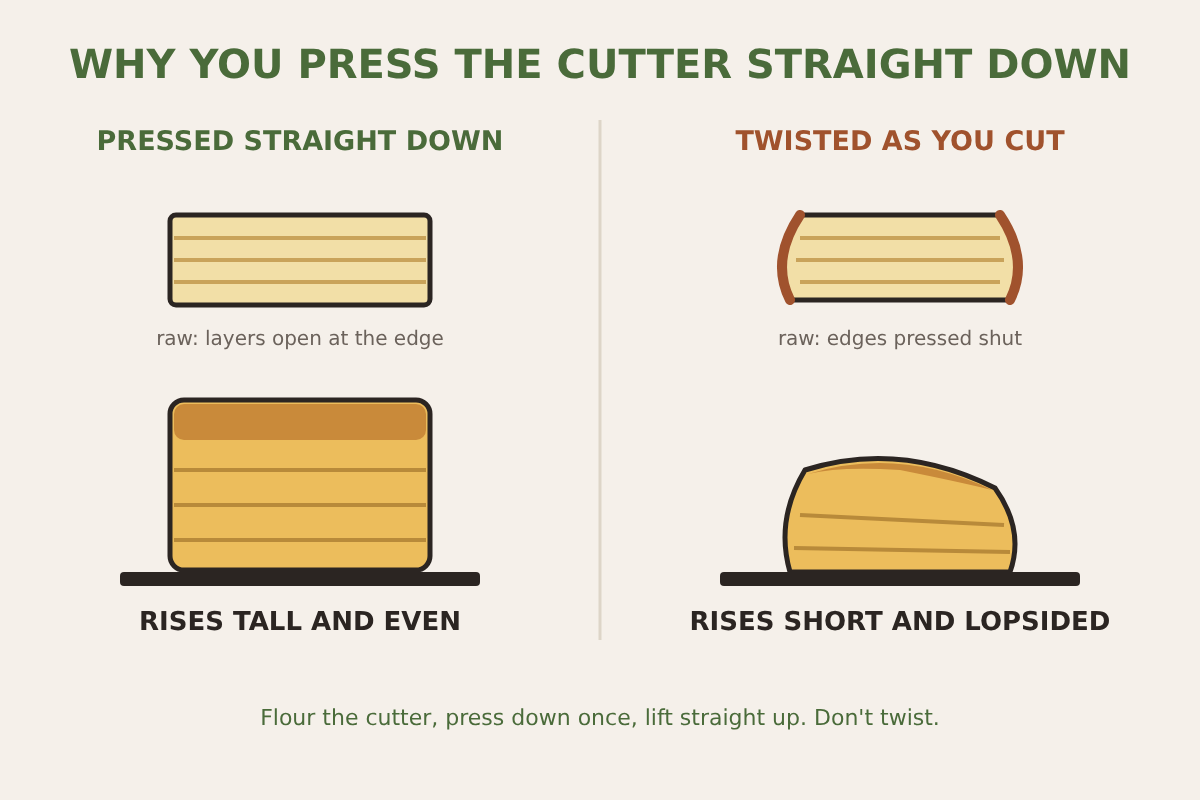
- Cut: Pat the dough to ¾ inch (2 cm) thick. Dip a 2½-inch (6 cm) round cutter in flour, press it straight down through the dough and lift it straight up. Do not twist.
- Arrange: Set the biscuits on the sheet about ½ inch (1 cm) apart. Gently press the scraps together, pat to ¾ inch (2 cm) and cut the rest. These last biscuits are a little less even; that is normal.
- Bake: Brush the tops with melted butter if you like, then bake 12 to 15 minutes, until tall and deep golden on top and underneath. Cool on the sheet for 5 minutes before serving.
Swaps that work
- Dairy-free: use cold plant-based butter sticks (not the soft tub kind) and make the soured milk with an unsweetened plant milk and lemon juice. Skip the butter brush or use melted plant butter.
- Gluten-free: a 1:1 gluten-free flour blend that contains xanthan gum can replace the flour. Expect a shorter, more tender biscuit with less defined layers, and let the dough rest 5 minutes before patting it out so the flour can absorb the liquid.
- Self-rising flour: if you use it, leave out the baking powder and salt, keep the baking soda.
Storing and reheating
Biscuits are best on the day you bake them. Keep leftovers in an airtight container at room temperature for up to 2 days, or freeze them in a freezer bag for up to 3 months. Reheat at 350°F (175°C) for 5 to 8 minutes from room temperature, or 10 to 12 minutes from frozen.
To bake ahead, freeze the cut, unbaked biscuits on the lined sheet until hard, then move them to a freezer bag. Bake straight from frozen at 450°F (230°C), adding 3 to 5 minutes. Any buttermilk left in the carton keeps for a batch of fluffy buttermilk pancakes later in the week.
