
Make-Ahead Soft Dinner Rolls: Shape Tonight, Bake Tomorrow
Soft, buttery pull-apart rolls you can shape the night before and bake while the turkey rests, or bake early and freeze. US and metric measures, shaping steps and allergen swaps.
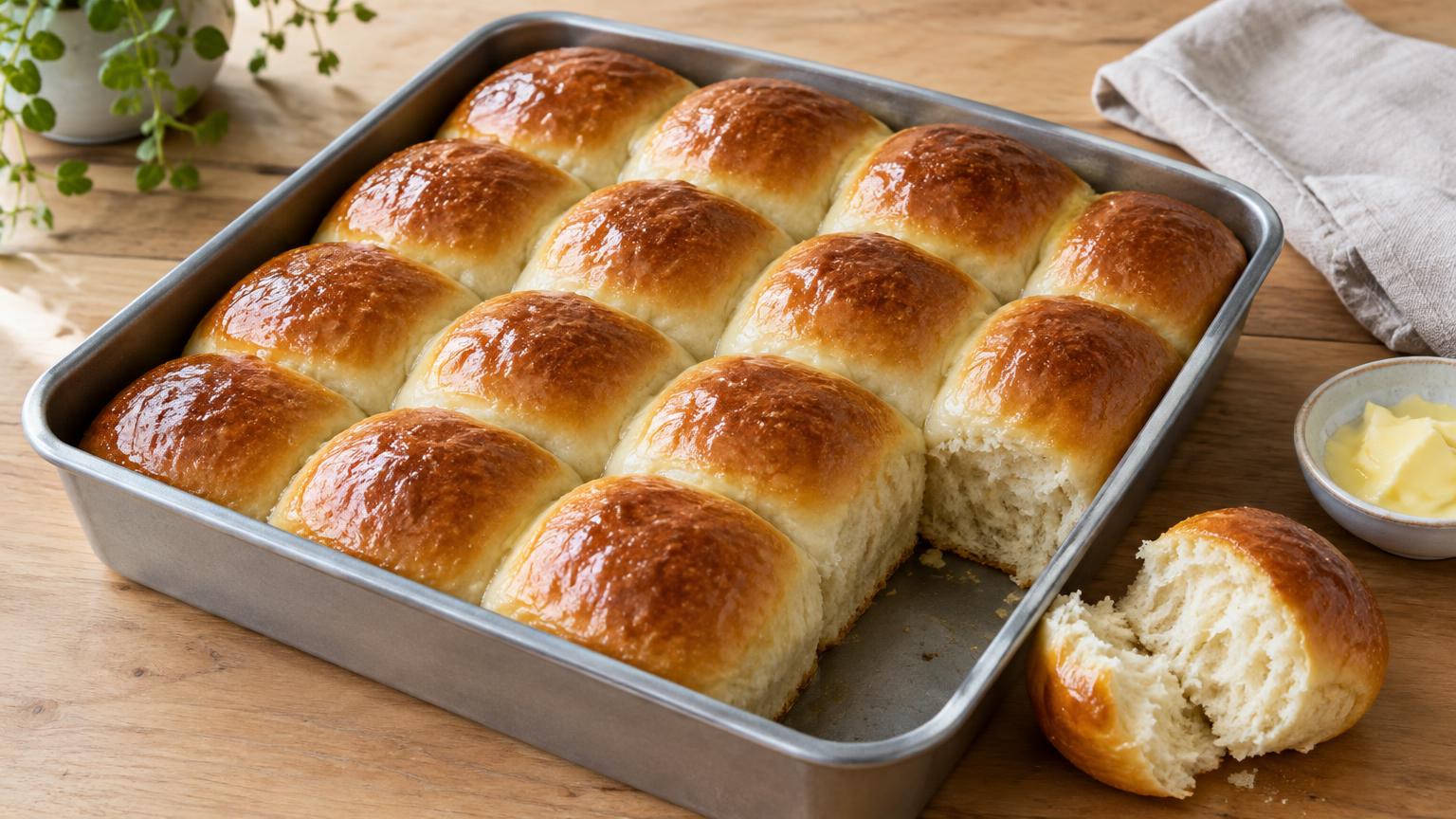
These soft, buttery pull-apart rolls are built to be made ahead. Shape them the night before, let them rise slowly in the fridge, and bake them the next day while the turkey rests. Or bake them days early, freeze them, and warm them through in 10 minutes. Either way the oven is free for the big dishes on the day.
Makes: 15 rolls Prep: 30 minutes | Rise: about 2 hours (or overnight in the fridge) | Bake: 20 to 25 minutes Allergens: gluten (wheat flour), dairy (milk, butter), eggs. No nuts, soy or shellfish; swaps below.
Ingredients
- 1 cup (240 ml) whole milk
- 1/4 cup (50 g) granulated sugar
- 2 1/4 teaspoons (7 g, one packet) instant or active dry yeast
- 1 large egg, at room temperature
- 4 tablespoons (57 g) unsalted butter, melted and cooled until just warm, plus 2 tablespoons (28 g) melted, for brushing
- 1 teaspoon (6 g) fine salt
- 3 1/4 cups (390 g) all-purpose flour, plus up to 1/4 cup (30 g) more as needed
All-purpose flour gives a tender, fluffy roll. Bread flour works too and makes a slightly chewier one that needs a tablespoon or two more milk.
Instructions
- Warm the milk. Heat the milk until it feels warm on your wrist, 105 to 110°F (40 to 43°C). Pour it into a large bowl or the bowl of a stand mixer and stir in the sugar and yeast. Much hotter than about 120°F (49°C) and you risk harming the yeast, so the dough rises slowly or not at all. With active dry yeast, leave the mixture 5 to 10 minutes until it looks foamy; if it doesn't foam, the yeast is old and the rolls won't rise. Instant yeast can go straight on to the next step.
- Mix the dough. Whisk in the egg and the 4 tablespoons (57 g) of melted butter. Add the salt and 3 cups (360 g) of the flour and stir until a shaggy dough forms. Add the rest of the 3 1/4 cups a little at a time.
- Knead. Knead with the dough hook on medium-low for 6 to 8 minutes, or by hand on a lightly floured counter for about 10 minutes. Add the extra flour a tablespoon at a time only if the dough sticks to your hands in clumps. It should end smooth, soft and slightly tacky. Kneading builds the gluten that traps gas and gives a fluffy roll; a dough stiff with extra flour bakes up dense.
- First rise. Shape the dough into a ball, put it in a lightly greased bowl, cover and leave in a warm spot for 1 to 1 1/2 hours, until doubled in size.
- Divide. Grease a 9 x 13-inch (23 x 33 cm) baking pan. Turn the dough out, press out the air and weigh it, then cut it into 15 equal pieces, each about 54 g. Equal pieces bake in the same time, so you don't get pale centers next to dark corners.
- Shape. Flatten each piece, pull the edges into the middle and pinch, then turn it seam side down. Cup your hand over it and move it in small circles on an unfloured patch of counter until it pulls into a smooth, taut ball. The tight skin helps the roll rise up instead of spreading out.
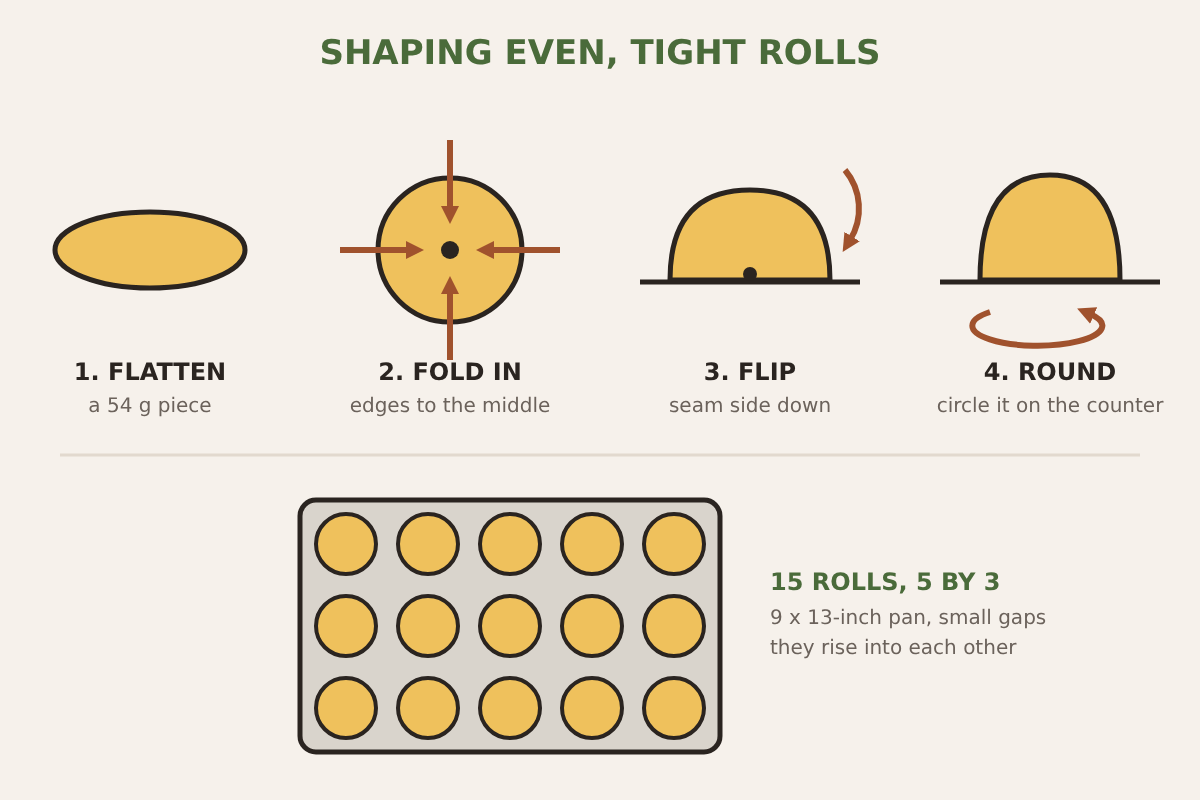
- Arrange. Set the rolls in the pan in 3 rows of 5 with small gaps between them. To make ahead, stop here and follow "Make-ahead options" below.
- Second rise. Cover and leave in a warm spot for 45 to 60 minutes, until the rolls look puffy and are touching. Heat the oven to 350°F (175°C) toward the end.
- Bake. Bake 20 to 25 minutes, until deep golden on top. An instant-read thermometer pushed into a center roll should read about 190°F (88°C); that is the usual sign that an enriched bread is baked through, and it is well past the 160°F (71°C) the USDA gives for dishes containing egg.
- Butter and serve. Brush the hot rolls with the 2 tablespoons (28 g) of melted butter. Let them cool in the pan for 10 minutes, then serve warm.
Make-ahead options
Overnight in the fridge (shape the day before). After step 7, cover the pan tightly with plastic wrap and refrigerate for up to 18 hours. The cold slows the yeast right down, so the rolls rise only a little. On the day, take the pan out and leave it covered at room temperature for 1 to 1 1/2 hours, until the rolls are puffy and touching, then bake as in step 9. Cold dough takes longer to rise, so judge by how they look, not the clock.
Bake ahead and freeze (up to 3 months). Bake and cool the rolls completely, then wrap the whole slab tightly in plastic wrap and foil, or pack them into a freezer bag with the air pressed out. Thaw at room temperature, still wrapped, for 2 to 3 hours. Warm them covered with foil at 325°F (165°C) for 8 to 10 minutes. Keeping them wrapped while they thaw stops them drying out.
If you are planning the whole meal, our Thanksgiving cooking timeline shows where rolls fit, and the make-ahead mashed potatoes reheat in the same 350°F (175°C) oven.
Storing and reheating
Keep baked rolls in an airtight container or bag at room temperature for up to 2 days. Rewarm them wrapped in foil at 325°F (165°C) for 5 to 10 minutes. The fridge makes bread go stale faster, so freeze anything you won't eat within 2 days. Leftover rolls make good small sandwiches; see our leftover turkey recipes for fillings.
Swaps and allergens
- Dairy-free: use unsweetened oat or soy milk and a plant-based butter in the same amounts. Soy milk adds soy, so pick oat milk if soy is the problem. The rolls brown a little less.
- Egg-free: leave out the egg and add 3 tablespoons (45 ml) more milk. The rolls come out slightly less rich and a little less golden, but still soft.
- Gluten-free: this dough depends on wheat gluten to rise and hold its shape, and a straight swap to gluten-free flour won't work. Use a recipe written for gluten-free flour instead.
- Instant vs active dry yeast: both work in the same amount. Only active dry yeast needs the foaming step.
