
Salted vs Unsalted Butter: Which to Use and How to Swap
Bake with unsalted butter, cook and spread with either. If you only have the other kind, swap it one for one and move ¼ teaspoon of salt per stick. Here is how, and where it matters.
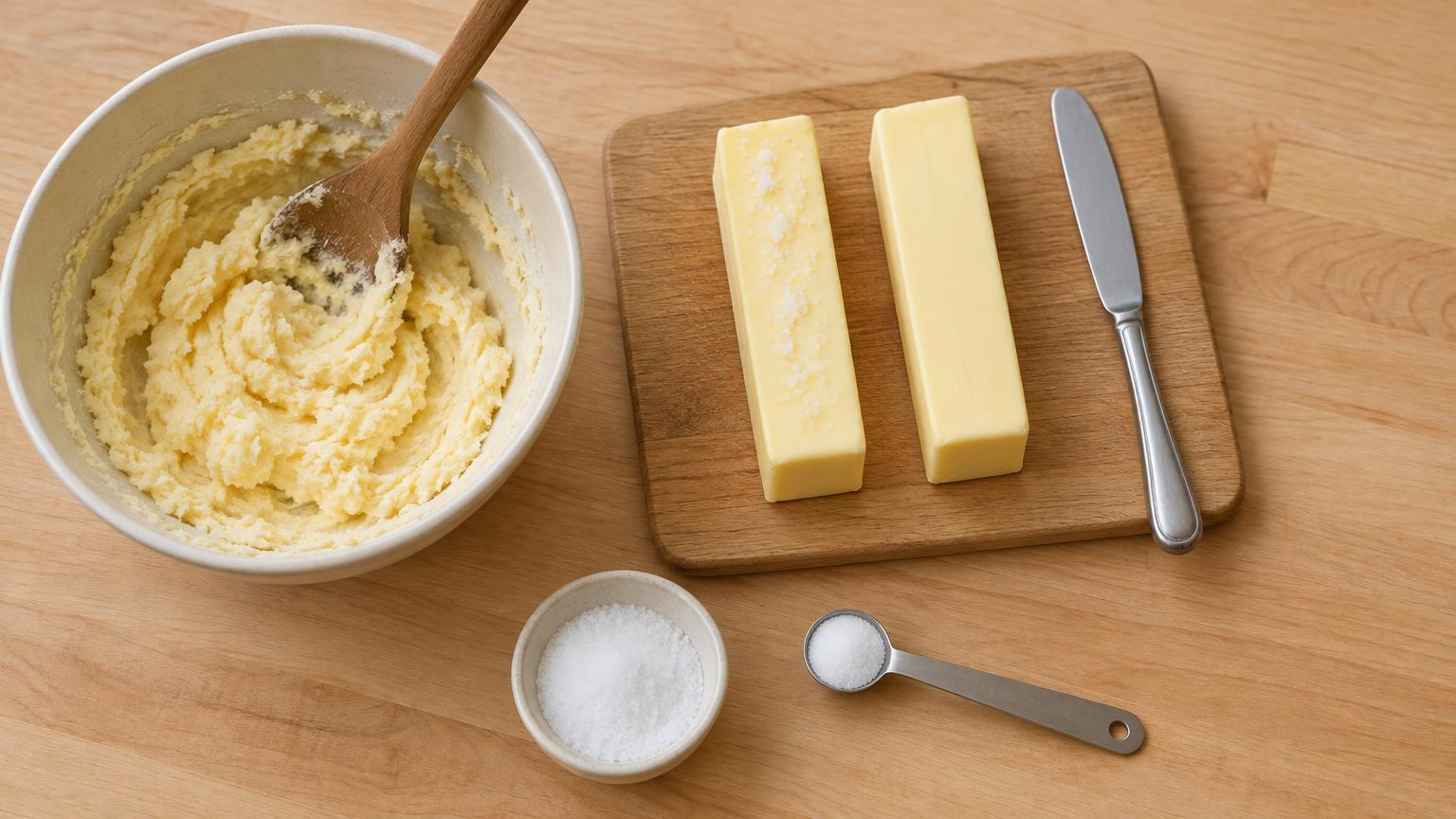
Bake with unsalted butter when a recipe asks for it, and use either one for everyday cooking and spreading. If you only have the other kind, you can still swap it one for one: salted butter holds roughly ¼ teaspoon (about 1.5 g) of fine salt per stick, so take that much salt out of the recipe, or add it back when you use unsalted butter where salted was called for.
Both kinds contain dairy. A dairy-free option is near the end.
What the difference actually is
Salt. That is the whole of it. In the US, anything sold as butter has to be at least 80% milkfat, salted or not; most of the rest is water, with a little milk solids. Salted butter simply has salt worked in during churning. The two behave the same in a hot pan, cream the same way with sugar and melt at the same temperature.
The labels can mislead. "Sweet cream butter" describes the cream it was made from, not the salt, and it is sold both salted and unsalted. Look for the word "unsalted" on the box, or check the sodium line in the nutrition panel: unsalted butter shows little or none.
Why baking recipes ask for unsalted
The reason is control. Salt in butter is not standardized, and brands differ. A baker who writes "¾ cup (170 g) unsalted butter and ¾ teaspoon (4 g) fine salt", as our chewy chocolate chip cookies do, knows exactly how salty those cookies will be in anyone's kitchen. With salted butter in the bowl, the total depends on the brand.
In most cookies, cakes and quick breads, a small difference barely shows. It shows more in recipes where butter is a large share of the dough and little else hides the salt: shortbread, buttercream, butter cookies and caramel. Those are the recipes where buying unsalted is worth the trip.
If you want to know what your salted butter holds, the label can tell you. Take the sodium per tablespoon, multiply by 8 for a stick, then by 2.5 to turn sodium into salt. A label reading 90 mg sodium per tablespoon, for example, works out to about 1.8 g salt per stick, a little more than ¼ teaspoon.
How to swap one for the other
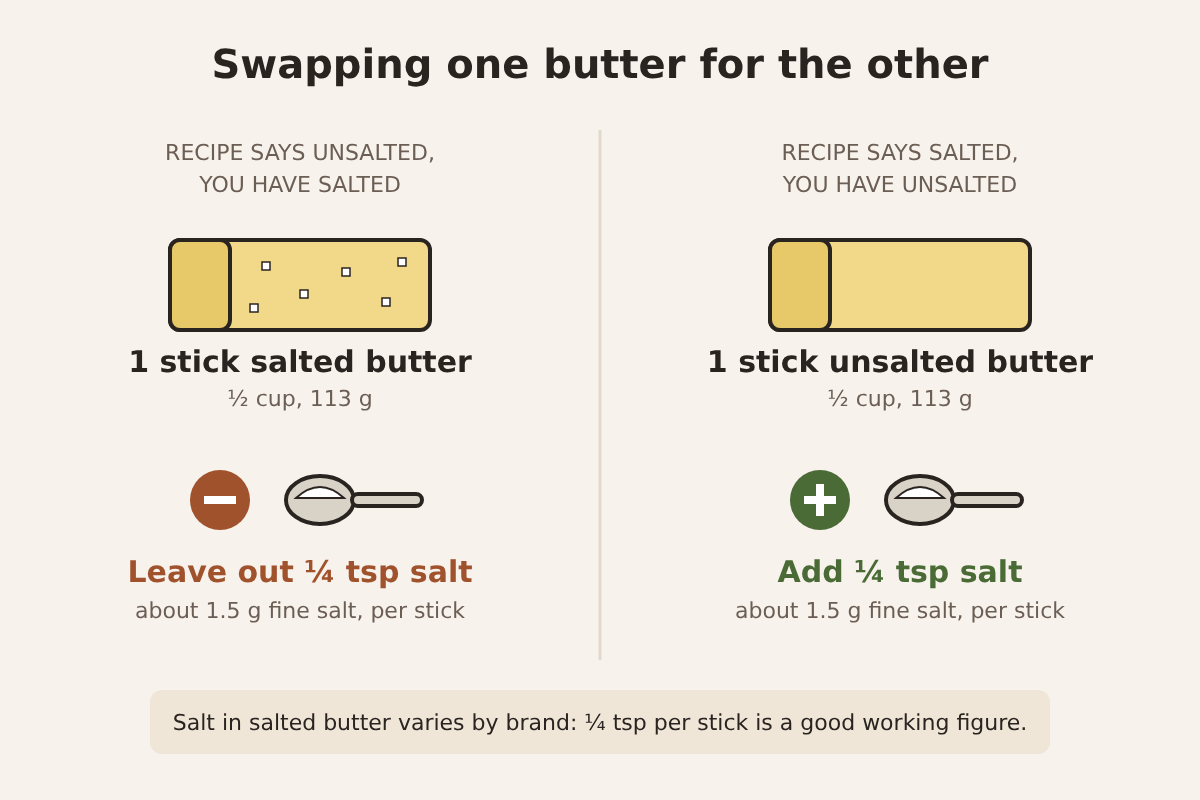
Every adjustment below is per stick, which is ½ cup, 8 tablespoons or 113 g of butter. Scale it to the amount the recipe uses.
Recipe says unsalted, you have salted. Use the butter as written and cut the recipe's added salt by ¼ teaspoon (about 1.5 g) for each stick. For the cookies above, ¾ cup (170 g) is a stick and a half, so reduce the ¾ teaspoon salt to a little under ½ teaspoon. If the recipe has less salt than you would need to remove, leave the salt out entirely and accept a slightly saltier result.
Recipe says salted, you have unsalted. Add ¼ teaspoon (about 1.5 g) fine salt per stick, mixed in with the other dry ingredients so it spreads evenly. In cooking, skip the measuring and salt to taste at the end.
Those measures are for fine table salt, the kind the recipes on this site use. Kosher salt has bigger flakes, so a teaspoon holds less of it, and the two big brands differ: Diamond Crystal kosher is much lighter by volume than Morton. With kosher salt, weigh it (1.5 g per stick) or use about ½ teaspoon of Diamond Crystal.
Leavening is not affected. Salt does not react with baking soda or baking powder, so the swap never changes how a batter rises.
When salted butter is the better pick
For anything that is seasoned to taste at the end, salted butter is fine and often handier.
- Spreading and finishing. Toast, warm bread, corn and a pat on a stack of buttermilk pancakes all taste better with the salt already in.
- Sautéing and roasting. Vegetables, eggs and stuffing get salted as they cook anyway. Season a little lighter at first, then taste.
- Mashed potatoes. Our make-ahead mashed potatoes call for 6 tablespoons (85 g) unsalted butter, but salted works if you hold back some of the salt and adjust after mashing.
Pan sauces and gravies are where salted butter can catch you out. As a sauce reduces, its salt concentrates, and drippings or stock may already be well seasoned. Use unsalted butter there if you have it, and taste before adding any salt.
European-style and cultured butter
Butter labelled European-style usually has a little more fat than the 80% US minimum, often 82% or more, and less water. Some are cultured, which gives a mild tang. They swap one for one by weight in almost any recipe. Check the box for salt, since many are sold both ways and imported butters are often salted; flaky sea salt in some "salted" versions is meant for spreading and makes uneven bites in a dough.
Dairy-free swaps
Plant-based butter sold in sticks or blocks for baking is the closest stand-in, and it swaps one for one in most cookies, quick breads and pie crusts. Avoid tub spreads for baking: they are softer and hold more water, so cookies spread and crusts turn tough. Plant butters are often salted, so apply the same ¼ teaspoon adjustment per stick. Read the ingredients for allergens too: many contain soy, coconut or nuts.
Storing both kinds
Keep butter in the fridge at 40°F (4°C) or below, in its wrapper or a covered dish, away from onions and other strong smells, since its fat picks up odours. Go by the date on the package.
Both salted and unsalted butter freeze well, which makes it easy to keep a stick of each. Freeze it in its original wrapper inside a freezer bag, and thaw it overnight in the fridge. Write which kind it is on the bag before it goes in, because once unwrapped, the two look exactly alike.
