
Crisp Buttermilk Waffles That Stay Crisp
Golden buttermilk waffles with a crisp shell and a light inside: more butter and less sugar than pancake batter, a little cornstarch, whipped egg whites, and opening the iron only when the steam stops.
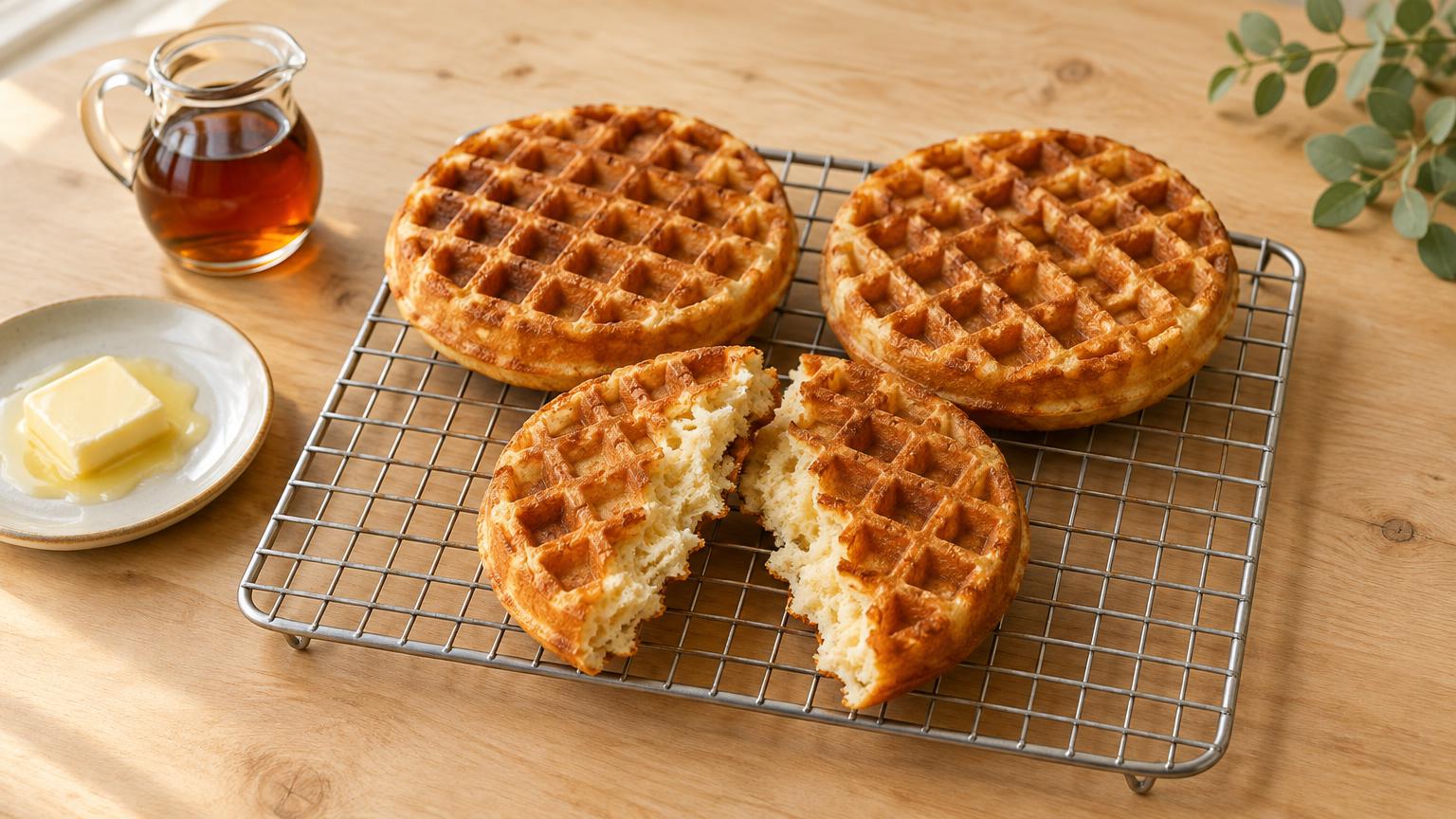
Crisp waffles come from a batter with more butter and less sugar than pancake batter, a little cornstarch, and the patience to leave the lid shut until the steam stops. This batch makes about 8 waffles in a standard 7-inch (18 cm) round iron, fewer in a deep Belgian-style iron, and each one comes out golden and crisp outside, light inside.
Serves: 4 (about 8 waffles) · Prep: 15 minutes · Cook: about 35 minutes with one iron
Allergens: contains gluten (wheat), dairy (buttermilk, butter) and eggs. Swaps are near the end.
Ingredients
- 1¾ cups (220 g) all-purpose flour
- ¼ cup (30 g) cornstarch
- 1 tablespoon (12 g) granulated sugar
- 2 teaspoons (8 g) baking powder
- ½ teaspoon (3 g) baking soda
- ½ teaspoon (3 g) fine salt
- 2 large eggs, separated
- 2 cups (480 ml) buttermilk
- 6 tablespoons (85 g) unsalted butter, melted and cooled slightly
- 1 teaspoon (5 ml) vanilla extract (optional)
- A little melted butter or neutral oil for the iron
Why this is not pancake batter
Pour buttermilk pancake batter into a waffle iron and you get something soft and bendy. The waffle looks right when it comes out and goes limp within a minute. Three changes fix that:
| Pancake batter | Waffle batter | |
|---|---|---|
| Butter per 2 cups (480 ml) buttermilk | 4 tablespoons (55 g) | 6 tablespoons (85 g) |
| Sugar | 2 tablespoons (25 g) | 1 tablespoon (12 g) |
| Starch | flour only | some flour swapped for cornstarch |
The extra butter coats the hot plates and fries the outside of the batter, which is where the crunch comes from. Less sugar keeps the grid from going dark brown before the middle has cooked through. Cornstarch forms no gluten, so the shell sets thin and crisp rather than chewy.
Steps
- Heat the iron. Turn it on now, so it is fully hot by the time the batter is ready. A waffle poured into a half-heated iron steams instead of browning.
- Mix the dry ingredients. Whisk the flour, cornstarch, sugar, baking powder, baking soda and salt in a large bowl for about 20 seconds so the leaveners are spread evenly.
- Mix the wet ingredients. Put the egg whites in a clean medium bowl. In another bowl, whisk the yolks with the buttermilk, then whisk in the melted butter and the vanilla. If the butter firms into flecks in the cold buttermilk, that is fine.
- Whip the whites. Beat the egg whites with a whisk or hand mixer until they hold soft peaks that flop over at the tip, about 2 minutes with a mixer. Any trace of yolk or grease in the bowl stops them from whipping, which is why they get their own clean bowl.
- Combine. Pour the buttermilk mixture into the dry ingredients and fold with a spatula until no dry flour shows. Leave the lumps. As with pancakes, every extra stir builds gluten and makes the waffles tough.
- Fold in the whites. Add the whites in two goes and fold them in gently, cutting down through the middle and turning the batter over, until only a few white streaks remain. The air in the whites is what keeps the inside light while the shell crisps.
- Cook. Brush the plates lightly with butter or oil, even if the iron is nonstick, for the first waffle. Pour in enough batter to cover about three-quarters of the grid (about ½ cup / 120 ml for a 7-inch round iron; your iron's manual gives its own amount) and close the lid. It spreads to the edges as it rises.
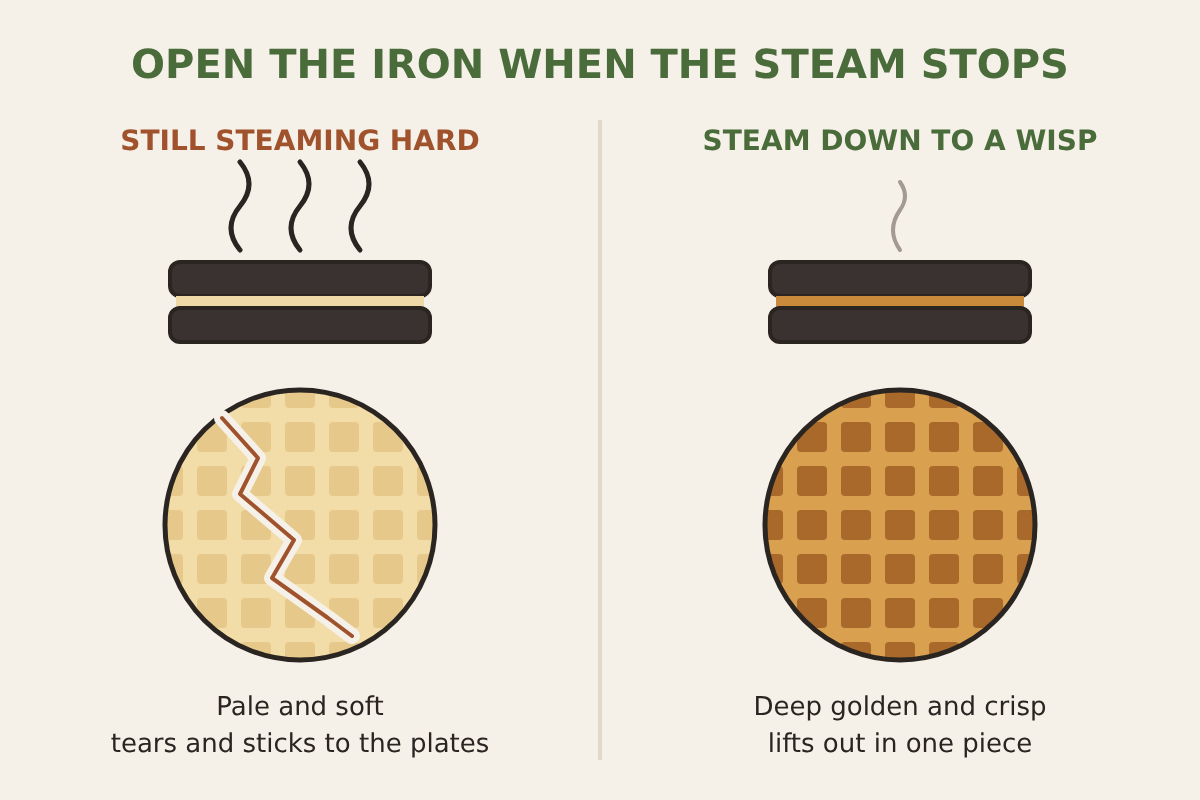
- Wait for the steam. A waffle gives off a lot of steam while the batter is still wet inside. When the steam from the edges of the iron slows to a faint wisp, usually 4 to 6 minutes depending on the iron, open it. The ready light on many irons only means the plates are hot, not that the waffle is done.
- Keep them crisp. Lift each waffle out with a fork or tongs and put it straight onto a wire rack set on a baking sheet in a 200°F (95°C) oven, in a single layer. Stacked waffles trap each other's steam and go soft, the same reason pancakes on a plate go soggy underneath.
Is it cooked through?
A waffle with a set, dry, springy inside is cooked. USDA's safe temperature for egg dishes is 160°F (71°C), and a waffle that has stopped steaming and is set all the way through is well past it. If the outside browns but the middle is still damp when you tear one open, your iron runs hot: turn it down a notch and give the next one a minute longer.
Common problems
- Soft, floppy waffles: the lid was opened early, the iron was not fully heated, or the waffles were stacked. Put limp ones back in the iron for a minute, or crisp them on the oven rack.
- Waffle stuck to the plates: usually it was not cooked long enough, so the shell had not set. Grease the plates before the first waffle, and open the iron only once the steam has stopped.
- Pale outside, dense inside: the batter sat too long. Baking soda starts working as soon as it meets the buttermilk, and whipped whites deflate, so cook the batter within about 30 minutes.
- Dark grid, raw middle: the iron is too hot for this batter. Lower the setting.
No buttermilk?
Stir 2 tablespoons (30 ml) lemon juice or white vinegar into a measuring cup, add milk up to the 2-cup (480 ml) line and let it stand 5 minutes. Our guide to buttermilk substitutes covers yogurt, kefir and the rest.
Allergen swaps
- Gluten-free: replace the flour with the same weight of a 1:1 gluten-free blend that contains xanthan gum, and keep the cornstarch, which is naturally gluten-free. Rest the batter 10 minutes before folding in the whites.
- Dairy-free: use unsweetened soy or oat milk soured with lemon juice as above, and a neutral oil such as sunflower in place of the butter (5 tablespoons / 75 ml). Soy milk contains soy.
- Egg-free: mix 2 tablespoons (14 g) ground flaxseed with 6 tablespoons (90 ml) water, rest 5 minutes and add it with the buttermilk. Without whipped whites the waffles come out crisp but denser inside.
Make ahead, storage and reheating
Whisk the dry ingredients together the night before and keep them covered; mix the wet ingredients and whip the whites in the morning.
Cool leftover waffles completely on a rack, then refrigerate them in a bag for up to 3 days. To freeze, lay them flat on a tray until firm, then bag them with parchment between them and freeze for up to 2 months. Reheat straight from frozen in a toaster, or on a rack in a 350°F (175°C) oven for 8 to 10 minutes. Either way they crisp up again; a microwave makes them soft.
For a slower weekend breakfast, waffles share the table well with a pan of flaky buttermilk biscuits, which use up the rest of the buttermilk carton.
